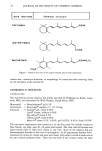
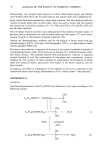
ANALYSIS OF COCAMIDOPROPYLAMINE OXIDE 71 Laurylamidopropylamine (C•2NN): b.p.: 161øC, 0.24 mm Hg, m.p. 33-36øC, ter- tiary nitrogen amount 99.1%, was obtained according to Muzyczko et al. (19). The oxidation step was carried out in the same way as described by Hoh et al. (12). The separated amine oxide was laurylamidopropylamine oxide monohydrate: % N for C•2NNO ß H20, calculated 8.80% found 8.71%. The amine C•2NN and its oxide C•2NNO were used for preparing standard mixtures simulating commercial composi- tions. These mixtures were then used for assessing accuracy of analytical procedures. Commercial cocamidopropylamine oxide (Gamidox K-40, aqueous solution) was kindly supplied by GZChG "Pollena" (Gdafisk, Poland). It had the following characteristics: ß active substance: min 32%, ß free amine: ca. 2%, -- ß average mol. weight of N-oxide: M = 309, -- ß average mol. weight of amine: M - 293. POTENTIOMETRIC TITRATION The titration procedure was the same as described by Metcalfe (8). A pehameter N-512 (Mera-Elmat, Poland) equipped with combined glass electrode SAg P-201W (WPL- Gliwice, Poland) was used. A sample containing 5-7 millimoles of amine oxide dissolved in isopropyl alcohol was titrated with 0.20 N HC1 solution in the same alcohol (VA). Another sample was quaternized with 3 ml of methyl iodide at 50 --- 2øC for 15 min and after cooling to room temperature titrated as before (VB). The difference V A - V B yielded the free amine content. TITANOMETRIC TITRATION The procedure was similar to that described by Brooks and Sternglanz (10). A sample containing ca. 0.35 mmole of amine oxide was placed in a conical flask and dissolved in 20 ml of ethanol-water mixture (1:1, V:V). 1.5 ml of 3M NH4SCN complex-forming reagent solution was added. Then the content of the flask was flushed with nitrogen, and 10.0 ml of ca. 0.20 N TiC13 solution was introduced. After flushing the contents with nitrogen again, the flask was firmly closed and left in the dark for 0.5 h. Then 7.5 ml of 18% HC1 (1:1, V:V) solution was added and the sample titrated with a 0.10 N solution of NH4Fe(SO4) 2 until the pale yellow or colorless solution turned light red. The same operations were carried out for a blank sample. TWO-PHASE TITRATION These titrations were made using two alternative indicators, i.e., methyl orange or a mixture of dimidium bromide and disulfine blue VN150 (mixed indicator). To a stoppered cylinder, 10.0 ml of a solution of a known amount of sample in 0.05 N HC1, 10 ml of citric acid/disodium phosphate buffer (pH = 3.0), 15 ml of chloroform, and 1 ml of 0.01% indicator solution were introduced. The resulting two-phase system was titrated with a standard 0.004 M sodium tetrapropylenebenzenesulphonate solu- tion. The titration was carried out with methyl orange until the chloroform layer lost

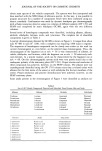
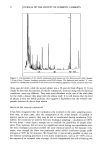
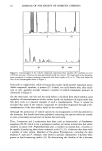
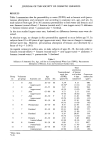
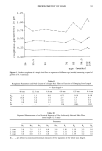
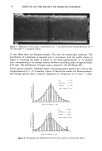
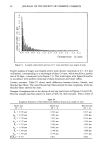
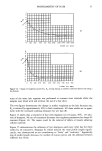
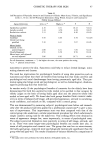
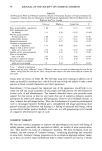
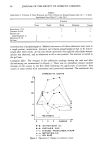
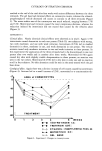
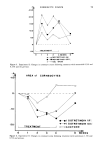
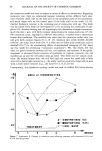
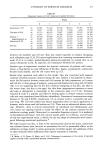
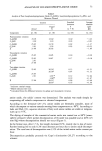
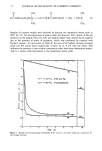
72 JOURNAL OF THE SOCIETY OF COSMETIC CHEMISTS its initial yellow color and, simultaneously, the aqueous layer changed from orange to red. The titration was carried out with the mixed indicator until the chloroform layer changed its color from navy blue to pink-violet. The content of free amine was calcu- lated from the difference in the results of the titanometric and two-phase titrations. DRY SUBSTANCE DETERMINATION Samples of amine oxide were placed in weighing bottles (60 mm in diameter) and dried in a vacuum oven at 80 or 40øC under atmospheric or reduced (25 mm Hg) pressure, respectively. The weight of samples and the content of amine oxide were occasionally checked, the latter by titanometric titration. RESULTS AND DISCUSSION In order to evaluate the selected methods of analysis, their accuracies were tested using model mixtures prepared from the master laurylamidopropylamine oxide (C•2NNO) and its amine (C•2NN). The compositions of the mixtures corresponded to those ex- pected to be found in commercial amine oxides (Table I). The standard deviations of the results obtained by potentiometric titration showed the precision of this method however, it introduces a systematic error. Specifically, the analysis of amine oxide alone both with and without quaternization gave results that were lower than the actual contents by ca. 1.3% (see Table I). On the other hand, the direct titrations of amine solutions yielded results in agreement with the actual contents. For the mixtures, the amounts of amine (after its quaterniza- tion with CH3I) were found higher than the actual ones by only 0.23%. The standard deviations of the results obtained by titanometric and two-phase titrations indicate these methods to be less precise than potentiometric titration. On the other hand, titanometric titration yields a smaller systematic error than the previous one despite the presence or absence of free amine. The results were only ca. 0.2% lower than the actual contents. The results of two-phase titration for both amine oxide alone and for its mixtures with free amine were always too high, regardless of the indicator used. Thus, the content of free amine in a mixture with amine oxide as calculated from the results of titanometric and two-phase titrations was two or more times higher than the actual contents. Even for pure amine oxide the results were too high. In each case, the results obtained using methyl orange were worse than those using the mixed indicator. The system of analytical methods verified against the model compounds was used for the analysis of a commercial amine oxide. As expected, the content of N-oxide deter- mined by titanometric titration was higher than by potentiometric titration. With respect to free amine, however, method II was found to be more reproducible. In order to detect the presence of other high boiling components in the commercial
Purchased for the exclusive use of nofirst nolast (unknown)
From: SCC Media Library & Resource Center (library.scconline.org)