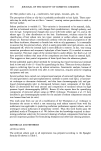
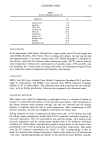
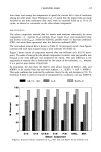
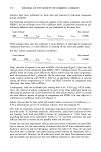
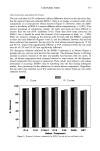
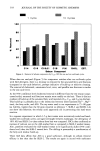
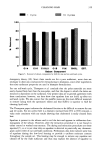
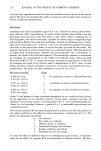
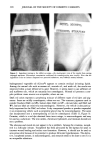
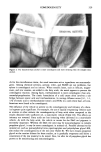
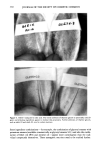
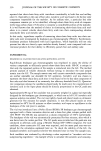
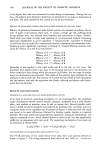
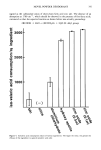
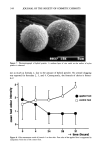
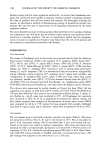
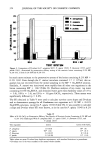
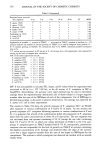
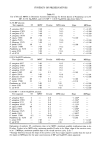
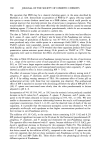
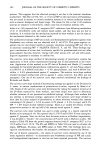
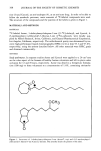
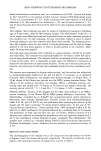
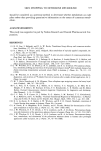
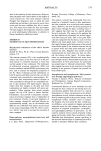
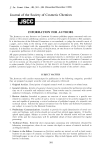
318 JOURNAL OF THE SOCIETY OF COSMETIC CHEMISTS lOO I Cycle 10 Cycles 8O ß 60 o (o 2o o c14 c16 c18:21 c18 P.W. CHOL. EST. 8ebum Component Figure 4. Removal of sebum components by C8,• o- lEO for one and ten soil/wash cycles. When data are analyzed (Figure 5) for component residues after ten soil/wash cycles with ALS detergent, there is a decrease in removal for the saturated fatty acid fractions (compared to one-cycle behavior), perhaps indicative of build-up or selective cleaning. The removal of cholesterol, unsaturated acid, ester, and paraffin wax fractions is similar to the one-cycle level. At the 95% confidence level cholesterol removal is different from the rest (except unsat- urated acids) saturated acid fractions remain more readily on the hair. There is distinct evidence of build-up of the saturated fatty acid materials (Ct4, Ct6, and C•8) on the hair. This build-up is probably due to the interaction between water hardness (Ca 2 +, Mg 2+ ions), the fatty acids, and ALS. The tap water used in our experiments is 75-80 ppm (as CaCO3) , higher than the 60 ppm reported in reference 7. SLES-2 and SODS-1 do not show this behavior the ethoxy units apparently aid in preventing this hard water reaction. In a separate experiment in which 3.5-g hair tresses were successively soiled and hand- washed (ten soil/wash cycles soil aged overnight between washings), the detergency of 10% ALS and SLES-2 to clean sebum from hair was compared. ESCA data confirmed an increase of calcium ion on the ALS-washed hair as compared to SLES-2 washed tresses. Also, panelists evaluated the ALS-washed tresses to be significantly duller (95% confi- dence level) than the SLES-2 treated hair. The dulling is presumably a manifestation of the fatty acid residue build-up. These ALS data affirm that ALS is a good surfactant, although its sebum removal efficacy is less than that for SLES-2. The results are again in accord with surfactant

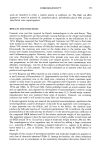
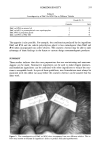
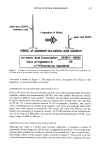
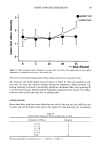
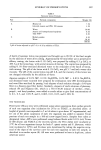
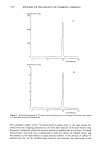
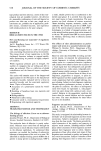
CLEANING HAIR 319 Cycle Cycles lOO ß 60 o E • 40 20 o c 14 c 16 c 18:21 c 18 P.W. CHOL. EST. 8ebum Component Figure 5. Removal of sebum components by ALS for one and ten soil/wash cycles. detergency theory (10). Since these results are for a pure surfactant, more data are necessary to draw any conclusions for extrapolating to shampoos, since other ingredients that alter surfactant properties are used in shampoo formulations. For one soil/wash cycle, Thompson et al. conclude that the polar materials are more easily cleaned from hair than the non-polar, and that the degree to which the latter are removed is dependent on the surfactant. Our present data are in general agreement with these conclusions however, our data show that squalene does not build up after ten soil/wash cycles. We also concur that the paraffin waxes are the most difficult materials to remove (along with the spermaceti esters) and that SLES-2 is superior to ALS for cleaning lipid soils. The Thompson paper indicates the cholesterol fraction to be difficult to remove for one and 20 cycles. For ten cycles there is a dramatic increase from 65% to 85% removal, a value more consistent with our results showing that cholesterol is easily cleaned from hair. Squalene is present in the sebum used to soil the hair and appears in calibration chro- matograms of the sebum. However, after the extraction procedure it is not found in either control or washed tress extracts. The drying and extraction procedures are those reported (7), so it is not clear why no squalene is detected in practically any chromato- gram under either of our soil/wash conditions. Preliminary data does indicate some loss of squalene during the low-level heating to provide a uniform moisture content throughout the sample set. This heating may be enough to remove any squalene not cleaned off by the wash surfactant and thus may explain the absence of squalene in
Purchased for the exclusive use of nofirst nolast (unknown)
From: SCC Media Library & Resource Center (library.scconline.org)