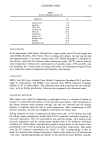
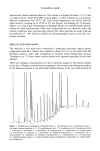
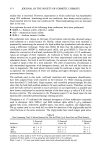
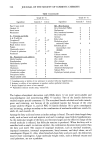
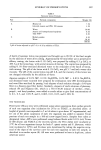
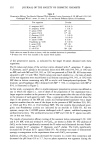
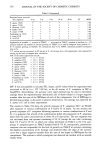
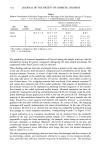
310 JOURNAL OF THE SOCIETY OF COSMETIC CHEMISTS (d) Hair product soils, e.g., conditioners, hair sprays, mousses, gels, etc. The perception of dirty or oily hair is probably attributable to hair lipids. These mate- rials may be sticky and can act like a "cement," causing various particulates to stick to the hair surface. Sebum production is variable (1). This variation is documented to be seasonal, daily, and due to hormonal activity, with changes from preadolescence, through puberty, and into old age. Compositional changes also occur with both subject age (1), and as the sebum ages (1), after distribution on the hair. Furthermore, evidence exists for the classification of hair sebum into two types: external or surface sebum, and internal sebum (2). External sebum contributions combine with the physical properties of the hair fibers (curliness, diameter) to furnish hair with an oily appearance. It is reasonable to assume that the external sebum, which is easily extractable into lipid solvents, can be shampooed off, while the internal lipid is more difficult to remove. In fact, very strong extraction procedures and enzymatic hydrolysis of hair keratin (2) is needed to remove this material. The exact origin of the internal lipid is under debate, but Koch et al. (2) have provided evidence that most of the components are those found in external lipid. This suggests at least partial origination of these lipids from the sebaceous glands. Several published papers detail methods for extracting hair lipid (external and internal) both in vitro and in vivo (1-4) and for quantifying the data. There are obvious disadvan- tages in collecting lipid in vivo by solvent extraction. Gravimetric analysis, because of the small quantities involved even after in vitro extraction, requires sensitive weighing equipment and care. Several authors have carried out compositional analysis of extracted lipM/sebum. Shaw (5) used gravimetric and spectrophotometric methods to assess total lipid, a fluorimet- ric technique to determine cholesterol, and thin layer chromatography (tlc) and gas- liquid chromatography (glc) to distinguish between major components of the lipid. Koch (2) determined the total amount and composition of extracted sebum by high pressure liquid chromatography (HPLC). Breuer (6) also reports data for quantifying components of extracted sebum using an HPLC technique. Thompson et al. (7) have described a gas chromatography system for the analysis of sebum components extracted into hexane from hair (in vitro). This work arose from our use of a modification of the Thompson et al. technique to determine the extent to which a test measuring total sebum removal from wool (by surfactants) was applicable to predicting surfactant performance against sebum, and to investigate certain surfactants of proprietary interest. Thus this work builds upon the published study of Thompson et al. We believe that the knowledge acquired in deter- mining surfactant selectivity for removal (cleaning) of sebum components from hair can provide important guidance for formulating shampoos and other hair cleaning products. MATERIALS AND METHODS ARTIFICIAL SEBUM The artificial sebum used in all experiments was prepared according to the Spangler formula (8) shown in Table I.

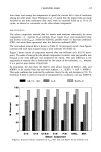
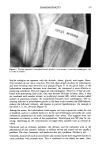
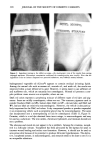
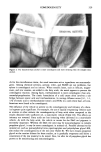
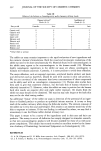
CLEANING HAIR 311 Table I Artificial (Spangler) Sebum (8) Ingredient % Linoleic acid 5.0 Squalene 5.0 Oleic acid 10.0 Coconut oil 15.0 Olive oil 20.0 Cholesterol 5.0 Stearic acid 5.0 Palmitic acid 10.0 Paraffin 10.0 Spermaceti wax 15.0 HAIR SUBSTRATE In all experiments, dark brown, Oriental hair, virgin quality and of 10-inch length was used (DeMeo Brothers, New York). Prior to soiling with sebum, the hair was divided into approximately 3.5-g tresses, washed with 10% TEALS (Standapol T, Henkel) for one minute, rinsed for two minutes under running tap water (105øF), and air dried at room temperature. Tresses were conditioned in a humidity room, 70øF and 60% rela- tive humidity, for 72 hours prior to soiling with sebum. All subsequent weights of hair were made after similar temperature and humidity conditioning. SURFACTANTS SLES-2 and ALS were obtained from Henkel Corporation (Standapol ES-2 and Stan- dapol A, respectively), and SODS-! was obtained from VISTA Chemical Company (Alfonic 8,10-20 ether sulfate). The surfactants were used as provided by the manufac- turer, with no further purification. Solutions were prepared with deionized water. HAIR-SOILING PROCEDURE Hair tresses were soiled by suspending a preweighed tress in a solution of sebum in hexane (3.5 g hair/250 ml solution), at the required concentration. After 20 minutes in the sebum solution (with constant stirring), the hair was removed and the solvent allowed to evaporate from the tress at room temperature. After conditioning at 60% relative humidity, the tress was weighed to determine the sebum load. Soiling solutions of 6 and 3 weight percent sebum were used. A 6% solution was used for soiling tresses subsequently washed with 0.01% surfactant (soil/wash condition A) one-cycle experiment. The 3% concentration was used for soiling 1.8-g tresses of the ten-cycle experiment and for soiling tresses washed with 0.1% surfactant (soil/wash condition B). These sebum concentrations produce soiling levels on the tresses of ap- proximately 0.04-0.055 g soil/g hair and 0.03 g soil/g hair, respectively. Hair soiled with the 3% solution is perceived to be "dirty" or "oily" (corresponding to that on heads of consumers who shampoo frequently), whilst tresses soiled in a 6% solution are "very oily," representing perhaps an extreme in hair oiliness for most Western cultures.
Purchased for the exclusive use of nofirst nolast (unknown)
From: SCC Media Library & Resource Center (library.scconline.org)