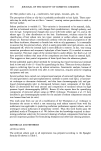
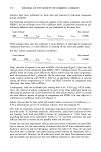
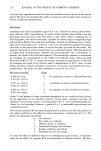
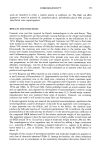
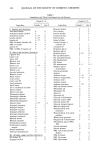
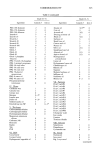
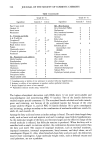
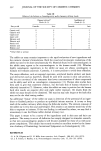
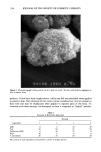
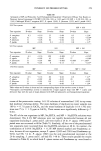
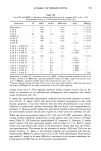
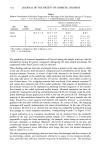
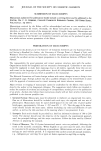
332 JOURNAL OF THE SOCIETY OF COSMETIC CHEMISTS Table III Effects of the Solvent on Comedogenicity and/or Irritancy of Fatty Acids Organic solvent* Sunflower oil Grade (0- 5) Grade (0- 5) Fatty acids Comedo. Irrit. Comedo. Irrit. Caproic acid 0 4 2 2 Caprylic acid 1 3 1 1 Capric acid 2 2 3 1 Lauric acid 3 1 4 1 Myristic acid 1 0 3 0 Palrnitic acid 0 1 2 0 Stearic acid 0 1 2 0 Archidic acid 1 1 2 0 Behenic acid 1 0 1 0 * Ethyl ether or acetone. The rabbit ear assay remains important to the rapid evaluation of new ingredients and the cosmetic chemist's formulations. Both the visual and microscopic evaluations of the rabbit ear need to be done simultaneously (9). Materials found to be noncomedogenic in the rabbit assay appear to be noncomedogenic in the human model (10). Whether highly comedogenic ingredients in the rabbit ear assay are always comedogenic in humans still remains uncertain. Currently, it is more prudent to avoid these offenders. The major offenders, such as isopropyl myristate, acetylated lanolin alcohol, and lauric acid derivatives such as laureth-4, should be used with caution in skin care products. We are not convinced of the statement that lower concentrations of these compounds can be safely used with no comedogenic consequences (11). Human skin studies have been used to give that statement credence, but the back skin of human volunteers is relatively insensitive (7). However, when the rabbit ear assay is positive but the human back skin results are negative after only eight weeks' exposure, the results from the rabbit ear assay should not be dismissed. The reaction may take longer or the back skin may not be the ideal testing surface. An additional "bonus" of the rabbit ear assay is detection of the potential of an ingre- dient or finished product to produce an epithelial irritant reaction. It is easy to keep track of the surface irritancy while doing the follicular studies. The stratum corneum of the rabbit ear is very thin and undeveloped. This results in an extreme sensitivity of the skin to exposure to irritants. If this test finding is confirmed by others, we may find it unnecessary to use the Draize rabbit dermal irritancy test. This paper is meant to be a survey of the ingredients used in skin care and hair care products. The survey is not at all definitive but simply designed to stimulate research, so that new noncomedogenic products will become available for those of us with acne- prone complexions. This subject has recently received an excellent review by the Amer- ican Academy of Dermatology Invitational Symposium on Comedogenicity (12). REFERENCES (1) A. M. Kligman and O. H. Mills: Acne cosmetica, Arch. Dermatol., 106, 843-850 (1972). (2) J. E. Fulton, S. Bradley, et al, Noncomedogenic cosmetics, Cutis, 17, 344-351 (1976).

COMEDOGENICITY 333 (3) J. E. Fulton, Jr., S. R. Pay, and JE Fulton III, Comedogenicity of current therapeutic products, cosmetics, and ingredients in the rabbit ear, J. Am. Acad. Dermatol., 10, 96-105 (1984). (4) W. R. Markland, Acne and cosmetic comedogenicity, Norda Briefi, 481, 1-6 (1977). (5) G. W. Hambrick and H. Blank, A microanatomical study of the response of the pilosebaceous appa- ratus of the rabbits' ear canal. J. Invest. Dermatol., 26, 185-200 (1956). (6) H. Gougerot, A. Carteaud, and E. Grupper, Epidermie de coedons par les brillantines, crSmes etc. de gerer, Bull. Soc. Franc. Derm. Syph., 52, 124-125 (1945). (7) G. Piewig, J. E. Fulton, and A.M. Kligman, Pomade acne. Arch. Dermatol., 101, 580-584 (1970). (8) G. Piewig, J. E. Fulton, and A.M. Kligman, Dynamics of comedo formation in acne vulgaris, Arch. Derm. Forsch. 242, 12-29 (1971). (9) A. Zatulone and N. A. Konnerth, Comedogenicity testing of cosmetics, Cutis, 39, 521 (1987). (10) O. H. Mills and A.M. Kligman, Comedogenicity of sunscreens, Arch. Dermatol., 118, 417-419 (1982). (11) M. Lanzet, Comedogenic effects of cosmetic raw materials, Cosmet. Toiletr. 101, 63-72 (1986). (12) J. S. Strauss and E. M. Jackson, American Academy of Dermatology Invitational Symposium on Comedogenicity, J Am. Acad. Dermatol. , 20, 272-277 (1989).
Purchased for the exclusive use of nofirst nolast (unknown)
From: SCC Media Library & Resource Center (library.scconline.org)