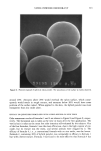
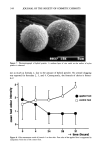
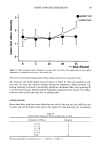
j. Soc. Cosmet. Chem., 40, 335-346 (November/December 1989) Development of a novel hybrid powder formulated to quench body odor FUJIHIRO KANDA, EIICHIRO YAGI, MINORU FUKUDA, KEISUKE NAKAJIMA, TADAO OHTA, and OKITSUGU NAKATA, Shiseido Research Center, 1050 Nippa-cho, Kohoku-ku, Yokohama, Japan 223. Received June 2, 1989. Presented at the 15th IFSCC Congress, London, September 29, 1988. Synopsis Olfactory and instrumental analyses show that short-chain fatty acids contribute to both foot and axillary malodors. The mechanism of choice to quench short-chain fatty acid malodors was to convert volatile short-chain fatty acids into their corresponding nonvolatile odorless metallic salts. Several metal-containing candidates were evaluated by means of headspace gas chromatography (HS-GC) for their ability to efficiently quench short- chain fatty acids. Zinc oxide was found most suitable for this purpose. Despite its strong deodorizing power, due to its aggregating ability, shortcomings such as clogging of aerosols and rough texture are unavoidable when formulating zinc oxide into deodorant products of various forms. By forming a hybrid powder in which zinc oxide is uniformly covered on the surface of a spherical resin such as nylon, these shortcomings were overcome without sacrificing any deodorizing power. Body odor quenchers formulated with this hybrid powder were more efficacious than conventional antiper- spirants and deodorants on both foot and axillary odor. INTRODUCTION Regardless of sex, age, or race, people have always been sensitive in trying to eliminate offensive body odors as much as possible. To fulfill such demands, countless products by various manufacturers have appeared in the marketplace. Human body odors result from interactions between secretions of eccrine, sebaceous, and apocrine glands, and resident bacteria. Several approaches have been made to control body odors, out of which the antiperspirants and antimicrobials have been most successful. Antiperspirants inhibit perspiration by means of aluminum salts, and antimicrobials inhibit odor- forming bacteria. Nevertheless, such ingredients are intended to prevent the generation of body odors and generally have little effect in reducing malodor once formed. Body odors have been investigated in terms of chemical compound constituents by dermatologists and analytical chemists, but little is still known as to which chemical compounds are responsible for the malodor for specific body sites. We have recently 335

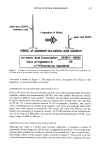
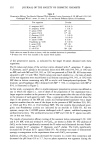
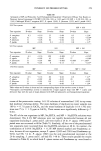
336 JOURNAL OF THE SOCIETY OF COSMETIC CHEMISTS reported that short-chain fatty acids contribute considerably to both foot and axillary odor (1). Especially in the case of foot odor, isovaleric acid was found to be the key odor component responsible for the malodor. As for axillary odor, a particular key odor component remains yet to be identified, although short-chain fatty acids of compara- tively long carbon chain (C6) seem to comprise a considerable portion of the malodor. It is well known that the method of choice in eliminating short-chain fatty acid mal- odors is to convert volatile short-chain fatty acids into their corresponding odorless nonvolatile fatty acid metallic salts. In this study, ingredients capable of converting short-chain fatty acids into their me- tallic salts were investigated by headspace gas chromatography (HS-GC). Furthermore, deodorant products formulated with such ingredients, which hopefully will not only prevent but also act directly upon malodor already formed, were compared with con- ventional products for their ability to efficiently quench foot and axillary odor. EXPERIMENTAL HEADSPACE GC ANALYSIS FOR EVALUATING QUENCHING ACTIVES Equilibrium headspace gas chromatography was employed to assess the ability of various compounds to efficiently quench short-chain fatty acids. HS-GC is unique in that only the vaporized portion of the sample is introduced into the GC. The method permits analysis of volatile chemicals without having to introduce the total sample matrix into the GC. The sample matrix may well contain nonvolatile compounds that are neither amenable nor desirable for GC operation. Isovaleric acid was chosen to represent the short-chain fatty acids since it was found to be the key odor component of foot odor and also because of its extremely low olfactory threshold level (2). Quantita- tive comparison among the candidates should easily be made since the concentration of isovaleric acid in the vapor phase should be directly proportional to the GC peak area obtained. Approximately 80 mg of the candidate was accurately weighed in a glass vial especially designed for the headspace gas chromatograph, to which one ml of 0.5% isovaleric acid aqueous solution was added. The vial was tightly closed and placed inside an ultrasonic generator for five minutes for sample dispersion. It was then placed inside an oven maintained at 60øC for 60 minutes to allow isovaleric acid vapor to equilibrate in the headspace of the vial prior to analysis. The vial was introduced into a Perkin Elmer SIGMA 3B headspace gas chromatograph equipped with a flame ionization detector and a three-foot glass column packed with 10% FFAP. The HS-GC was operated at a column temperature of 150øC isothermally. The headspace of the vial was automatically pressurized for four minutes, after which it was forced into the carrier gas flow. The GC peaks were recorded and the peak area was calculated in arbitrary units using a Hewlett Packard HP 3380A integrator. For each candidate, three consecutive GC runs were acquired, and the mean peak area was em- ployed for the calculation explained later on. To check the stability of the GC, the standard isovaleric acid aqueous solution was measured once in every five sample runs. Each candidate was evaluated by calculating a value expressed as "isovaleric acid con- sumption/mg ingredient." An example of how to calculate the isovaleric acid consump-
Purchased for the exclusive use of nofirst nolast (unknown)
From: SCC Media Library & Resource Center (library.scconline.org)