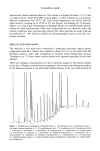
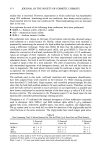
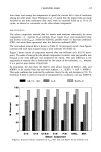
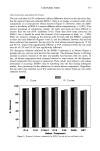
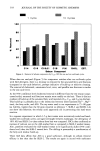
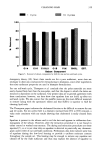
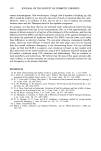
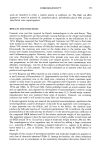
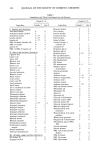
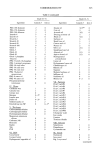
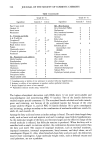
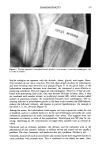
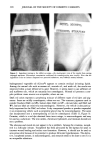
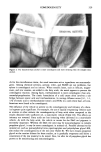
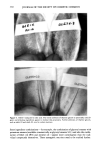
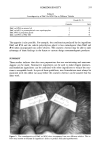
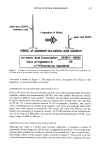
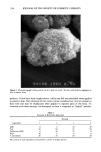
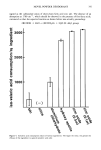
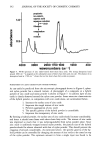
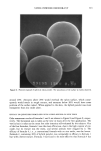
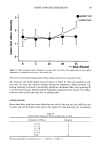
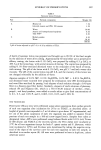
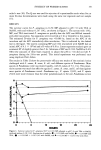
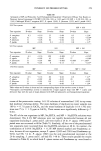
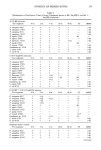
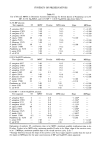
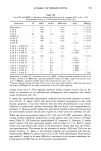
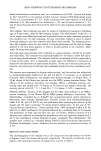
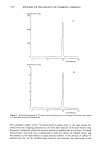
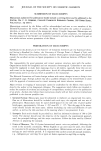
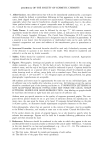
NOVEL POWDER DEODORANT 337 peak area 233612 (arbitrary unit) -i-Ingredient A (80mg) ak area 96281 HSGC of standard iso-valeric acid solution Iso-valeric Acid Consumption_233612--96281 Value of Ingredient A 80 =1717(counts/mõ ingredient) Figure 1. Calculation of isovaleric acid consumption values. Upon addition of a quenching ingredient, the GC peak area of the standard isovaleric acid solution decreases. tion value is shown in Figure 1. The larger the value, the greater the efficacy of the ingredient to quench isovaleric acid odor. CONFIRMATION OF THE QUENCHING MECHANISM BY FT-IR Fatty acids in the free form and metallic salt form are readily distinguishable by Fourier transform infrared spectrophotometry (FT-IR), since they exhibit characteristic absorp- tion bands at different wave numbers. Therefore, the speculated quenching mechanism in which volatile short-chain fatty acids are converted into metallic salts was confirmed by FT-IR. To a mixed aqueous solution (0.1%) of propionic, isovaleric, and caproic acids, resembling that of a sweaty body malodor, zinc oxide was gradually added until excess zinc oxide started to precipitate. The excess zinc oxide was filtered, and the tiltrate was evaporated to dryness in vacuum. An FT-IR spectrum of the resulting res- idue in the form of a KBr tablet was acquired using a Biorad Qualimatic FT-IR, scan- ning a range of 4000 to 400 cm-• FORMATION OF A ZINC OXIDE/NYLON HYBRID POWDER Although zinc oxide is a widely used cosmetic ingredient, it possesses a couple of unfavorable shortcomings that derive from its aggregating property. Even though some commercially available zinc oxides are claimed to be as small as 0.1 •m in particle size, they readily cohere to form massive lumps, as shown in Figure 2. This is said to be due to the electrostatic behavior of zinc oxide, and can thus easily lead to clogging of aerosol

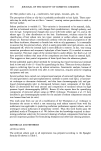
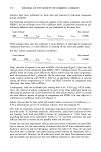
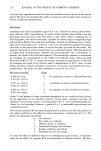
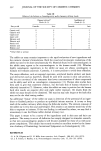
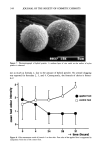
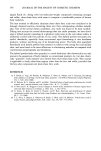
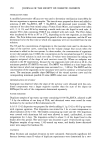
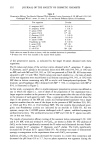
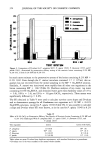
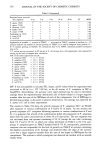
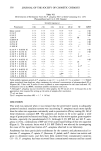
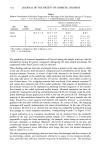
338 JOURNAL OF THE SOCIETY OF COSMETIC CHEMISTS Figure 2. Photomicrograph of fine particle size (0.1 Ixm) zinc oxide. The zinc oxide particles aggregate to form a massive lump. products. It also has a fairly rough texture, which may feel uncomfortable when applied to sensitive skin. The whiteness of zinc oxide is often considered too vivid in contrast to skin color and may be emphasized when applied to exposed parts of the body. To overcome such shortcomings, we attempted to form a composite or "hybrid" powder, Table I Formulae of Body Odor Quenchers Formula Ingredients 1 2 3 4 AHC 0 0 3O 3O Talc 50 50 35 50 ZnO/nylon (20%) 0 30 15 0 ZnO 30 0 0 0 S. microbeads 20 20 20 20 The content of each ingredient in the powder is shown in weight percent.
Purchased for the exclusive use of nofirst nolast (unknown)
From: SCC Media Library & Resource Center (library.scconline.org)