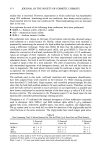
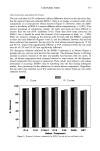
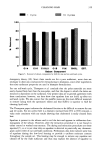
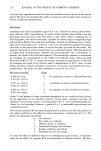
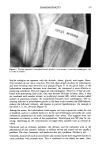
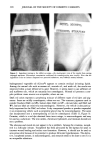
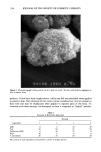
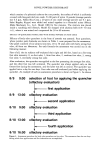
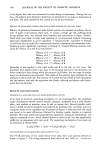
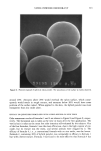
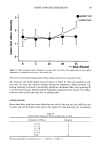
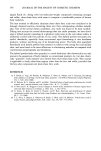
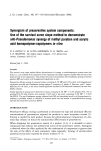
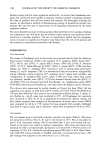
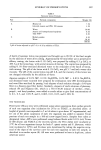
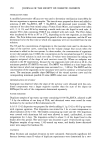
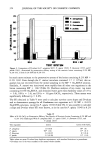
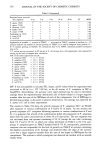
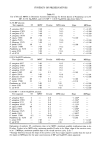
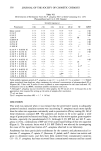
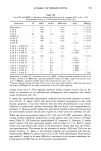
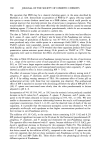
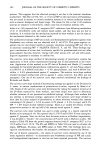
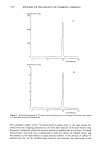
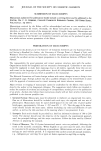
NOVEL POWDER DEODORANT 343 Figure 6. Photomicrograph of spherical nylon powder. The smoothness of the surface is readily observed. around 20%. Amounts above 20% would overload the nylon surface, which conse- quently would result in rough texture, and amounts below 20% would leave some portions of the surface naked. When applied to the skin, the hybrid powder was more transparent than zinc oxide alone. EFFICACY OF QUENCHERS FORMULATED WITH HYBRID POWDER ON FOOT ODOR Odor assessment results of formulae 1 and 4 are shown in Figure 8 and Figure 9, respec- tively. The horizontal axis is taken as the time in hours after the first application. The vertical axis is taken as the mean foot odor intensity self-evaluated by the subjects. Out of the four formulae, formula 1 was the most efficacious, due to the high content of zinc oxide, but its texture was the worst, and several aerosols were clogged by it. The efficacy of formula 4, i.e., a conventional formula with no zinc oxide, was the lowest. Formula 2, containing 30% of hybrid powder, was comparable in efficacy to formula 1 but with a better texture. Formula 3 was found to be more effective than formula 4 but

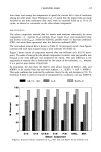
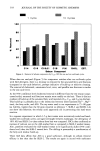
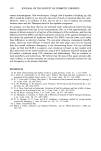
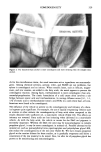
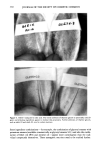
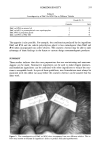
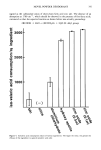
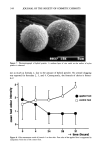
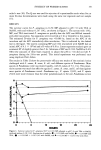
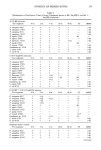
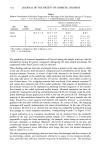
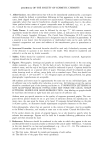
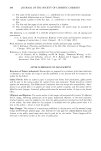
344 JOURNAL OF THE SOCIETY OF COSMETIC CHEMISTS 8937 15K sum Figure 7. Photomicrograph of hybrid powder. A uniform layer of zinc oxide on the surface of nylon powder is observed. not as much as formula 2, due to the amount of hybrid powder. No aerosol clogging was reported for formulae 2, 3, and 4. Consequently, the formula of choice is formu- la 2. 3' I m • applied foot control foot ' / i • I , 0 4 24 28 31 ) time (hours) Figure 8. Odor assessment result of formula 1 on foot odor. Foot odor of the applied foot is suppressed in comparison with that of the control foot.
Purchased for the exclusive use of nofirst nolast (unknown)
From: SCC Media Library & Resource Center (library.scconline.org)