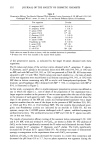
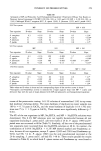
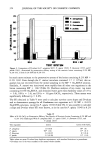
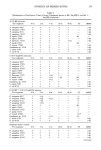
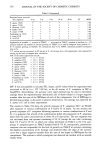
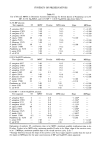
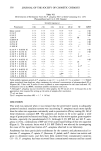
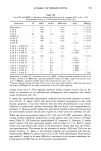
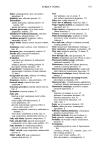
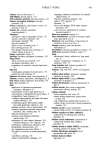
SYNERGY OF PRESERVATIVES 363 curve slope method may be used to determine synergy when STs are known for the test organisms in systems containing combined preservative system components and in which the inoculum level is known. Isobolograms (5,7,39) are not needed when using this method. We propose that the synergy with acrylic acid homopolymer/copolymers and MP is due, at least in part, to the chelation of divalent metal ions by the homopolymer/co- polymers and that it is similar to the potentiation of preservative action by EDTA. No synergy was demonstrated in systems challenged with E. coli, S. aureus, and B. cereus, which suggests that the synergy was specific for the pseudomonads. In general, P. cepacia was inactivated more slowly than the fluorescent pseudomonads in test systems containing acrylic acid homopolymer/copolymers and MP. It is possible that the pri- mary benefit from the polyacrylic acid/acrylic acid copolymer synergy with MP may be obtained in systems in which EDTA cannot be used or in systems with low ionic strength. Experiments were not performed to determine whether acrylic acid homo- polymer/copolymers exert a synergistic effect on MP/EDTA systems, or whether EDTA exerts a potentiating effect on MP/acrylic acid homopolymer/copolymers. Additional experiments are required to define the range of synergy of MP and other paraben esters with these homopolymer/copolymers and to characterize the mechanism of this synergy with certainty. ACKNOWLEDGMENTS We thank Mr. Mark Entrup, of Hill Top Biolabs, Inc., for supplying the culture of E. coli. We thank Mr. Gary Kramzar, of Nipa Laboratories, Inc., for supplying phenoxy- ethanol and Nipastat. REFERENCES (1) D. S. Orth, Principles of preservative efficacy testing. Cosmet. Toilet,, 96(3), 43-52 (1981). (2) J. J. Kabara, "Food-Grade Chemicals in a Systems Approach to Cosmetic Preservation," in Cosmetic and Drug Preservation. Principles and Practice, J. J. Kabara, Ed. (Marcel Dekker, Inc., New York, 1984), pp. 339-356. (3) D. S. Orth, C. M. Lutes, S. R. Milsrein, and J. J. Allinger, Determination of shampoo preservative stability and apparent activation energies by the linear regression method of preservative efficacy testing,J. Soc. Cosmet. Chem., 38, 307-319 (1987). (4) E. E. Boehm, Synergism in vitro of certain antimicrobial agents, J. Soc. Cosmet. Chem., 19, 531- 549 (1968). (5) R. M. E. Richards and R. J. McBride, Phenylethanol enhancement of preservatives used in oph- thalmic preparations, J. Pharm. Pharmac., 23 (Suppl.), 141S- 146S (1976). (6) P. G. Hugbo, Additivity and synergism in vitro as displayed by mixtures of some commonly em- ployed antibacterial preservatives, Cosmet. Toilet., 92(3), 52,55 - 56 (1977). (7) S. P. Denyet, W. B. Hugo, and V. D. Harding, Synergy in preservative combinations, Internat. J. Pharm., 25, 245-253 (1985). (8) D. S. Orth, Linear regression method for rapid determination of cosmetic preservative efficacy, J. Soc. Cosmet. Chem., 30, 321-332 (1979). (9) Betz Laboratories, Analytical Procedure #130, "Hardness Titration Method" (1978). (10) C. C. Garber and R. N. Carey, "Laboratory Statistics," in Clinical Chemistry--Theory, Analysis, and Correlation, L. A. Kaplan and A. J. Pesce, Eds. (C. V. Mosby Company, St. Louis, 1984), pp. 287-300.

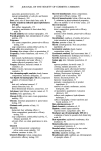
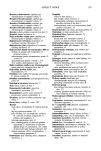
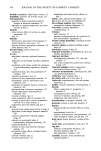
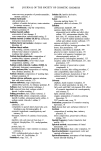
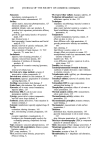
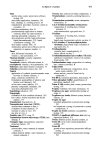
364 JOURNAL OF THE SOCIETY OF COSMETIC CHEMISTS (11) (12) (27) (28) (29) (30) (31) (32) (33) (34) J. E. Freund, Modern Elementary Statistics, 4th ed. (Prentice-Hall, Inc., Englewood Cliffs, N.J., 1973), pp. 329-331. E. M. Scott and S. P. Gorman, "Chemical Disinfectants, Antiseptics and Preservatives," in Pharma- ceutical Microbiology, 4th ed., W. B. Hugo and A.D. Russell, Eds. (Blackwell Scientific Publica- tions, Oxford, England, 1988), pp. 226-252. (13) U. Blachman and L. S. Elowitz-Jeffes, Microbiology of cosmetics--Regulatory and quality-assurance aspects, Cosmet. Technol., 4(1), 24-26, 28-30, 32, 34, 36, 37, 54 (1982). (14) R. Bonorden, The nature and extent of bacteria found in some raw materials used in the cosmetic industry, ½TFA Cosmet. J., 5(3), 23-28 (1973). (15) L. A. Carson, M. S. Favero, W. W. Bond, and N.J. Petersen, Morphological, biochemical, and growth characteristics of Pseudomonas cepacia from distilled water, Appl, Microbiol., 25, 476-483 (1973). (16) L. A. Wilson, W. Kuehne, S. W. Hall, and D. G. Ahearn, Microbial contamination in ocular cosmetics, Am. J. Ophthalmol., 71, 1298-1302 (1971). (17) L. A. Wilson and D. G. Ahearn, Pseudomonas-induced corneal ulcers associated with contaminated eye mascaras, Am. J. Ophthalmol,, 84, 112-119 (1977). (18) D. E. Woods, "Pathogenesis of Acute and Chronic Pseudomonas aeruginosa Infections," in Basic Re- search and ClinicalAspects ofPseudomonas aeruginosa, G. Doring, I. A. Holder, and K. Botzenhart, Eds. (Karger, Basel, Switzerland, 1987), Vol. 39, pp. 160-171. (19) G. Doring, M. Maier, E. Muller, Z. Bibi, B. Tummler, and A. Kharazmi, "Virulence Factors of Pseudomonas aeruginosa," in Basic Research and Clinical Aspects of Pseudomonas aeruginosa, G. Doring, I. A. Holder, and K. Botzenhart, Eds. (Karger, Basel, Switzerland, 1987), Vol. 39, pp. 136-148. (20) D. J. Wozniak, D.C. Cram, C. J. Daniels, and D. R. Galloway, Nucleotide sequence and charac- terization of toxR: A gene involved in exotoxin A regulation in Pseudomonas aeruginosa, Nucleic Acids Research, 15, 2123-2135 (1987). (21) A. R. Ogaard, B. P. Berdal, and K. B0vre, Variation of endopeptidase activities in cultures of Pseu- domonas aeruginosa strains. Acta Path. Microbiol. Immunol. Scand., Sect. B., 92, 31-37 (1984). (22) S.S. Pedersen, F. Espersen, N. H0iby, and G. H. Shand, Purification, characterization, and immu- nological cross-reactivity of alginates produced by mucoid Pseudomonas aeruginosa from patients with cystic fibrosis, J. Clin, Microbiol., 27, 691-699 (1989). (23) T. I. Nicas and B. H. Iglewski, "Contribution of Exoenzyme S to the Virulence of Pseudomonas aeruginosa," in Pseudomonas aeruginosa, New Therapeutic Approaches From Basic Research, D. P. Speert and R. E. W. Hancock, Eds. (Karger, Basel, Switzerland, 1985), Vol. 36, pp. 40-48. (24) R. E. Buchanan and N. E. Gibbons (Eds.), Bergey's Manual of Determinative Bacteriology, 8th ed. (The Williams & Wilkins Company, Baltimore, 1975), pp. 217-230. (25) C. Hagedorn, W. D. Gould, T. R. Bardinelli, and D. R. Gustavson, A selective medium for enu- meration and recovery of Pseudomonas cepacia biotypes from soil, Appl. Environ. Microbiol., 53, 2265-2268 (1987). (26) N.J. Palleroni, "General Properties and Taxonomy of the Genus Pseudomonas," in Genetics and Bio- chemistry of Pseudomonas, P. H. Clarke and M. H. Richmond, Eds. (John Wiley & Sons, New York, 1975), pp. 1-36. B. A. Ramsay, J. A. Ramsay, and D. G. Cooper, Production of poly-13-hydroxyalkanoic acid by Pseudomonas cepacia, Appl, Environ. Microbial., 55, 584-589 (1989). M. K. London, D. E. Woods, and D.C. Straus, Production of lipase by clinical isolates of Pseudo- monas cepacia, J. Clin. Microbial., 26, 979-984 (1988). L. Marshall, K. Parris, J. Rebek, Jr., S. V. Luis, and M. I. Burguete, A new class of chelating agents,J. Am, ½hem. Soc., 110, 5192-5193 (1988). E. Freese, C. W. Sheu, and E. Galliers, Functions of lipophilic acids as antimicrobial food additives, Nature, 241, 321-325 (1973). J. J. Kabara, GRAS antimicrobial agents for cosmetic products, J. Soc. Cosmet. Chem., 31, 1-10 (1980). J. R. Hart, "Chelating Agents as Preservative Potentiators," in Cosmetic and Drug Preservation. Prin- ciples and Practice, J. J. Kabara, Ed. (Marcel Dekker, Inc., New York, 1984), pp. 323-337. R. M. E. Richards and R. J. McBride, The preservation of ophthalmic solutions with antibacterial combinations,J. Pharm. Pharmac., 24, 145-148 (1972). P. A. Lambert, "Resistance to Non-Antibiotic Antimicrobial Agents," in Pharmaceutical Microbiology, 4th ed., W. B. Hugo and A.D. Russell, Eds. (Blackwell Scientific Publications, Oxford, England, 1988), pp. 288-297.
Purchased for the exclusive use of nofirst nolast (unknown)
From: SCC Media Library & Resource Center (library.scconline.org)