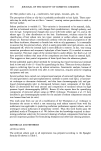
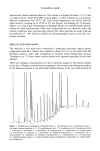
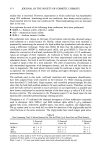
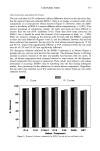
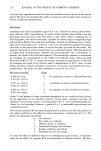
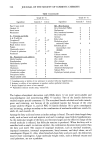
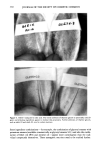
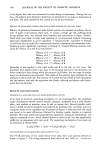
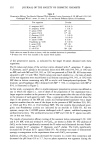
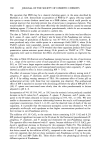
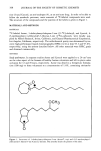
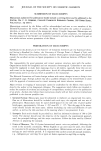
368 JOURNAL OF THE SOCIETY OF COSMETIC CHEMISTS tion (3) and Cyoctol, an anti-androgen (4), as an anti-acne drug. In order to be able to follow the metabolic processes, tracer amounts of •4C-labeled compounds were used. The structure of the compounds and the position of the labels is given in Figure 1. MATERIALS AND METHODS MATERIALS •4C-labeled Azone, 1-dodecylazacycloheptan-2-one ([1-•4C]-dodecyl), and Cyoctol, 6- (5-methoxyphept- 1-yl)bicyclo[3.3.0]octan-3-one ([•4C]-carbonyl), were kindly sup- plied by Nelson Research, Irvine, California, and Chantal Pharmaceutical Corporation, Los Angeles, California, respectively. The radiochemical purity was determined by iso- cratic high-performance liquid chromatography (HPLC) to be at least 95.3 and 97.0%, respectively, using the system described below. All other materials were HPLC grade and obtained commercially. METHODS Study performance. In separate studies Azone and Cyoctol were applied to a 24-cm 2 area on the volar aspect of the forearm of healthy human volunteers and left in place under occlusion for 12 and 8 hours, respectively. Azone was dosed in a therapeutic formula- tion (100 mg) to three volunteers at a concentration of 1.6%, containing tritium-la- OCH 3 0 Figure 1. Structures of 1-dodecylazacycloheptan-2-one (Azone ©, top) and 6-(5-methoxyhept-1- yl)bicyclo[3.3.0]octan-3-one (Cyoctol, bottom). The asterisks denote the position of the label.

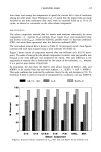
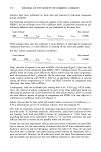
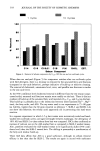
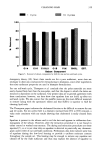
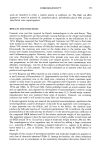
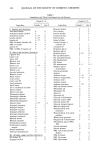
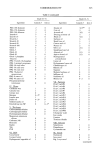
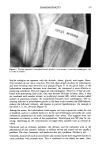
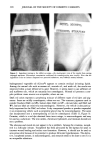
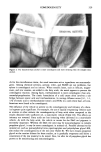
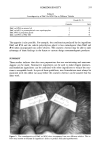
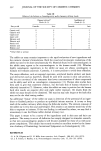
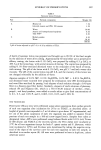
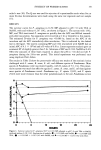
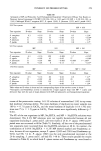
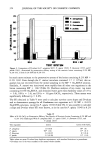
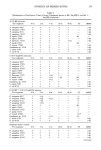
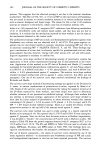
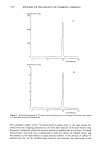
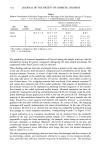
SKIN STRIPPING TO DETERMINE METABOLISM 369 beled triamcinolone acetonide as well, at a concentration of 0.05%. Cyoctol was dosed to four volunteers in an aqueous alcohol solution (ethanol (96%)/bidistilled water 75/25) at a concentration of 1.5%. Study conditions have been reported in full detail elsewhere (5,6). Skin samples were obtained at 1, 20, and 44 hours (Azone) or 1, 23, and 45 hours (Cyoctol) after removal of the dose by the skin stripping method described below. Skin stripping. Skin stripping was done by means of commercial translucent cellophane tape of 9-mm width, made by 3M Company (Leiden, The Netherlands). Strips of ca. 6 cm in length were affixed and removed sequentially from the same transverse portion of the treatment site. At each stripping, the tape was firmly rubbed in place to achieve thorough adherence and then removed after about three seconds. The stripping proce- dure was complete when the area started to become glistening and the tape no longer adhered to the skin when applied, or when it became painful to the volunteer. Maxi- mally 28 strips were applied. All strips from one procedure were combined in a glass container, and 60 ml of meth- anol was added. The container was vigorously shaken for 16 hours to allow full extrac- tion of drug-related material. The chemical stability in methanol of both compounds is at least several years. As it is impossible to spike tapes, the efficiency of extraction of radioactive material from the tapes cannot be given. At the end of the extraction period, however, the sticky layer of the tape had completely dissolved in the scintillation cock- tail. The extracts were evaporated to dryness under vacuum, and the residue was redissolved in methanol/phosphate buffer 0.01 M, pH 6.8 (85/15 v/v) (Azone), or in methanol (Cyoctol). After redissolution, the samples were filtered through a 0.45-•m filter. A 50-•1 aliquot of the tiltrate was injected into the HPLC system described below. The efficacy of the analytical procedure was checked. When a methanol solution con- taining tapes was spiked with •4C-Azone or •4C-Cyoctol and assayed identically, the recovery proved to be 94.7 +-- 1.2 and 96.3 --- 2.4 (mean ___ S.D.), respectively. Metabolic profiling. Extracts of the dosages and the tapes were analyzed in an HPLC- system consisting of two Waters M510 HPLC-pumps (Millipore, Etten-Leur, The Netherlands), controlled by an Adalab © data acquisition/control system (Interactive Microware, State College, Pennsylvania). Isocratic elution with methanol/phosphate buffer 0.01 M, pH 6.8 (85/15 v/v) was performed when analyzing the extracts of the dosage and the tapes containing •4C-Azone-derived radioactivity. In the case of •4C- Cyoctol-derived radioactivity, a linear gradient from 100% phosphate buffer 0.01 M, pH 6.8, to 100% methanol in 20 minutes followed by a methanol flush of 10 minutes was performed. In both cases the flow rate was 1.0 ml/min. Effluent fractions of 0.5 minutes were collected in polyethylene scintillation vials and vigorously shaken with 3 ml of the scintillation cocktail RiaLuma (Lumac, Landgraaf, The Netherlands). The samples were counted on a Packard Minaxi B4450 Liquid Scintillation Spectrometer (Packard Technologies, Irvine, California) for five minutes or a statistical accuracy of O.5%. RESULTS AND DISCUSSION The chromatograms of the radioactivity in the dosages and the tape extracts are shown in Figures 2 and 3 for Azone and Cyoctol, respectively. The relative contribution of the peaks to the total eluted amount of radioactivity is given in Table I.
Purchased for the exclusive use of nofirst nolast (unknown)
From: SCC Media Library & Resource Center (library.scconline.org)