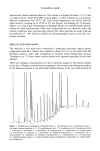
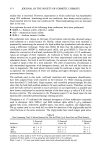
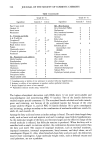
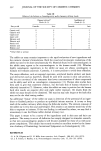
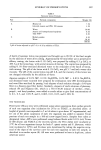
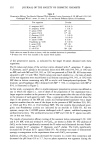
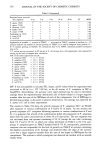
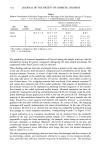
314 JOURNAL OF THE SOCIETY OF COSMETIC CHEMISTS residue that is recovered. However, experiments in which soiled hair was handwashed using 10% surfactant, simulating actual use conditions, have shown results similar to those reported here for these test conditions (9). These handwashing tests are discussed later in the text. Five replicates for each of the following three surfactants have been performed: ß SODS- 1-- Sodium octeth- 1/deceth- 1 sulfate ß ALS--Ammonium lauryl sulfate ß SLES-2--Sodium laureth-2 sulfate The surfactants were chosen on the basis of total sebum removal data obtained using a wool substrate as a model keratin (9). Briefly, sebum removal from wool swatches is measured by monitoring the removal of a lipid-soluble dye (coadsorbed with the sebum) using a reflectance technique. These data (Table II) show that the surfactants may be considered as poor (SODS-1), medium-good (ALS), and good (SLES-2). Data are also shown for a second set of soil/wash conditions (B) (0.03 g soil/g hair 0.1% surfactant) values are averages of three replicates. As evidenced in Table II, values for the total sebum removed are in good agreement for the three experimental conditions (and two substrates) shown. For both A and B conditions, the amount of soil removed from hair is larger or equal to that for a wool substrate. The order of superiority of surfactants is also maintained (agreement with detergency theory), and the wool and hair values are close in magnitude. The total sebum removed under B conditions is larger than for A: as expected, the combination of lower soil loading and higher detergent concentration promotes better cleaning. The methods used in this work, soil/wash conditions and component identification, have been adapted from work reported in the literature (7). Three cleaning processes were described (7): bulk bath, finger squeeze, and controlled pressure/sponge the data show that the bulk bath method produces the most uniform results. Therefore, we have used the bulk method to provide as much precision in our experiments as possible and have drawn conclusions by statistical analysis of the data using a p value of 0.05 as the decision criterion. The conclusions in the Thompson paper (7) are based upon the less reproducible controlled pressure/sponge cleaning process. Thompson et al. (7) evaluated the shampoo detergency of three surfactants commonly used in shampoos: ALS, SLES-2, and AOS (sodium alpha olefin C14-C16 sulfonate) against fatty acids, cholesterol, paraffin waxes, wax esters, squalene, and triglycerides. The gc system used in our work did not allow for detection of the triglycerides and all other fractions at the same resolution. The triglycerides have much longer peak reten- Table II Data Comparing Total % Sebum Removed for One Soil/Wash Cycle From Hair and Wool Surfaces % Removed % Removed % Removed Surfactant (Cond. A) (Cond. B) (Wool) SODS-1 40.7 + 15 56.7 + 25 35 -+ 4 ALS 72.4 -+ 9 97.3 + 2 79 +- 3 SLES-2 93.7 + 3 97.6 -+ 2 88 -+ 2 Condition A: Hair soiled at 0.04-0.055 g soil/g hair and washed with 0.01% surfactant. Condition B: Hair soiled at 0.03 g soil/g hair and washed with 0.1% surfactant. Wool: 3-inch X 4.5-inch wool challis swatch soiled with sebum/lipid-soluble dye soil.

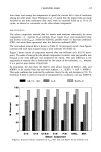
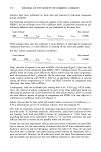
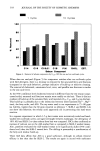
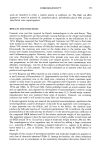
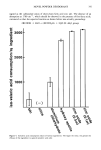
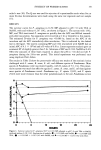
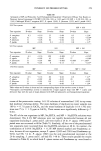
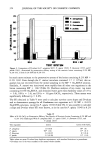
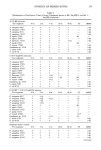
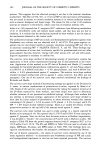
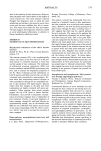
CLEANING HAIR 315 tion times, and raising the temperature to speed the elution led to loss of resolution among the other peaks. Since Thompson et al. (7) stated that the triglycerides are easily removed by the three surfactants they used, with no increased build-up at 10 or 20 cycles, we elected to concentrate on the other sebum components. ONE-CYCLE DATA The sebum component removal data for tresses were analyzed statistically for seven components, i.e., myristic (C14), palmitic (C16), stearic (C18), and unsaturated (oleic and linoleic) acids (C18:21), cholesterol (CHOL), paraffin waxes (11 fractions combined) (PW), and esters (from spermaceti wax five fractions combined) (EST). The total sebum removal data is shown in Table II. As previously stated, these figures correlate well with data acquired using a wool substrate (9) (Table II). Figure 2 shows results of component removal after one soil/wash cycle (0.01% deter- gent). The order of removal for the sebum components is similar: ester and paraffin wax removal is the most difficult, and cholesterol the easiest. The only difference is the magnitude of removal that is determined by the nature of the surfactant, i.e., whether it is a good or poor cleaner of lipid soils. As mentioned, the data show the relative total sebum removal of SLES-2, ALS, and SODS-1 to be similar from hair and wool surfaces, i.e., SLES-2 ) ALS ) SODS-1. This order confirms that predicted by surfactant theory for oily soil detergency (10). To determine if there is selective removal of components by a surfactant, one way ANOVA • C8,10-1EO • ALS • SLES-2 'o o lOO 8o 6o 4o 2o C14 C16 C18:21 C18 P.Wo CHOL. EST. Sebum Component Figure 2. Removal of sebum components by Cs,•o-iEO, ALS, and SLES-2 for one soil/wash cycle.
Purchased for the exclusive use of nofirst nolast (unknown)
From: SCC Media Library & Resource Center (library.scconline.org)