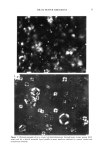
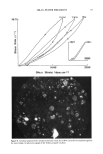
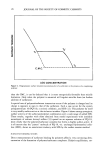
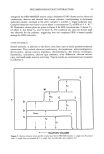
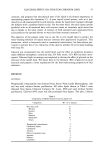
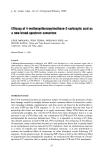
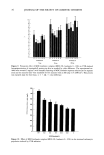
OIL-IN-WATER EMULSIONS 11 Figure 5. Photomicrographs of (a) a cetearyl alcohol/cetrimonium bromide/water ternary system (93% water) and (b) a diluted semisolid liquid paraffin-in-water emulsion stabilised by cetearyl alcohol and cetrimonium bromide.

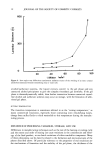
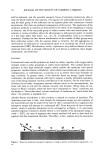
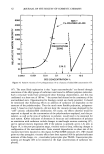
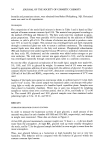
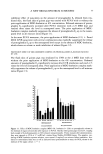
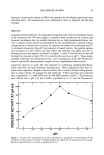
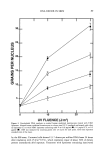
12 JOURNAL OF THE SOCIETY OF COSMETIC CHEMISTS 6OO 30O 0 I I I I I 20 40 60 80 100 OloWater (w/w) Figure 6. Low angle x-ray diffraction (synchrorron radiation source) of the swelling of an ionic cetearyl alcohol/cetrimonium bromide emulsifying wax in water (20). alcohol/surfactant systems, the liquid crystals convert to the gel phase and any unreacted alcohol precipitates to give the complex viscoelastic gel networks. If the gel phase is thermodynamically stable, then further interaction between unreacted crystal- line alcohol and surfactant solution may occur on storage, with the formation of addi- tional gel phase. SETTING TEMPERATURE The transition temperature is sometimes referred to as the "setting temperature," as many commercial emulsions, especially those containing ionic emulsifying waxes, change from milky fluids to thick semisolids at this temperature during the manufac- turing process. INFLUENCE OF PROCESSING VARIABLES, STORAGE, AND USE Differences in manufacturing techniques such as the rate of the heating or cooling cycle and the extent and order of mixing can cause variations in the consistencies and rheol- ogy of the final product, as can batch variations of either emulsifier component. Many of these phenomena can be directly related to the formation and microstructures of the phases described above. Of particular relevance to the properties of real emulsions are the mechanisms of formation and the stability of the gel phase, the thickness of the
Purchased for the exclusive use of nofirst nolast (unknown)
From: SCC Media Library & Resource Center (library.scconline.org)