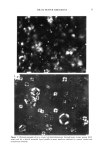
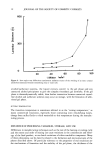
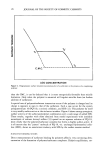
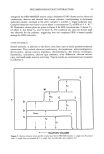
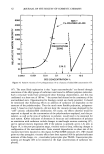
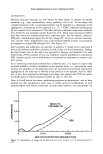
62 JOURNAL OF THE SOCIETY OF COSMETIC CHEMISTS sorbed 10% of its weight in water over the same duration, i.e., the incorporated glyc- erol absorbed its own weight as did the neat material. This finding is in agreement with the data reported by Rieger and Deem (12), who also found that water absorption by isolated stratum corneum treated with glycerol is merely additive to that by the humec- tant. In the present study, under conditions of low relative humidity, glycerol did not attract moisture into the model. Furthermore, glycerol did not retard water loss under conditions of low humidity. In solution or in cosmetic formulations, glycerol has been observed to soften, plasticize, and generally improve the condition of the skin. These effects have been attributed to the humectant property of the material. Our present findings suggest that humectancy is not the mechanism of action of glycerol on skin in dry climates. Instead, our results suggest that in dry ambient conditions glycerol maintains the liquid crystalline state of the lipid, thus preventing crystal formation. The results of the polarized light microscopy were unexpected, especially regarding the low-humidity conditions. In high humidity, the difference in the hydration of the control (net loss of water) and glycerol-containing samples (net gain of water) may explain the persistence of the liquid crystal phase in the model: water is necessary to form the lameliar structure. However, in the case of low-humidity conditions, the glycerol-containing samples maintained the liquid crystal state despite the fact that, as in the control samples, almost all the water had been lost. Glycerol therefore appears to enable the skin lipid to preserve its normal structure even when underhydrated. This is an important finding, since there is now evidence that the barrier to water loss in vivo depends on the structural organization of the lipids (13). This is an interesting result, additionally, because it posits a new, more plausible expla- nation for the skin-conditioning properties of glycerol. It has been assumed that glyc- erol improves the skin only through humectancy and, under certain conditions, by occlusion (8,14). Our results imply another function for glycerol--the preservation of the liquid crystalline state of intercellular lipid. The molecular basis of this action is not known and must be probed further. It is possible that the glycerol acts merely as an "impurity" in the skin lipid mixture, depressing the melting point of the lipids and thereby preventing solid crystal formation. Investigation on lameliar liquid crystals of lecithin with water and glycerol as solvents (15) showed the melting point of glycerol- based liquid crystals to be lower than those of water by approximately 30øC. Although the mechanism of action is not known, it is clear that glycerol does not evaporate and that it is substantive to skin. Published studies (16,17,18), as well as studies in this laboratory (unpublished observations) on in vivo skin conditioning with glycerol, show a cumulative conditioning effect. Glycerol is not the only material that has been shown to condition the skin without hydrating it. The effects of another nonhygroscopic skin softener, a modified triglyc- eride known as glyceridacid, were recently reviewed by Osborne (19). Studies with this material indicate that it may exert skin-softening effects via interaction with the stratum corneum lipids. Glyceridacid may behave similarly to glycerol in preserving a liquid crystalline phase in the skin lipid. Recently the skin-conditioning properties of the class of compounds known as the ot- hydroxyacids have been investigated (20,21,22). These compunds, which are not hu-

GLYCEROL EFFECT ON STRATUM CORNEUM LIPID 63 mectants, have been found to plasticize the stratum corneum even under conditions of low humdiity (30% RH) (21,22). It has been suggested that such materials act to break hydrogen bonds between keratin chains, rendering the stratum corneum more pliable (20). Although this mechanism may be correct, we propose that the ot-hydroxyacids may also act directly on the skin lipids to prevent the transition of liquid crystal to solid crystal state. Because glycerol is a small polar molecule, we suspect that it maintains fluidity of the lipid membrane through interaction with the polar headgroups of the bilayer rather than by penetrating the alkyl chains. On the other hand, the structure of the ot-hydroxyacids, particularly the longer-chain (C•o, C•2) species, may enable these compounds to penetrate the fatty acid chains of the bilayer, interrupting the close packing of these chains and thereby enhancing the fluidity of the membrane. Studies are planned to test this hypothesis using our model lipid system. Glycerol is also frequently added to biological samples prior to freezing, to prevent the disruption of membranes and denaturation of proteins. Probably glycerol interferes with the formation of large crystals (23). APPLICABILITY OF MODEL TO IN VIVO SKIN RESPONSES An important objective in this work is to establish the predictive nature of the behavior of the model skin lipid in response to cosmetic ingredients. Insofar as the present results show that glycerol helps to maintain the normal state of the intercellular lipid under extremes of relative humidity, our model is consistent with in viva studies of the effect of glycerol, where cracking, flaking, and roughness were reduced by the application of glycerol to the skin. Bissett and McBride (16) used an animal model (pig epidermis) as well as human skin to demonstrate that glycerol visibly improves dry skin in a dose-de- pendent manner and that this improvement is accompanied by an increase in skin levels of glycerol. The related liquid polyols, ethylene glycol, propylene glycol, and 1,3-pro- panediol evaporated rapidly from the skin surface and supplied no conditioning effects. Solutions of the crystalline polyols erythritol, xylitol, and sorbitol crystallized on the skin upon evaporation and provided negligible conditioning benefits. Glycerol, being a nonvolatile liquid, is retained in the skin for long periods. The conditioning action of glycerol depends on the ability of this compound to penetrate the skin. These authors (16) supposed that the mechanism of action of glycerol, once in the skin, was to retain water, preventing the physical changes that accompany dehydration. Our data suggest an alternative mechanism. Batt and Fairhurst (17) also measured in viva skin conditioning by glycerol in humans. As in the study cited above, glycerol was found to penetrate and accumulate in the stratum corneum, where its presence showed resistance to soap-and-water washing. Glycerol gave long-term benefits, such as an improved visible appearance and reduced surface roughness. Highley et al. (9) have shown that serial treatment of the hands with 25% glycerol solution following handwashing with soap prevents induction of skin dryness. This effect is observed even after a final handwash not followed by glycerol application i.e., glycerol does not simply mask skin dryness. We confirmed these results in our labora- tory and demonstrated that glycerol specifically prevents soap-induced cracking, rather than erythema (unpublished observations).
Purchased for the exclusive use of nofirst nolast (unknown)
From: SCC Media Library & Resource Center (library.scconline.org)