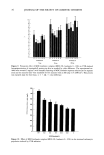
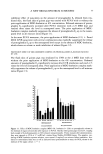
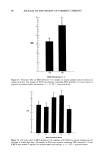
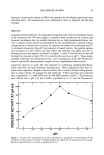
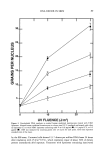
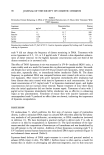
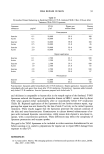
A NEW BROAD-SPECTRUM SUNSCREEN 83 the degree in each combination does not necessarily parallel the corresponding SPF values seen for the erythematous reaction. However, a precise comparison with the SPF for erythema should be made for pigmentation. Of considerable interest is the combination of this ingredient with ordinary UVB sunscreens. There is an optimal combination of MDC-boehmite complex and Parsol MCX for preventing UVB or sun-induced erythema, with a 6/2 ratio exhibiting the highest value among a number of formulations (8%). It seems likely that this phenom- enon results from the marked suppression of so-called photoaugmentation (15,16) or the localization of each sunscreen in different emulsion phases, which may result in improved efficacy. The most important question about a sunscreen capable of absorbing UVA is to what extent it can prevent sun-induced immediate darkening or delayed tanning, because UVB sunscreens alone are not sufficient to eliminate these skin reactions. For protection against delayed tanning, UVB sunscreens generally exhibit only a slight effect, such as an SPF of 1.6, whereas with the addition of MDC-boehmite complex, an SPF of more than 2 is attained. The low efficacy for delayed tanning as compared to that for ery- thema is in accordance with that obtained by other UVA sunscreens (17) and may be relevant to the photobiological properties of typical mongoloid skin types, which ex- hibit a lower MMD than MED, easily inducing delayed tanning without inflammation (18). For the prevention of immediate darkening, it induced an SPF of about 2, in contrast to an SPF of about 1 seen with the use of UVB sunscreen alone. The observed low efficacy of protection against immediate tanning can be accounted for by the fact that visible light also causes immediate darkening (19,20). These findings, taken to- gether, demonstrate that MDC is a useful tool for preventing several adverse effects of exposure to sunlight. REFERENCES (1) H. van Weelden, F. R. de Gruijl, S.C. J. van der Putte, J. Toonstra, and J. C. van der Leun, The carcinogenic risks of modern tanning equipment: Is UV-A safer than UV-B?, Arch. Dermatol. Res., 280, 300-307 (1988). (2) L. H. Kligman, F. J. Akin, and A.M. Kligman, The contributions of UVA and UVB to connective tissue damage in hairless mice. J. Invest. Dermatol., 84, 272-276 (1985). (3) I. Willis, J. M. Menter, and H. J. Whyte, The rapid induction of cancers in the hairless mouse utilizing the principle of photoaugmentation, J. Invest. Dermatol., 76, 404-408 (1981). (4) M. Kumakiri, K. Hashimoto, and I. Willis, Biologic changes due to long-wave ultraviolet irradiation on human skin: Ultrastructural study, J. Invest. Dermatol., 69, 392-400 (1977). (5) K. Hori and N. Takaishi, A convenient synthesis of 3-phenacylidenephthalides, Bull. Chem. Soc. Jpn., 61, 1791-1792 (1988). (6) G. Imokawa and T. Tejima, A possible role of prostaglandins in PUVA-induced inflammation: Im- plication by organ cultured skin, J. Invest. Dermatol., 92, 296-300 (1989). (7) B. M. Jaffe, H. R. Beharman, and C. W. Parkewr, Radioimmunoassay measurement of prosta- glandins E, A and F in human plasma, J. Clin. Invest., 52, 398-405 (1973). (8) G. Imokawa and M. Kawai, Differential hypermelanosis induced by allergic contact dermatitis, J. Invest. Dermatol., 89, 540-546 (1987). (9) B. A. Gilchrest, N. A. Soter, J. S. Stoff, and M. C. Mihm, The human sunburn reaction: Histologic and biochemical studies, J. Am. Acad. Dermatol., 5, 411-422 (1981). (10) D. S. Snyder, Effect of topical indomethacin on UVR-induced redness and prostaglandin E levels in sunburned guinea pig skin, Prostaglandin, 11, 631-643 (1976). (11) A. K. Black, M. W. Greaves, C. N. Hensby, and N. A. Plummet, Increased prostaglandin E 2 and

84 JOURNAL OF THE SOCIETY OF COSMETIC CHEMISTS F2• in human skin at 6 and 24 hours after ultraviolet B irradiation (290-320 nm), Br. J. Clin. Pharmacol., 5, 431-436, (1978). (12) A. K. Black, N. Fincham, M. W. Greaves, and C. N. Hensby, Time course changes in levels of arachidonic acid and prostaglandins D2, E 2 and F2• in human skin following ultraviolet B irradiation, Br. J. Clin. Pharmacol., 10, 453-457 (1980). (13) J. J. Hawk, A. K. Black, K. F. Jaenicke, R. M. Barr, N. A. Soter, A. I. Mallett, B. A. Gilchrest, C. N. Hensby, J. A. Parrish, and M. W. Greaves, Increased concentrations of arachidonic acid, prostaglandins E2, D 2 and 6-oxo-F• and histamine in human skin following UVA irradiation, J. Invest. Dermatol., 80, 496-499 (1983). (14) G. Imokawa, M. Kawai, Y. Mishima, and I. Motegi, Differential analysis of experimental hypermel- anosis induced by UVB, PUVA and allergic contact dermatitis using a brownish guinea pig model, Arch. Dermatol. Res., 278, 352-362 (1986). (15) B. S. Paul and J. A. Parrish, The interaction of UVA and UVB in the production of threshold erythema, J. Invest. Dermatol., 78, 371-374 (1982). (16) H. Spiegel, G. Plewig, C. Hofmann, and O. Braun Falco, Photoaugmentation, Arch. Dermatol. Res., 261, 189-200 (1978). (17) M. Fukuda, M. Naganuma, and K. Nakajima, Laboratory studies on UVA protection with Parsol A, Nishinihon Hifu, 49, 88-94 (1987). (18) M. A. Pathak and D. L. Fanselow, Photobiology of melanin pigmentation: Dose-response of skin to sunlight and its content,J. Am. Acad. Dermatol., 9, 724-733 (1983). (19) M. A. Pathak, R. C. Riley, T. B. Fitzpatrick, and W. L. Curwen, Melanin formation in human skin induced by long-wave ultraviolet and visible light, Nature, 193, 149-150 (1962). (20) K. H. Kaidbey and A.M. Kligman, The acute effects of long-wave ultraviolet radiation on human skin, J. Invest. Dermatol., 72, 253-256 (1979).
Purchased for the exclusive use of nofirst nolast (unknown)
From: SCC Media Library & Resource Center (library.scconline.org)