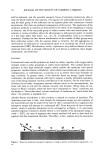
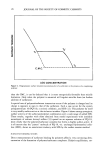
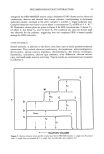
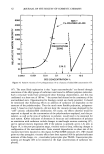
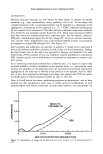
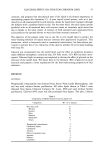
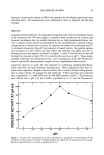
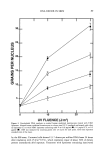
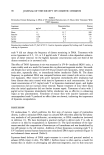
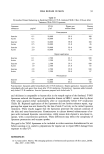
52 JOURNAL OF THE SOCIETY OF COSMETIC CHEMISTS which then becomes highly permeable to water loss (4). Replacement of linoleic acid, either systemically or topically, restores the natural barrier function of the skin (4). The rapid response of the skin to topical replacement suggests a structural, rather than a precursor, role for linoleic acid. The structural role of lipids in the stratum corneum is a topic of considerable recent investigation. Elias (5) proposed a model wherein these lipids form multiple layers alternating with water. The model is based on phosphatidyl ethanolamine and ceram- ides as the principal components of the lipid layers (6). This proposal of a multilayer structure is supported by the work of Friberg and Osborne (1), who modified Elias' model and constructed a physical model of the stratum corneum lipids. Friberg found that the crystalline layered structure of ceramides does not accept the remaining lipids instead this is achieved by the lipid bilayers formed by free fatty acids when they are adjusted to the pH of the skin (pH 4.5-6). In this pH range the fatty acids are partially converted to the corresponding soaps. It is this acid/soap combination that forms a lameliar liquid crystal with water (see Figure 1). The balance between the liquid crys- talline and solid crystal phases is determined by the degree of fatty acid unsaturation, the amount of water, and probably by other as yet undiscovered factors. The remaining neutral lipid components of the stratum corneum (see Table I) are incorporated into this matrix. The validity of the model is supported by the similarity between the low-angle x-ray diffraction patterns of isolated human stratum corneum and the model stratum corneum lipids (1). Friberg has used the model system to explore the water barrier function of stratum ''•' - ""' • "" "'• "' "" '"'"' "-' I Water Layer .......... Polar .... HydtocarborChalno }. .......... Methyl Oroupg ........ Water Layer Figure 1. A liquid crystalline lipid bilayer structure (26).

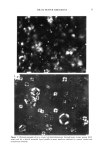
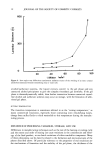
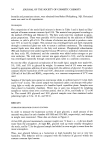
GLYCEROL EFFECT ON STRATUM CORNEUM LIPID 53 corneum, and proposes that the physical state of the lipids is of primary importance in maintaining proper skin hydration (7). A pure liquid crystal system, such as is pro- duced by an all-unsaturated fatty acid mixture, allows for rapid water transport through the bilayers with a moderate barrier action. On the other hand, the solid crystal SYstem produced with an all-saturated fatty acid mixture causes an extremely rapid water loss due to breaks to the solid crystal. A mixture of both saturated and unsaturated fatty acids produces the optimal barrier to water loss from stratum corneum (7). The objective of the present study was to use the in vitro model lipid to predict the water-binding behavior of human stratum corneum after application of glycerol. This humectant, which is frequently used in commercial moisturizers, has been shown pre- viously to prevent the in vivo induction of dry skin by weather (8) or by hand washing with soap (9). Glycerol was incorporated into the model lipid, and the effect on hydration dynamics under different atmospheric conditions (dry, 6% RH moist, 92% RH) has been inves- tigated. Polarized light microscopy was employed to discern the effect of glycerol on the structure of the model lipid. We report here on the dramatic effect of glycerol on lipid structure and propose a novel explanation for the skin-moisturizing properties of this substance. METHODS MATERIALS Phosphatidyl ethanolamine was obtained from Avanti Polar Lipids (Birmingham, AL) and was used without further purification. All other lipids shown in Table I were obtained from Sigma Chemical Company (St. Louis, MO) and used without further purification. Glycerol (99% pure) was also purchased from Sigma. The salts, lithium Table I Composition of Model Stratum Corneum Lipid (10) Component Wt. % in mixture Free fatty acids 17 Myristic 10 Linoleic 15 Oleic 55 Palmitic 5 Palmitoleic 10 Stearic 5 Phosphatidyl ethanolamine 5 Cholesteryl sulfate 4 Cholesterol 17 Triolein 22 Oleic acid palmityl ester 5 Squalene 5 Pristane 4 Ceramides 2 !
Purchased for the exclusive use of nofirst nolast (unknown)
From: SCC Media Library & Resource Center (library.scconline.org)