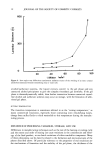
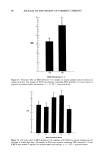
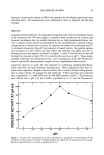
54 JOURNAL OF THE SOCIETY OF COSMETIC CHEMISTS bromide and potassium nitrate, were obtained from Baker (Philipsburg, NJ). Deionized water was used in all experiments. TECHNIQUES The composition of the model lipid mixture is shown in Table I and is based on Elias' analysis of human stratum corneum lipid (10). The material was prepared according to the method of Friberg and Osborne (1). The fatty acids were first combined in appro- priate proportions. These were partially (41%) neutralized by the addition of NaOH solution, to yield a pH of 4.6. The volume of solution was selected to produce a mix- ture 33% in water by weight. This mixture was centrifuged back and forth repeatedly through a constricted glass test tube to ensure a uniform consistency. The remaining neutral lipids were then added to the fatty acid mixture. Phosphatidyl ethanolamine (PE) and cholesterol were added together because PE serves to solubilize cholesterol into the fatty acids. PE, cholesterol, and the ceramides were added under nitrogen to pre- vent oxidation. The total water content was again adjusted to 33%, and the mixture was centrifuged repeatedly through constricted glass tubes to a uniform consistency. To test the effect of glycerol on hydration of the model lipid, samples were made 0%, 5%, 10%, and 15% in glycerol by weight. A constant level of 3% water was main- tained by appropriate addition of water along with the addition of glycerol. To produce constant relative humidities of 6% and 92%, dessicators containing saturated solutions (200 ml) of the LiBr and KNO3, respectively, at a constant temperature of 2 IøC were used. Samples of the lipids were spread on microscope slides in uniform layers 0.5-mm thick and 0.5-cm 2 in area. The control sample was examined under a microscope with polar- izing light to verify the presence of a lameliar liquid crystalline phase. Samples were then placed in humidity chambers. Water loss or gain was measured by weighing samples at various times over a six-hour period, then at 24 hr, and finally at 72 or 96 hr. The control (0% glycerol) and 10% glycerol samples were then examined under polarizing light at 6 hr, 24 hr, and 96 hr. RESULTS HYDRATION BEHAVIOR OF NEAT GLYCEROL In order to measure the humectant activity of pure glycerol, a small amount of the material was placed in each chamber (6% RH and 92% RH, respectively), and changes in weight were monitored. These data are shown in Figure 2. At low RH, glycerol maintained a constant weight over 72 hour i.e., it did not absorb water from the atmosphere. At high RH, glycerol took up water steadily throughout the study, and by 72 hr the glycerol sample had added its own weight in water from the moist atmosphere. Thus, neat glycerol behaves as a humectant at high humidity but not at very low humidity. This behavior will be compared with the behavior of glycerol within the stratum corneum lipid matrix.

GLYCEROL EFFECT ON STRATUM CORNEUM LIPID 55 130 A 120 110 100 9O 8O ß I ' I ' | ' I ' I ' 0 1 2 3 4 5 6 time (hr) B 220 200 '• 180 ._• 160 ß ,- 140 O 8 •2o lOO 8o I I ' I o '20 40 60 80 time (hr) Figure 2. Humectancy of glycerol: uptake of water by neat glycerol in 6% RH ([]) and 92% RH (•) over 6 hours (A) and over 72 hours (B).
Purchased for the exclusive use of nofirst nolast (unknown)
From: SCC Media Library & Resource Center (library.scconline.org)