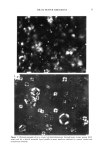
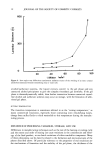
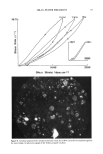
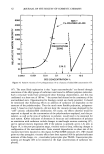
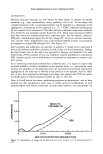
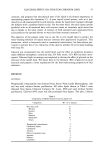
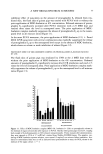
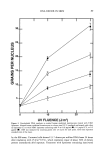
56 JOURNAL OF THE SOCIETY OF COSMETIC CHEMISTS HYDRATION DYNAMICS OF THE MODEL: EFFECT OF GLYCEROL Low humidity. Under conditions of very low (6%) relative humidity, all model lipid samples showed a progressive loss in weight with time. There were no differences among the water-loss rates of samples containing 0%, 5%, 10%, and 15% glycerol (Figure 3). The greatest loss occurred within the first hour for all samples. Between the first and sixth hours there was a steady but slower rate of water loss. Evaporation continued over the following three days--the final readings were taken at 72 hr. At this point, all samples were again roughly equivalent and approached the limiting value of 67% of the initial weight. These samples were thus nearly devoid of water and consisted almost entirely of lipid. A humectant like glycerol within the model therefore is incapable of extracting moisture from the air at very low humidity. This is consistent with the absence of humectant activity of neat glycerol at 6% RH (Figure 1). It is concluded, furthermore, that glycerol is ineffective at preventing water loss from the model lipid in this humidity. High humidity. Care must be taken to ensure that the humidity chambers remain closed for adequate time periods to enable the correct RH to be established. Preliminary studies showed that readings had to be taken at least two hours apart to allow a 92% RH atmosphere to be reestablished. Figure 4 shows the change in sample weight with time for control and 10% glycerol samples, using 2-hr intervals between measure- ments. Here the behavior of the glycerol-containing sample is consistent over a four-day period, with water uptake beginning in the first time interval. As in the above experi- ments, the control lost water over this time. It is noted that the control sample did not approach the limiting value of 67% of the initial weight after several days as did the control exposed to 6% RH. The model lipid therefore does not become completely dehydrated in high humidity. The use of 2-hr time intervals had no effect on the samples exposed to 6% RH, i.e., the data (not shown) were essentially the same as those shown in Figure 3. STRUCTURE OF THE MODEL: EFFECT OF GLYCEROL The model lipid was examined by polarizing light microscopy at the start of the study and again at 6 hr, 24 hr, and 96 hr of exposure to controlled humidity. Figure 5 shows the control sample and the 10% glycerol sample at 400 X magnification at the initial time. The patterns are virtually identical and are characteristic of a lameliar liquid crystalline structure. Figures 6 and 7 show the changing structural patterns of the control and glycerol-con- raining samples with the passage of time in 6% RH and 92% RH, respectively. In low humidity (Figure 6), at 6 hr the control has begun to form fine crystals, while the 10% glycerol sample is still largely liquid crystalline. By the 24-hr timepoint, the control has lost more of its liquid crystal character and formed larger crystals. At 96 hr the control is entirely solid crystal. The glycerol-containing sample also loses liquid crystal character over the same time period but at a much slower rate than does the control. By 96 hr. there is still a liquid crystal component to the structure with glycerol. In high humidity (Figure 7) a similar contrast exists between the control and glycerol-

GLYCEROL EFFECT ON STRATUM CORNEUM LIPID 57 11o 1 oo 90 80 7o 6o A ß I ' I ' I ß i ' I 0 1 2 3 4 5 6 time (hr) 110 B lOO 9o 8o 7o 6o 0 10 20 30 40 50 60 70 80 time (hr) Figure 3. Water loss oerom model ]ipid in 6% RH over 6 hours (^) and over 72 hours (B). Samples contained glycerol at 0% ([•), 5% (•), 10% (I), and 15% (0) by weight.
Purchased for the exclusive use of nofirst nolast (unknown)
From: SCC Media Library & Resource Center (library.scconline.org)