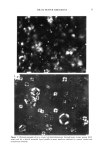
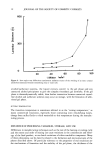
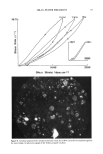
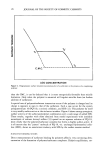
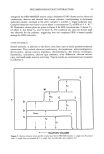
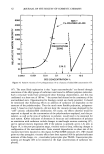
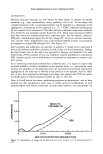
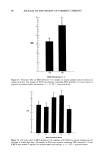
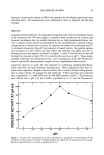
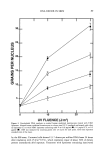
DNA REPAIR IN SKIN 89 30/ I I I I o z n" Z 0 10 20 UV FLUENCE (d/m •) Figure 3. Unscheduled DNA synthesis in normal human epidermal keratinocytes treated with T4N5 liposomes. Normal human epidermal keratinocytes in culture were UV-C irradiated and treated with either no liposomes ((2)) or with T4N5 liposomes containing endo V at 0.02 •g/ml (O), 0. ! •g/ml ([]), or 0.2 I•g/ml (I). UDS was measured by counting grains over 25 nuclei for each point. Error bars represent standard error of the mean. by the ESS assay. Untreated cells showed 13.7 dimers per million DNA bases 24 hours after irradiation with 25 J/m 2 UV-C, which represents repair of about 50% of dimers present immediately after exposure. Treatment with liposomes containing inactivated

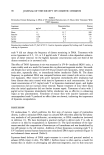
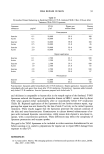
90 JOURNAL OF THE SOCIETY OF COSMETIC CHEMISTS Table I Pyrimidine Dimers Remaining in DNA of UV-Irradiated Keratinocytes 24 Hours After Treatment With T4N5 Liposomes Liposome Dimers/million Percent treatment Ixg/ml bases control None 0 13.7 100 Inactive 0.2 13.7 100 Active 0.05 9.8 71 Active 0.1 7.8 57 Active 0.2 4.7 34 Keratinocytes irradiated with 25 J/m 2 of UV-C. Inactive liposomes prepared by boiling endo V and encap- sulating in liposomes. endo V did not change the frequency of dimers remaining in DNA. Treatment with active liposomes at 0.5, 1.0, or 2.0 •xg/ml endo V showed a dose-dependent enhance- ment of dimer removal. At the highest liposome concentration only one third of the dimers remained as in untreated cells. The effect of T4N5 liposomes in vivo was measured in UV-B-irradiated SKH-1 mice, a strain widely used as a model for human skin in photocarcinogenesis studies. Six-week- old female mice were irradiated with UV-B and treated with liposomes, either immedi- ately after, repeatedly after, or immediately before irradiation (Table II). The dimer frequency in epidermal DNA was compared between mice treated with active or inac- tive liposomes. Mice treated with active liposomes immediately after irradiation had fewer dimers than mice treated with inactive liposomes at each concentration. An op- timal concentration of 0.5 mg/ml endo V in liposomes maximized repair, and higher concentrations did not increase dimer removal. Repeat treatment of mice three hours after the initial application did not further increase repair. Treatment of mice with 2 •xg/ml active liposomes immediately before irradiation was as effective in enhancing repair as was posttreatment. Treatment of mouse skin with inactive liposomes and unencapsulated endo V produced no effect (data not shown), indicating the importance of liposome encapsulation. DISCUSSION T4 endonuclease V, which performs the first step of excision repair of pyrimidine dimers, is able to stimulate DNA repair in cultured XP cells when added by the labora- tory methods of cell permeabilization, microinjection, or DNA transfection (reviewed in reference 11). We have developed a practical method to deliver endo V to cells in culture or in skin by encapsulation in liposomes (5). The lipid membrane of the lipo- somes matched the composition of keratinocyte cell membrane and was destabilized by low pH present in the cell interior. Addition of these liposomes containing endo V to UV-irradiated normal human keratinocytes stimulated DNA repair synthesis (Figure 3) and enhanced dimer removal (Table I). Liposome-based delivery of DNA repair enzymes is a novel and practical method to enhance DNA repair in skin. The SKH-! hairless mouse is often used as a model for human skin in studies on photoaging and photocarcinogenesis, and its skin structure
Purchased for the exclusive use of nofirst nolast (unknown)
From: SCC Media Library & Resource Center (library.scconline.org)