J. Soc. Cosmet. Chem., 41, 51-65 (January/February 1990) Prevention of stratum corneum lipid phase transitions in vitro by glyceroI--An alternative mechanism for skin moisturization CLAUDIA L. FROEBE, F. ANTHONY SIMION, H. OHLMEYER, LINDA D. RHEIN, JAIRAJH MATTAI, ROBERT H. CAGAN, and STIG E. FRIBERG, Colgate-Palmolive Research and Development, 909 River Road, Piscataway, NJ 08854 (C.L.F., F.A.S., H.O., L.D.R., J.M., R.H.C.), and Department of Chemistry, Clarkson University, Potsdam, NY 13676 (S.E.F.). Received January 3, 1990. Synopsis Intercellular lipids have an integral role in the barrier function of the stratum corneum. Friberg and Osborne (1) proposed that maintaining the lipids in a liquid crystalline state is required for optimal barrier function in preventing water loss. This study shows that the addition of glycerol to a mixture of stratum corneum lipids in vitro inhibits the transition from liquid to solid crystals even when the water content is reduced by low ambient humidity (6% RH). Glycerol does not act as a humectant at 6% RH, either when tested alone or when incorporated into the model lipids. Therefore, we conclude that in a dry atmosphere glycerol acts as a skin moisturizer by inhibiting the lipid phase transition from liquid to solid crystal, rather than by acting as a humectant. This represents an alternate, more likely molecular mechanism of action for this skin moisturizer. Use of this novel approach may facilitate discovery of more powerful moisturizing and skin conditioning systems. INTRODUCTION A major function of the stratum corneum layer of the epidermis is to provide a barrier to the evaporation of water from the viable cell layers below. Removal of the stratum corneum from the human skin results in as much as a 50-fold increase in the rate of water loss from the skin surface (2). The intercellular lipids are thought to play an important role in preventing water loss through the stratum corneum. For example, solvent extraction of the stratum corneum (removal of lipids) causes severe barrier damage (3). Another example of this relation- ship, which is frequently cited, is the enhanced rate of water loss that accompanies the essential fatty acid deficiency (EFAD) syndrome. In this condition the specific absence of linoleic acid in the diet is manifested in the absence of the fatty acid in the skin, 51

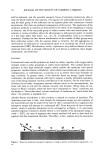
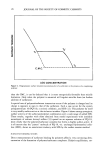
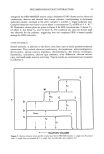
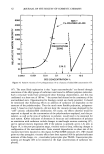
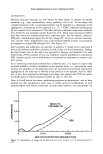
52 JOURNAL OF THE SOCIETY OF COSMETIC CHEMISTS which then becomes highly permeable to water loss (4). Replacement of linoleic acid, either systemically or topically, restores the natural barrier function of the skin (4). The rapid response of the skin to topical replacement suggests a structural, rather than a precursor, role for linoleic acid. The structural role of lipids in the stratum corneum is a topic of considerable recent investigation. Elias (5) proposed a model wherein these lipids form multiple layers alternating with water. The model is based on phosphatidyl ethanolamine and ceram- ides as the principal components of the lipid layers (6). This proposal of a multilayer structure is supported by the work of Friberg and Osborne (1), who modified Elias' model and constructed a physical model of the stratum corneum lipids. Friberg found that the crystalline layered structure of ceramides does not accept the remaining lipids instead this is achieved by the lipid bilayers formed by free fatty acids when they are adjusted to the pH of the skin (pH 4.5-6). In this pH range the fatty acids are partially converted to the corresponding soaps. It is this acid/soap combination that forms a lameliar liquid crystal with water (see Figure 1). The balance between the liquid crys- talline and solid crystal phases is determined by the degree of fatty acid unsaturation, the amount of water, and probably by other as yet undiscovered factors. The remaining neutral lipid components of the stratum corneum (see Table I) are incorporated into this matrix. The validity of the model is supported by the similarity between the low-angle x-ray diffraction patterns of isolated human stratum corneum and the model stratum corneum lipids (1). Friberg has used the model system to explore the water barrier function of stratum ''•' - ""' • "" "'• "' "" '"'"' "-' I Water Layer .......... Polar .... HydtocarborChalno }. .......... Methyl Oroupg ........ Water Layer Figure 1. A liquid crystalline lipid bilayer structure (26).
Purchased for the exclusive use of nofirst nolast (unknown)
From: SCC Media Library & Resource Center (library.scconline.org)