68 JOURNAL OF THE SOCIETY OF COSMETIC CHEMISTS METHODS MATERIALS Groups of five to ten guinea pigs (albino Hartley strain and tortoiseshell guinea pigs) were used in the experiments. 4-Methoxydibenzoylmethane-2-carboxylic acid (MDC, •kma x = 344 nm, ½ = 30,300) was synthesized as described previously (5). SUNSCREEN PREPARATION MDC-boehmite complex was directly solubilized at indicated concentrations into aqueous solution or emulsified at indicated concentrations into W/O-type emulsion consisting of 3% o•-monomethyl heptadecyl glyceryl ether (GE Kao, Tokyo, Japan), 10% squalane, 3% petrolatum, and 10% octyl dodecyl myristate. PROTECTION AGAINST UVB EFFECT To test the effect of sunscreen agents on UVB-induced erythema, the experimental animals (guinea pigs, albino Hartley strain) were treated with samples on five separate areas and, ten minutes later, were irradiated once with 0.23-1.15 J/cm 2 of UVB light, emitted from a Toshiba FL20S'E30 lamp (SE lamp, Toshiba, Japan, 0.48 mW/cm 2, 1 MED = 7.9 minutes, 0.23 J/cm2). Test sites were observed 24 hours later to deter- mine the minimal erythema dose (MED), which is the smallest dose required to produce minimally visible erythema. Erythema was assessed according to the following scale: 0, no reaction _+, slight erythema 1 +, apparent erythema 2 +, moderate erythema with edema 3 +, crust or necrosis. The sun protection factors (SPF) were calculated by dividing the dose required to produce minimal erythema on the sunscreen-treated skin by the dose required to produce minimal erythema on untreated skin. In human volunteers, back skins were treated with samples and, ten minutes later, were irradiated with an SE lamp (290-320 nm) with energy of 62-311 mJ/cm 2 (0.41 mW/cm 2, 1 MED = 62 mJ/cm2), with an Osram lamp (0.41 mW/cm2), or under natural sunlight in summer. MED and SPF values were determined as described pre- viously. PROTECTION FROM UVA EFFECT For PUVA treatment, guinea pigs received a topical application of 0.6% 8-methoxy- psoralen in ethanol 30 minutes prior to UVA exposure (1.5-12 J/cm 2 at 365 nm) using a Toshiba FL20S-BLB lamp (BLB lamp). The samples were applied on five separate areas of the flank ten minutes prior to UVA exposure. Test sites were observed 48 hours later to determine the minimal phototoxic dose (MPD), which is the smallest dose required to produce a minimally visible phototoxic reaction consisting of erythema or edema. The SPF was determined as described above for UVB irradiation. PROTECTION FROM PIGMENTATION To test the effect of sunscreen agents on UVB- or UVA-induced pigmentation, the

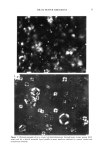
A NEW BROAD-SPECTRUM SUNSCREEN 69 experimental animals (tortoiseshell guinea pigs) were treated with samples on five sepa- rate areas and, ten minutes later, were irradiated once with 0.26 J/cm 2 of UVB (1.4 mW/cm 2) or 22.32 J/cm • of UVA light (3.1 mW/cm2). This process was repeated daily for three (UVB) to eight (UVA) days. Test sites were followed over 22 days to evaluate pigmentation by means of a color difference meter (Nippon Denshyoku Co. Ltd.), and the intensity of the pigementation was expressed by Hunter's color difference formula (AL). In human volunteers, back skins were treated with samples and, 20 minutes later, were exposed to natural sunlight for 20-60 minutes in midsummer. Test sites were observed 14 days later to determine the minimal melanogenic dose (MMD). The MMD was determined as being the smallest dose required to produce minimally visible pigmenta- tion at 14 days. Pigmentation was assessed as follows: 0, no pigmentation 1 +, min- imal visible pigmentation 2 +, moderate pigmentation 3 +, intense deep pigmenta- tion. ASSAY OF ARACHIDONATE METABOLITES Shaved back skin of Hartley white guinea pigs was irradiated with UVB using SE lamps at an intensity of 0.6 mW/cm = at 305 nm (1 MED = 0.29 J/cm=). For PUVA treat- ment, the animals received 4.2 mg/kg body weight of 8-methoxypsoralen in 30% eth- anol intraperitoneally. Thirty minutes after administration, they were exposed to UVA of 3.5 mW/cm 2 at 365 nm (1 MED = 3.5 J/cm=), emitted from Toshiba FL20BLB lamps. Levels of arachidonate metabolites were determined in organ-cultured skin by radioim- munoassay (6). Thus, irradiated or non-irradiated skin was cut off at indicated hours postirradiation using a punch biopsy knife with a diameter of 6.5 ram, then placed on a 3.5-cm culture Petri dish supplemented with 0.5 ml Eagle's minimum essential me- dium (MEM) containing 20% FCS, 4 mM glutamine, 100 units/ml penicillin, and 100 }xg/ml streptomycin. Organ culture was carried out at 37 ø C with 5% CO•/95% air atmosphere for 24 hours. Radioimmunoassay for PGE2 was performed with 2000 g supernatant of whole culture medium after addition of 1.5 ml MEM into the culture dish according to the method of Jaffe (7). HISTOCHEMICAL PROCEDURE Melanocyte population was evaluated according to the method described previously (8). Breifly, skin specimens (2.5 X 2.5 cm) were removed from the flanks of guinea pigs. The tissues were rinsed in 0.1 M phosphate buffer (pH 6.8) and incubated in 1 M sodium bromide for 5 h at 37 ø C. The epidermal sheets separated from the dermis were fixed in 10% cold neutral formalin for 30 minutes, washed twice with 0.1 M phosphate buffer (pH 6.8), and incubated in 0.1% dihydroxyphenylalanin (dopa) in 0.1 M phos- phate buffer (pH 6.8) for 5 hours. The number of melanocytes (per square millimeter) was counted using an Olympus-BHA microscope at a magnification of X 200. In each specimen, the number of melanocytes was calculated by averaging the numbers found in 50-100 fields.
Purchased for the exclusive use of nofirst nolast (unknown)
From: SCC Media Library & Resource Center (library.scconline.org)