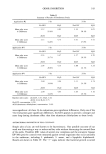
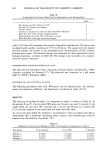
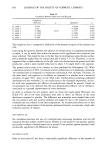
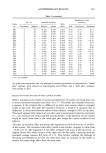
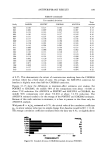
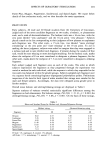
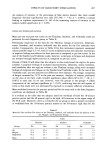
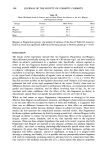
ODOR INHIBITION 145 active property being exploited is an affinity for keratin and that skin keratin is similar to hair keratin with respect to the affinity of Zn-GLY. When hair is exposed to such levels of zinc glycinate, the zinc residue left on the hair, even after rinsing with water, is sufficient to completely inhibit both of the bacterial enzymes that were previously implicated in the production of axillary odor (I,3). This conclusion is substantiated by clinical studies that show that 4.5% zinc glycinate is superior to 5% aluminum chlor- hydrate as an underarm deodorant (Table III). Zn-GLY would function as a deodorant probably by preventing the release of com- pounds that contribute significantly to axillary odor. It would appear not merely to block odor receptors or mask unpleasant odor with a strong fragrance. A complex of zinc, in addition to allowing higher zinc concentration, may give rise to a product with longer-lasting deodorancy. We postulate that the complex, acting as a reservoir, may release zinc as the free ion is diluted by eccrine sweat or is consumed by the bacterial enzymes. Although zinc glycinate has been found to inhibit bacterial growth, it is a distinctly poor bacteriostat, i.e., high concentrations are required for its effectiveness (Table IV). We believe that the principal mechanism of axillary odor reduction with this compound is enzyme inhibition. Regardless of the mechanism, the clinical studies discussed here make it clear that zinc glycinate can function as an adequate deodorant. REFERENCES (1) C. Froebe, A. Simone, A. Charig, and E. Eigen, Axillary realodor production: A new mechanism, J. Soc. Cosmet. Chem., 41, 173 (1990). (2) J. N. Labows, K. J. McGrinley, and A. M. Kligman, Perspectives on axillary odor, J. Soc. Cosmet Chem., 34, 193 (1982). (3) E. Eigen, A new mechanism ofaxillary malodor, J. Soc. Cosmet. Chem., 41, 147 (1990). (4) R. R. Marpies, "Effects of Soaps, Germicides, and Disinfectants on the Skin Flora," in The Normal Microbial Flora of Man (Academic Press, New York, 1974), p. 35. (5) J. J. Leyden and R. R. Marpies, Ecological principles and antibiotic therapy in chronic dermatoses, Arch. Dermatol., 107, 208 (1973). (6) J. V. Dubsky and A. Rabas, The formation of salts with glycine, Chem. Abs., 24, 4722 (1931). (7) Hill Top Biolabs, Inc., Cincinnati, Ohio, Private Report to Colgate-Palmolive, 1987. (8) M. Hollander and D. A. Wolfe, Non-Parametric Statistical Methods, Chapter 3 (Wiley, New York, 1973). (9) R. R. Marpies and A. M. Kligman, In-vivo methods for appraising antibacterial agents, TGA Cosmet. J., 1, 26 (1969).

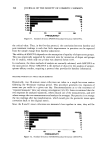
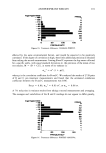
j. Soc. Cosmet. Chem., 42, 147-158 (May/June 1991) Changes in skin pH and resident flora by washing with synthetic detergent preparations at pH 5.5 and 8.5 H. C. KORTING, K. GREINER, K. Hf3BNER, and G. HAMM, Dermatologische Klinik und Poliklinik der LM U, Frauenlobstrasse 9-11 (H.C.K., K.G., K.H.), and Poliklinikfiir Zahnerhaltung und Parodontologie der LMU, Goethestrasse 30 (G.H.), D-8000 Munich 2, Germany. Received April 2, 1989. Synopsis A crossover trial was performed in 10 healthy volunteers using a synthetic detergent preparation at pH 8.5 vs 5.5. Both on the forehead and on the forearm significantly higher skin surface pH values were detected in those volunteers using the alkaline preparation. While the counts of coagulase-negative staphylococci were never influenced in a significant manner by the type of cleansing agent, there were significantly more propionibacteria on the skin of the forehead at the end of the fourth week and on the forearm at the end of the first, second, third, fourth, and eighth week of the trial (p 0.05). Propionibacterial counts both at the forehead and at the forearm were significantly correlated to pH (p 0.05). These findings support the hypothesis that acidity or alkalinity can influence both the skin surface pH and propionibacteria as one as the major components of the skin flora in the long term. INTRODUCTION The effect of repeated washings with both soaps and synthetic detergent preparations on the cutaneous surface pH and bacterial flora has already been focused upon by several investigators. This especially applies to single washings with either soap (1,2) or soap and synthetic detergent preparations (3,4). In some of these investigations, all of which are solely concerned with skin pH, the effect of repeated applications of the cleansing agents was also examined (1,4). While the effect of soap (5) and synthetic detergent preparations (5,6) on the cutaneous microflora was by principle also investigated, although to a lesser extent, both cutaneous surface pH and bacterial flora together have so far only once been analyzed under the aspect of their relationship to washing proce- dures. In this recent study (7), both parameters were examined at the same time in volunteers regularly washing the skin of forehead and forearm twice a day for four weeks each, with (alkaline) soap or an acidic synthetic detergent preparation of pH 5.5 (cross- over design). The skin pH was found to be significantly higher when soap was used (by 0.3 units), as was the number of propionibacteria both at the forearm and the forehead. Counts of coagulase-negative staphylococci, however, showed no such significant dif- 147
Purchased for the exclusive use of nofirst nolast (unknown)
From: SCC Media Library & Resource Center (library.scconline.org)