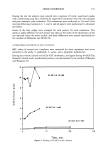
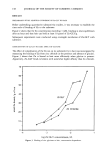
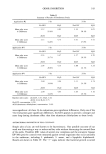
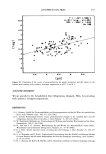
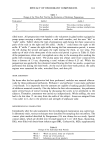
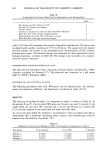
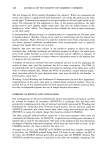
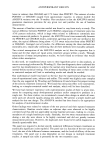
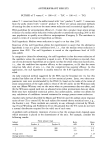
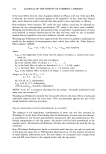
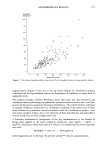
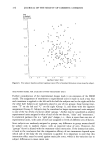
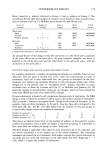
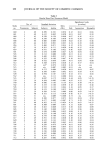
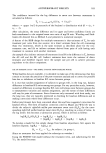
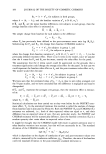
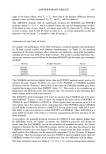
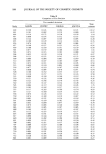
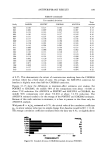
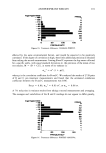
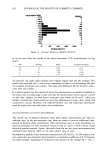
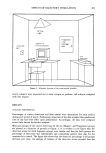
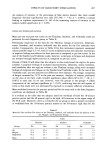
190 JOURNAL OF THE SOCIETY OF COSMETIC CHEMISTS 1.40 o lO 2o FREQUENCY 26 15 1 1 Figure 11. Standard deviation (POSTRT)/standard deviation (ANCOVA). the critical value. Thus, in the five-day protocol, the correlation between baseline and post-treatment readings is such that little improvement in precision can be expected from the simple change from baseline adjustment. The validity of ANCOVA depends on the assumption of equality of slopes across groups. This was empirically supported by statistical tests for interaction of slopes and groups for 33 studies, where only one p-value was observed below 0.05. In conclusion, the three methods of analysis are mutually unbiased, with ANCOVA as the most precise. Hence ANCOVA is the method of choice for the analysis of antiper- spirant efficacy studies, requiring a protocol that provides for baseline information. MULTIPLE WITHIN-DAY SWEAT MEASUREMENTS Historically, two 20-minute sweat collections are taken in a single hot-room session following the 40-minute warmup period. This procedure generates two responses of sweat rate per axilla in a given test day. Recommendations as to the treatment of "repeated measures" data vary among investigators (4,6, 10). Some recommend that the two responses be analyzed separately, others discard one of the measurements, and still others average the two measurements and analyze the averages. Our practice is to average the two readings after log transformation, which would give the geometric mean upon conversion back to the original metric. Since the B and C sweat collections are measured close together in time, they will be ratio 0.9• 1.05 1.11 1.17 1.23 1.2• 1.35 1.41 FREQUENCY Figure 12. Standard deviation (CHGBAS)/standard deviation (ANCOVA).

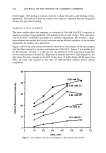
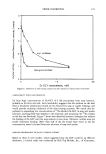
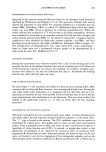
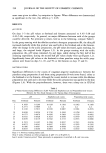
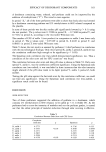
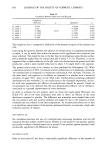
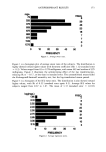
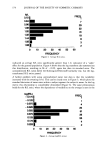
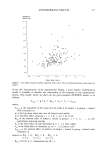
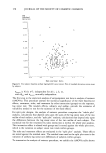
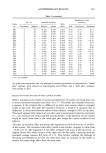
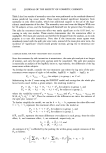
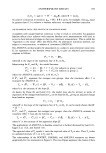
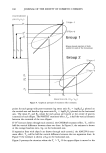
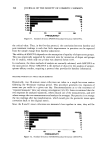
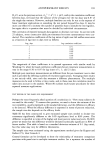
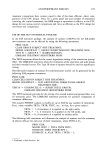
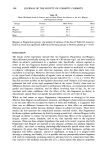
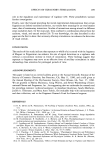
ANTIPERSPIRANT RESULTS 191 Iog(•)x1000 -- 113 1•) 37 I ß o 9 16 6'7' 1,4.,4. •)0 FREQUENCY Figure 13. Treatment differences: CHGBAS-POSTRT. affected by the same environmental factors, and would be expected to be positively correlated. If the degree of correlation is high, then little additional precision is obtained from taking the second measurement. Letting B and C represent the log sweat collected for a specific axilla, with equal standard deviations 0., the precision of the mean of two test results, M = (B 4- C)/2, in terms of its variance is: 0.m 2 = 0 '2 (1 + p)/2, where p is the correlation coefficient for B and C. We analyzed the results of 2728 pairs of B and C pre-treatment measurements and found that the estimated correlation coefficient between the B and C measurements was 0.86. 2 0.93 0.2 For p = 0.86, 0.m = , or 0.m = 0.96 0.. A 7% reduction in variance results from taking a second measurement and averaging. The averages and variabilities of the B and C readings do not appear to differ greatly, log (mgs)x1000 --48 --24 --12 0 0 FREQUENCY 14 42 147' 38 12 3 4 1 1 Figure 14. Treatment differences: POSTRT-ANCOVA.
Purchased for the exclusive use of nofirst nolast (unknown)
From: SCC Media Library & Resource Center (library.scconline.org)