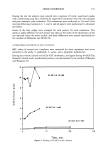
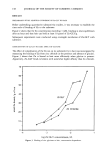
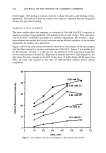
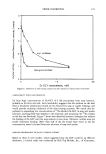
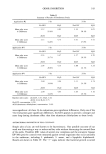
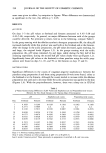
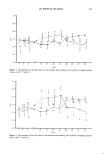
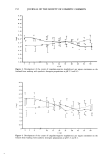
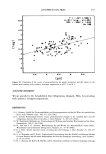
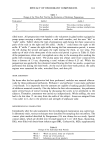
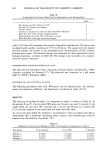
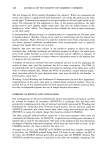
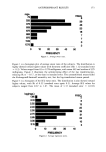
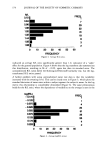
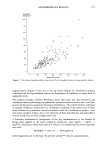
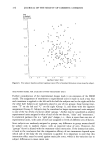
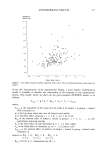
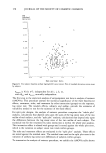
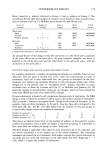
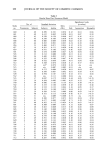
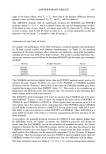
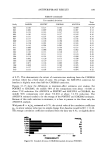
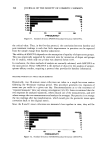
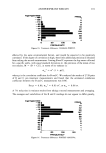
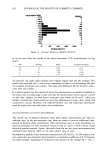
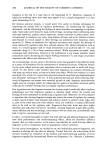
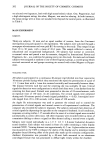
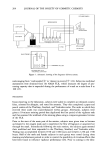
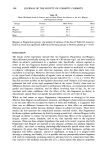
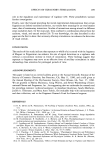
174 JOURNAL OF THE SOCIETY OF COSMETIC CHEMISTS 0.72 0.84 0.96 1.08 1.20 1.32 1.44 1.56 • 1.68 I ......... i ......... • ......... i ......... i ......... • ........ 0 10 • 30 40 ,50 GO FREQUENCY Figure 3. Average E/L ratios. FREQ. 1 7 18 8 3 2 indicated an average R/L ratio significantly greater than 1.0, indicative of a "sides" effect for the general population. Figure 4 shows that the log transform also symmetrizes this distribution, resulting in Sk of -0.09, again less than its standard error. The untransformed R/L ratios failed the Kolmogoroff-Smirnoff normality test, but the log- transformed R/L ratios passed. A further problem with using untransformed sweat rate data is that the variability increased with the sweating level. This can be clearly seen in Figure 5, which plots the standard deviation of sweat rates within a subject against the subject's mean. In the log metric this relationship is considerably diminished (Figure 6). The same phenomenon holds for the R/L ratio, where the dependence of variability on the average is seen in the -0.175 -0.125 -0.075 - 0.025 0.025 0.075 0.125 0.175 0.225 ......... ! ......... , ......... i ......... • ......... • ......... i 10 20 3o 40 50 6o FREQUENOY Figure 4. Average 1og(R/L ratios). FREQ. 1 1 4 51 4 2

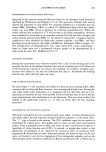
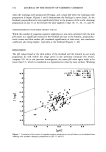
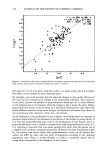
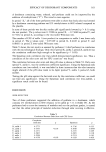
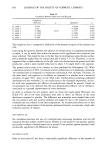
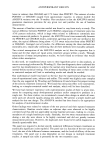
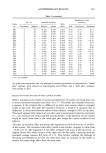
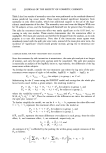
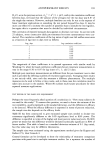
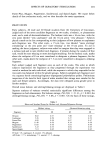
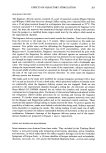
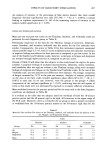
ANTIPERSPIRANT RESULTS 17 5 Standard Deviation 800 700 600 + 500 + 400 + 300 + 200 + A A 100 A A A A A A A A A A A A A A A A A AA AAAA AAA A B A BAA AC A AAAAAABBAAA BA A ABAAB ABA A A AAAAABBB B BAB A A A B DAABA AA A A ADC AA A AA A AABA AA A AAA A A A A A A A AA A A A A A A Mean Sweat Rate Figure 5. Test subject baseline axillary sweat rates: Plot of standard deviation versus mean by subject. original metric (Figure 7) but not in the log metric (Figure 8). Correlation analysis confirmed that the log transform reduces the dependence of variability on sweat level to negligible levels. This analysis strongly confirms Wooding's thesis that sweat rate data should be log transformed before performing any parametric statistical analyses (such as the t-test) that assume the data have a normal (or Gaussian) distribution. This will be further confirmed in analyses of efficacy studies later on. Arithmetic handling of raw sweat rates or their ratios followed by parametric statistical analysis must be considered as suspect, even with large numbers of data, due to the skewness of their distributions and dependence of their variability on their average sweat rate. A fortunate mathematical consequence of the log transformation is the benefit of being easily applied to the sweat reduction calculation, since log(T) - log(C) = log(T/C), and percent sweat reduction of T versus C is a simple function of the log sweat rate ratio: PCTRED = 100 * (! - !0**log(T/C)) where logarithms are to the base 10 and the symbol ** denotes exponentiation.
Purchased for the exclusive use of nofirst nolast (unknown)
From: SCC Media Library & Resource Center (library.scconline.org)