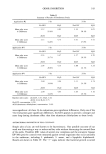
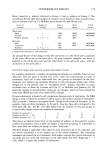
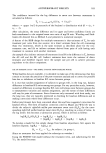
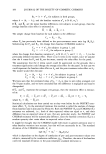
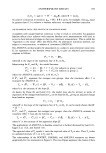
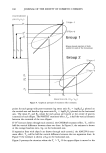
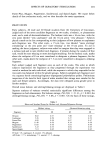
EFFECTS OF OLFACTORY STIMULATION 201 Forest-Plus, Muguet, Peppermint, Sandiewood, and Spiced-Apple. We report below details of that evaluation study, and we then describe the main experiment. PILOT STUDY Forty subjects, 20 male and 20 female students from the University of Cincinnati, judged each of the seven candidate fragrances on two scales, a hedonic, or pleasantness scale, and a scale of alertness/relaxation. The hedonic scale was a 16-cm line, with the zero point labeled "very unpleasant" and the 16-cm point "very pleasant." Subjects placed a mark on the line corresponding to their judgment of how pleasant or unpleasant each fragrance was. The other scale, a 15-cm line, was labeled "more alerting/ stimulating" at the zero point and "more relaxing" at the 15-cm point. To aid in making the latter judgment, subjects were asked to imagine that they were engaged in a tedious task and to note whether each fragrance, if present during the conduct of that task, would be more relaxing or more alerting/stimulating. For the hedonic scale, marks above the midpoint of 8 cm were considered to designate a pleasant fragrance for the other scale, marks above the midpoint of 7.5 cm were considered to designate a relaxing fragrance. Each subject judged each fragrance once on each of the scales. The order in which subjects experienced the fragrances as they progressed through the experiment was varied at random for each individual, while the sequence in which they responded to the two scales was balanced within the gender groups. Subjects sampled each fragrance once via a squeeze bottle containing fragrance-impregnated polyethylene pellets. Preliminary inspection of the data for both types of scales revealed that ratings were similar for the male and female subjects. Accordingly, the data were collapsed across gender prior to further analysis. Overall mean hedonic and alerting/relaxing ratings are displayed in Table I. Separate analyses of variance revealed statistically significant differences among the fragrances on both dimensions. For hedonic ratings, F(6,234) = 21.31, p ( 0.001 for alerting/relaxing ratings, F(6,234) = 5.08, p ( 0.001. On the basis of these ratings, Table I Means and Standard Errors for Hedonic and Alertness/Relaxation Ratings Hedonic rating Alertness/relaxation rating Fragrance M SE M SE Benzoin 8.02 0.57 7.88 0.43 Cashmeran 5.26 0.59 5.27 0.52 Forest-Plus 6.09 0.56 6.07 0.47 Muguet ! !.40 0.59 8.34 0.56 Peppermint ! !. 02 0.56 5.63 0.56 Sandiewood 5.22 0.55 6.04 0.45 Spiced-Apple 7.6 ! 0.65 6.65 0.45 H Scale: (8, unpleasant 8, neutral )8, pleasant. A/R Scale: (7.5, stimulating 7.5, neutral )7.5, relaxing.

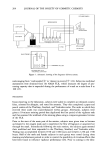
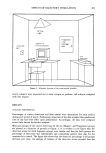
202 JOURNAL OF THE SOCIETY OF COSMETIC CHEMISTS we selected two fragrances, both with high mean hedonic values. One, Peppermint, had a high alertingness rating the other, Muguet, was rated as relaxing. In both instances, the mean ratings were at least one standard error beyond the neutral point, as illustrated in Table I. MAIN EXPERIMENT SUBJECTS Thirty-six subjects, 18 men and an equal number of women, from the Cincinnati metropolitan area participated in the experiment. The subjects were solicited through a newspaper advertisement and were paid $ ! 5 for serving in the study. They ranged in age from 18 to 30 years, with a mean of 26.6 years. The sample reflected a variety of educational and occupational backgrounds. All subjects had normal or corrected- to-normal vision and passed a test for anosmia, designed by International Flavors and Fragrances, Inc., as a condition for gaining entry into the study. Six male and six female subjects were assigned at random to one of three fragrance groups, a control group which received unscented air and groups receiving air scented with either Muguet or Pepper- mint. VIGILANCE TASK All subjects participated in a continuous 40-minute vigil divided into four consecutive 10-minute periods during which they monitored the repetitive presentation of a pair of ! X 13-mm lines with a 1-mm dot centered vertically and horizontally between them. The distance between each line and the centering dot was normally 10 mm. Critical signals for detection were configurations in which both lines were 2 mm farther from the centering dot than usual. Stimuli were presented at the rate of 24 events/minute, with an exposure time of 150 msec. In all conditions, five critical signals were presented during each 10-minute period of watch (signal probability = 0.02). Intersignal inter- vals ranged from 20 to 240 seconds, with a mean of 120 seconds. An Apple IIe microcomputer was used to generate the stimuli and to control the presentation of critical signals and neutral events in all experimental conditions. The computer also recorded the subjects' responses. The subjects indicated their detection of critical signals by depressing the spacebar on the computer's keyboard. In all conditions, responses occurring within 1.25 seconds after the onset of a critical signal were recorded automatically as correct detections. All other responses were recorded either as errors of commission (failing to detect a signal) or false alarms (calling a neutral event a signal). Subjects were tested individually in a 1.9 X 1.8 X 2.0-meter Industrial Acoustics sound chamber. Each subject was seated in front of a table containing a video display terminal (VDT). Viewing distance was approximately 43.5 cm. A glare reduction screen was mounted on the VDT to enhance the clarity of the display and to minimize visible phosphor decay following offset of the pixels that made up the stimulus configuration. Ambient illumination was provided by a 40-watt bulb mounted in an aluminum cone-shaped fixture that was positioned to diffuse light evenly within the chamber.
Purchased for the exclusive use of nofirst nolast (unknown)
From: SCC Media Library & Resource Center (library.scconline.org)