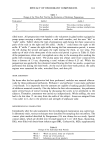
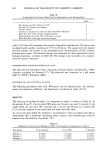
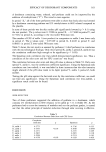
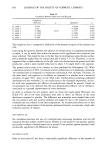
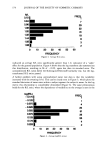
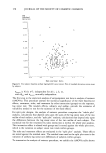
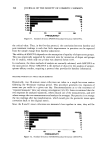
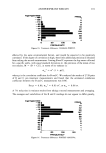
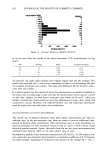
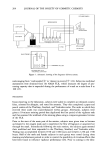
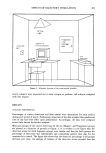
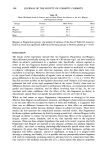
EFFECTS OF OLFACTORY STIMULATION 203 FRAGRANCE DELIVERY The fragrance delivery system consisted of a pair of aquarium pumps (Hagen Optima and Whisper 1000) that forced air through Teflon tubing into a charcoal filter and then into a 35-ml glass reservoir housed in a refrigerator that was maintained at 70 ø F. The reservoir contained 9 x 9-mm polyethylene pellets that incorporated the fragrance to be used. Air from the reservoir was transmitted through additional tubing under pressure from the pumps to a modified home oxygen mask worn by the subject while seated in the experimental chamber. The fragrance delivery equipment was located outside the chamber. Total travel distance from the reservoir to the mask was 2.15 meters. Odor concentration at the mask was controlled by the air flow (0.80 liters/minute) and by the number of pellets in the reservoir. Five pellets were used for delivering the Peppermint fragrance and 10 for Muguet. The concentration of Peppermint was 0.05 parts/million, while that for Muguet was 0.13 parts/million. Fragrance concentration was determined by pilot work that equated the fragrances for salience when delivered against an unscented back- ground. In the control condition, unscented air was delivered to the mask by forcing the air through an empty reservoir in the refrigerator. The duration of air flow through the mask was controlled by a decade interval timer in conjunction with a Gerbrands tape timer. The timing system activated the air pumps for limited intervals at specified times during the experimental session. In the course of the experiment, subjects experienced 30-second whiffs of either scented or unscented air through the mask 4.5 minutes after the start of the vigil and every five minutes thereafter. At other times the fragrance delivery system was dormant. The masks used in the study were modified by cutting triangular openings (with a base of 6 cm and an altitude of 4 cm) in both sides, which permitted subjects to breathe room air comfortably when the fragrance delivery system was not engaged. Fresh air was provided to the experimental chamber through a ceiling fan. An electronic air cleaner (Sears Model 635.830000) cleansed the air within the chamber and insured against contamination by lingering odors. Containers of charcoal and baking soda placed within the refrigerator offered similar protection for air entering and leaving the fragrance reservoir. To further insure against contamination, three separate reservoirs were used for the Muguet and Peppermint pellets and in the unscented control condition. These reservoirs had separate tubing leading to masks reserved for them. To protect against the possibility of infection, masks were bathed in alcohol after being used. Subjects reported little discomfort in wearing the masks. The tubing leading to each mask was of suffi- cient length to permit the subjects considerable freedom of movement as they sat at their workstation. Schematic drawings of the fragrance delivery system and of the experi- mental chamber are presented in Figures 1 and 2, respectively. STRESS AND WORKLOAD MEASUREMENT Stress measures were obtained from three scales. They included (a) the Thackray Mood Scales--a nine-point rating scale measuring attentiveness, sleepiness, strain, boredom, and irritation, in which values below five reflect negative feelings (22) (b) the Yoshitake Symptoms of Fatigue Scale•a 30-item checklist of fatigue indicants such as headache, dizziness, eye strain, etc. (23) and (c) the Stanford Sleepiness Scale•a seven-item rating

204 JOURNAL OF THE SOCIETY OF COSMETIC CHEMISTS AIR PUMP I AIR PUMP CHARCOAL AIR FILTER VIGILANCE BOOTH REFIRIGERATOEDFI••MODIII -- ' I OXYGEN MASK GLASS TUBING - FRAGRANCE PELLETS ENLARGEMENT OF A FRAGRANCECONTAINER Figure 1. Schematic drawing of the fragrance delivery system. scale ranging from "wide awake { 1}" to "almost in reverie {7}" (24). Subjective workload assessments were obtained from the NASA TLX, which measures the degree of pro- cessing capacity that is expended during the performance of a task on a scale from 0 to 100 (25). PROCEDURE Upon reporting to the laboratory, subjects were asked to complete an informed consent form, screened for allergies, and tested for anosmia. They then completed a paper and pencil version of the Thackray, Stanford, and Yoshitake scales. The order in which they received these scales was counterbalanced within groups. Afterwards, subjects were given a 10-minute training period that duplicated the first period of the vigilance task and then assessed the workload of the training phase using a computer-generated version of the TLX. Prior to the start of the main part of the session, subjects were given time to become acclimated to the oxygen mask and to experience the flow of fragrance or unscented air through the mask. Immediately following the main session, the subjects again assessed their workload and then responded to the Thackray, Stanford, and Yoshitake scales. Testing was accomplished between 0730 and 1100 hours and between 1230 and 1700 hours. Half of the male and female subjects in each group were tested during these morning and afternoon periods in order to control the possibility of circadian effects that have been found to influence vigilance performance (26). Prior to coming to the labo-
Purchased for the exclusive use of nofirst nolast (unknown)
From: SCC Media Library & Resource Center (library.scconline.org)