160 JOURNAL OF THE SOCIETY OF COSMETIC CHEMISTS growing concern with respect to the ecological consequences. Triclosan (8), e.g., as a major representative of the whole class, has been suggested to contain dioxine derivatives (9). Perfumes are still widely considered as an adequate ingredient for deodorants. One should, however, not overlook the growing concern with the induction of allergic contact dermatitis (10). Therefore, there is a clear demand for alternative principles. Odor blotting (or extinguishing), as made possible by substances such as zinc ricino- leate, was proposed some years ago (11). They are, however, not yet widely accepted, perhaps because of their limited efficacy. Most recently, it has been proposed to use substances that liberate acidic components on human skin, such as triethylcitrate that forms citric acid after enzymatic ester cleavage on the skin surface. The rationale for this principle is to shift the skin surface pH to a more acidic side in order to prevent bacterial destruction of sweat components (12). It is well known that body odor is especially produced in certain regions such as the axilla, where the skin surface pH is less acidic than in other parts of uncovered skin (13). Moreover, a relationship between skin surface pH and bacterial microflora was demon- strated recently (14). A deodorant containing triethylcitate has so far only preliminarily been characterized (12). Therefore, it seemed useful to compare the efficacy of a recent commercial preparation containing triethylcitrate, perfume oil, and ethanol in a double- blind controlled study. Facing the expected mechanism of action of such a preparation apart from the body odor itself, the axilla skin pH and the quantity of the bacterial flora were analyzed. VOLUNTEERS AND METHODS SUBJECTS Fifteen healthy males and 15 healthy females with a minimum age of 18 years were enrolled. Written informed consent was obtained in every case. The age of the volun- teers ranged from 23 to 50 years more than 90% were 23 to 29 years of age. For general skin cleansing all persons were provided with Simple Soap TM (Albion Soap Company, Hampton, Middlesex, UK), a preparation said to contain no perfumes or antimicrobial additives (15). During the trial the panelists were not allowed to use any other cosmetic in the axillary region. Epilation habits had to be kept constant. TRIAL DESIGN The trial was based on a crossover design as proposed by Baxter and Reed (15). Four deodorant preparations differing in composition were applied in a double-blind fashion accoMing to a balanced random plan. The preparation used for each of the two axillae was always different in a given trial period. On the whole, there were three trial periods of three weeks each. The commercial deodorant preparation called "test product" con- tained 2% triethylcitrate in 60% ethanol and perfume (1% perfume oil, FAL 58306, International Flavours and Fragrances, Hamburg, FRG). The pH of this preparation was adjusted to 5.5 with small amounts of citric acid. The two additional preparations either contained no perfume or no triethylcitrate. The fourth preparation contained just dis-

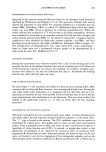
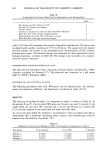
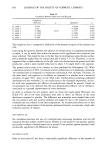
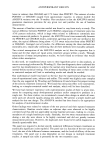
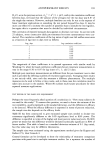
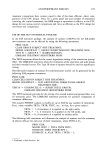
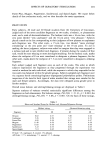
EFFICACY OF DEODORANT COMPONENTS 161 Table I Design of the Three-Part Trial for the Evaluation of Deodorant Preparations Trial period Axilla 1 Axilla 2 X Test product Y Test product Z Test product Test product without perfume Test product without triethylcitrate Placebo tilled water. All preparations were handed to the volunteers in glass bottles equipped as pump sprays carrying a subject number, a trial week number, and the note "left" or "right" axilla. Table I shows the type of preparation used during the three consecutive parts of the trial in the right and left axilla. "Axilla 1" could mean the right or left axilla. If"axilla 1" meant the right axilla during the first examination period, it meant the left during the second and again the right during the third, or vice versa. The make-up of each of the three parts of the entire trial period is given in Table II. Each of the preparations, when used, was applied once a day in the morning after washing the axilla with running tap water. The pump spray was always used twice consecutively from a distance of 15 cm, dispensing a total volume of about 0.25 mi. While the preparation was applied by the volunteer himself during the first two weeks, a supervisor performed this during the third week. At the end of each three-week period, the axilla regions were examined for odor, microbial flora, and skin pH. ODOR ASSESSMENT Six hours after the last application had been performed, malodor was assessed olfactor- ically by three professional perfumers. Perfumer 1 and perfumer 3 were male perfumer 2 was female. It is important that the assessors are capable of ranking graded dilutions of odiferous materials correctly. One day before the first odor assessment, the perfumers spent several hours of initial training by discussing the scores to be attributed to the subjects. Thereafter, assessment was carried out independently. While sniffing, the nose had to be less than 15 cm away from the axilla of the subject. Scores are assigned from 1 (no odor) to 6, due to the presence and strength of unpleasant odor. MICROBIOLOGICAL EXAMINATION Immediately after the odor assessment the microbiological examination was carried out. In laboratory trials, various techniques were described for sampling skin microflora. The contact plate method described by Faergemann (16) was chosen for our study. Special contact plates, which are divided into 16 small squares of 1 cm 2 (A/S Nunc, Kamstrup, DK), were filled with brain-heart infusion agar (BBL, Cockeysville, MD), supplemented Table II Design of the Individual Trial Periods Week 1 Week 2 Week 3 Wash out period, home use of placebo Home use of test products Laboratory use of test products
Purchased for the exclusive use of nofirst nolast (unknown)
From: SCC Media Library & Resource Center (library.scconline.org)