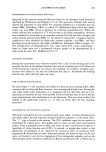
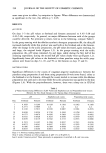
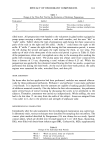
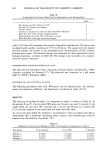
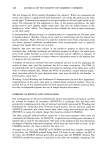
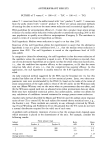
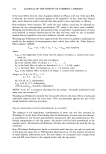
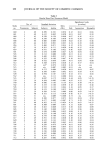
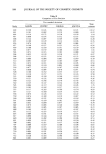
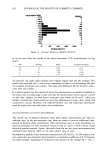
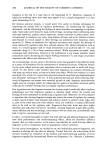
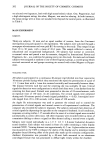
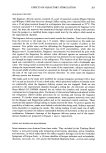
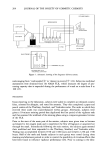
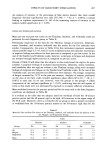
162 JOURNAL OF THE SOCIETY OF COSMETIC CHEMISTS Table III Scoring System for Contact Plates Used for Quantitation of the Bacterial Flora Score No colonies seen after 48 hours at 37øC Less than 30 colonies on 16 squares 30-100 colonies Colonies too numerous to count but more than 80% well-spaced More than 20% of the colonies merging together Heavy growth, more than 60% of the agar is covered More than 98% of the agar covered by colonies with 0.5 % Tween 80 to promote the growth of lipophilic diphtheroids. The plates were incubated under aerobic conditions at 37øC for 48 hours. The square with the highest bacterial density was chosen as the semiquantitative determination of CFU (colony- forming unit) count. The bacterial density was examined by three experienced micro- biological assessors, as shown in Table III. The average score was taken into consider- ation for further evaluation. DETERMINATION OF THE SKIN SURFACE pH VALUE The skin pH was determined with a flat glass electrode (Ingold, Steinbach/Ts., FRG) clinically evaluated by Schirren (17). The electrode was connected to a pH meter (pH521, WTW, Weilheim, FRG). MATHEMATICAL AND STATISTICAL ANALYSIS The following procedures were used: Wilcoxon's test for matched pairs, the determi- nation of correlation coefficient, and Spearman's correlation by ranks (18, 19). RESULTS The reduction of malodor of axilla 1 in comparison to axilla 2 is shown in Table IV. In the periods X and Y, the two-tailed Wilcoxon test for pairs was used. In period Z, the single-tailed test was used. We conclude that it can be used because it is certain that 0.25 ml water applied to the axilla does not lower the body odor. As can be seen from Table IV, perfumer 1 and perfumer 3 (the two males) were able to demonstrate that a deodorant containing water, ethanol, and triethylcitrate could be improved by the addition of perfume ("X"). Table IV Significance of Reduction of Malodor in Axilla 1 (test product) in Comparison to Axilla 2 Trial period X (no perfume) Y (no TEC) Z (placebo) Perfumer 1 0.07829 - 0.10264 0.01929 Perfumer 2 0. 23047 - 0. 53829 0. 02796 Perfumer 3 0.09755 - 0.12515 0.07254

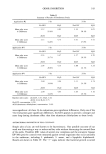
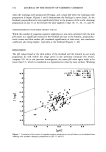
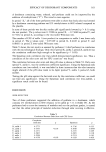
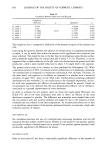
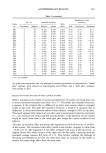
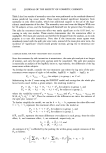
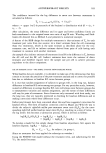
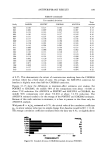
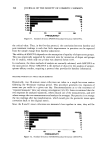
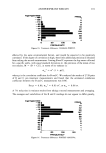
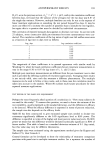
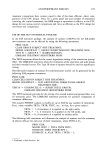
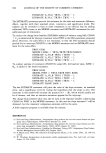
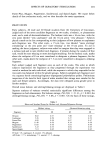
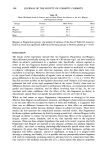
EFFICACY OF DEODORANT COMPONENTS 163 A deodorant containing water, ethanol, and perfume could not be improved by the addition of triethylcitrate ("Y"). The trend is even negative. In period "Z," all of the three perfumers were able to show that body odor was lowered by a deodorant containing perfume and 2% triethylcitrate in 60% ethanol compared to the placebo. In none of these periods was the skin surface pH significantly lowered (p 0.1) using the test product. The p values were 0. 15286 in period X, - 0.73660 in period Y, and 0.73432 in period Z, according to the two-tailed Wilcoxon test. The number of CFU of axilla 1 (test product) in comparison to axilla 2 was lower only in period Z. The p values were -0.93169 in period X, 0.4445 in period Y, and 0.00633 in period Z (two-tailed Wilcoxon test). Table V shows the test results as assessed by perfumer 1 (chief perfumer) in correlation with the microbiological findings. Only twice (period X, axilla 2 period Z, axilla 2) was the correlation coefficient high enough to be significant (p 0.05). The Spearman rank correlation test (two-tailed) demonstrated significance, too. Thus a correlation of low odor score and low CFU count/cm 2 was found. The correlation between odor score and skin pH value is shown in Table VI. Only once (period Y, axilla 1), was the correlation coefficient significant. Using the Spearman rank correlation test (two-tailed), it was concluded in three instances that the odor intensity might diminish if the pH value tends to be higher (period Y, axilla 1 period Z, both axillae). Testing the pH value against the bacterial score by the correlation coefficient, we could not find any significance. Using the Spearman rank correlation test (two-tailed), a significant result could not be found. DISCUSSION ODOR REDUCTION Two of three perfumers suggested the addition of perfume to a deodorant, which contains 2% triethylcitrate in 60% ethanol, to be useful (p 0.1) (Table IV). As the perfumers had to score the intensity of malodor and not the perfume grades, it turned out that the oldest principle of malodor reduction through odor covering is effective. Table V Correlation Between Odor Score and CFU Count Correlation coefficient p Spearman p X, axilla 1 0.2775 0. 1716 0.355 X, axilla 2 0.4345 0.05 0.3648 0.0495 Y, axilla 1 0.2371 0.2335 0.209 Y, axilla 2 0.2905 0.2905 0.118 Z, axilla 1 0.2958 0.2574 0. 165 Z, axilla 2 0.4178 0.05 0.4129 0.026
Purchased for the exclusive use of nofirst nolast (unknown)
From: SCC Media Library & Resource Center (library.scconline.org)