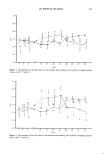
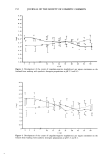
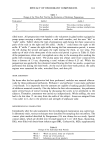
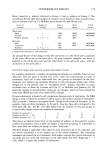
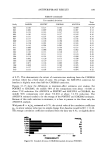
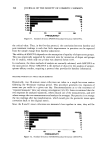
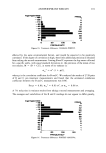
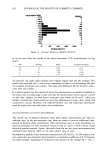
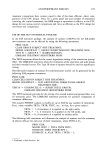
pH EFFECTS ON SKIN 149 DETERMINATION OF THE BACTERIAL SKIN FLORA Sampling of the cutaneous bacterial flora was based on the detergent scrub method as described by Williamson and Kligman (13,14). The specimens obtained were serially diluted and dispensed on solid media. For culturing staphylococci, Columbia agar was chosen (BBL, Heidelberg, FRG), to which 5% defibrinated sheep blood was added tryptic soy agar (BBL) served as medium for culturing propionibacteria. While the former medium was incubated at 37øC for two days in an aerobic atmosphere, the latter was incubated for seven days in an anaerobic setting (Gas Pak jars with nitrogen and carbon dioxide generator kits (BBL)) at the identical temperature. Coagulase-negative staphylococci were identified by Gram stain, plasma coagulase, test (BBL), and their biochemical reaction pattern (Api Staph, BioM•rieux, Nfrtingen, FRG) (compare 15). The identification of propionibacteria was--apart again from colony morphology-- based on Gram stain and a biochemical reaction pattern to be demonstrated by a ready-made kit (Api 20A, BioM•rieux) (16,17). CLEANSING PROCEDURE During the experiments every volunteer washed twice a day (in the morning and in the evening) the skin of the forehead (median line) and the proximal part of the flexor site of the forearm for a period of one minute. For washing, the synthetic detergent prep- arations were diluted in the way the individual was used to. Afterwards the washing solution was rinsed off with plain tap water. TIME COURSE OF INVESTIGATIONS On each of days 1-3 the volunteers still adhered to their previous washing habits. Both cutaneous pH and bacterial flora, however, were investigated at both sites. During the next eight weeks either preparation A or preparation B was used first and the corre- sponding one thereafter for four-week periods. Every seventh day (day 10 and so on) the same measurements were performed as at the beginning. This was done at about the middle of the application interval, i.e., at least six hours after the last cleansing procedure. MATHEMATICAL AND STATISTICAL ANALYSIS The figures included in the text, in general, show mean values, as well as maximum and minimum values the bars represent standard deviation symmetric to the mean value. The "=" sign is located at the median. The 95% confidence range for the median is symbolized by a blank space. This applies both to charts on pH values and bacterial counts. Time is generally given in days, pH values in units, and bacterial counts as a logarithm of colony-forming units (CFU). In general, in graphs data related to the application of preparation A are connected by continuous lines in connection with preparation B, dotted lines are used. Statistical analysis was based on sign test for tied pairs, on Student's t-test for the comparison of two independent samples, and on the determination of the correlation coefficient of Bravais and Pearson (18). p-Values are in

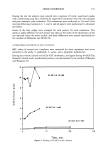
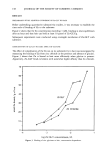
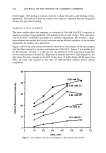
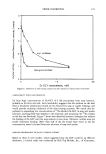
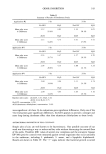
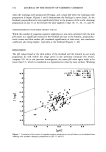
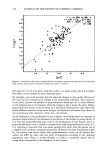
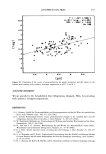
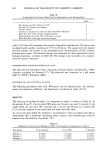
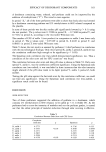
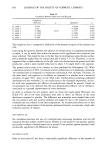
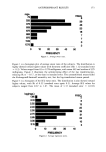
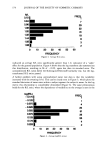
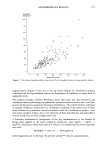
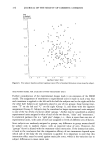
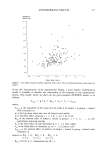
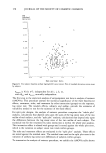
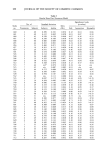
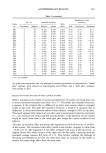
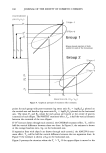
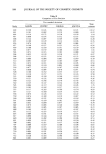
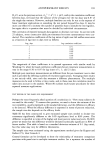
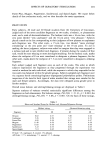
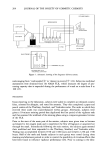
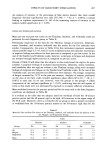
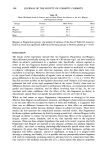
150 JOURNAL OF THE SOCIETY OF COSMETIC CHEMISTS most cases given in tables, by exception in figures. When differences are characterized as significant in the text, this reflects p 0.05. RESULTS pH VALUES On days 1-3 the pH values at forehead and forearm amounted to 4.45-5.68 and 4.42-5.86, respectively. In general, no major differences between each of the groups could be detected. For pertinent p values, here as in the following, compare Table I. In the group starting with the alkaline synthetic detergent preparation (B), the skin pH increased markedly while this product was used both at the forehead and at the forearm. After the change to the acidic preparation, the pH values decreased, again reaching, by and large, the original levels (Figures 1,2). In the groups starting with the acidic preparation (A), pH values remained, by and large, stable during the first half of the cleansing experiment during the second half pH values clearly went up (Figures 1,2). Significantly lower pH values at the forehead in those panelists using the acidic prep- aration were found on days 31, 45, and 59 at the forearm on days 17 and 31. BACTERIAL FLORA Significant differences in the counts of coagulase-negative staphylococci between the panelists using preparation A and those using preparation B were never found, either at the forehead or at the forearm, although the counts tended to increase while the alkaline preparation was used and to decrease while the acidic preparation was applied to the skin (Figures 3,4). With the propionibacteria, however, there was a sharp rise in CFU/ml Table I p-Values Characterizing Differences of pH Values and Staphylococcal and Propionibacterial Counts Between the Two Study Groups at the Various Days of Investigation pH Staphylococcal counts Propionibacterial counts Day Forehead Forearm Forehead Forearm Forehead Forearm 1 0.1829 0.3296 0.0128 0.1303 0.1062 0.1160 2 0.2771 0.5869 n.d. n.d. n.d. n.d. 3 0.4116 0.5013 0.0326 0.0607 0.1861 0.2076 10 0.0638 0.0226 0.5730 0.1810 0.1258 0.0031 17 0.0175 0.0076 0.6426 0.5464 0.1529 0.0002 24 0.0532 0.0428 0.3624 0.6649 0.0759 0.0024 31 0.0039 0.0119 0.8142 0.2733 0.0553 0.0080 38 0.1521 0.3395 0.2396 0.8237 0.7611 0.8216 45 0.0072 0.0541 0.0947 0.5921 0.2925 0.2392 52 0.0186 0.0467 0.0108 0.6818 0.1202 0.0246 59 0.0033 0.0240 0.0061 0.1770 0.0192 0.0002 Days 1-3: Previous washing habits used. Next 4 weeks: Panelists on either preparation A (pH 5.5) or B (pH 8.5). Last 4 weeks: Crossover period: Those previously on preparation A switched to B, and vice-versa.
Purchased for the exclusive use of nofirst nolast (unknown)
From: SCC Media Library & Resource Center (library.scconline.org)