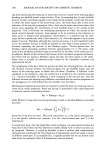
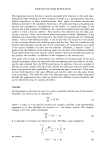
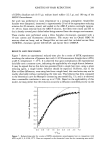
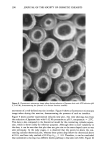
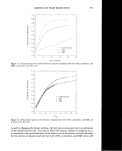
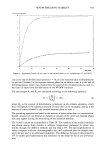
SHAMPOO ANALYSIS 311 A typical experimental protocol employed in this study included the following steps: 1. The measurement period of a new hair plug consisting of five pulses of 5 X 10- 5 M KCI solution at 12 cm Hg during 5 minutes in an alternating sequence: flow 30 s on-flow 30 s off. 2. On-line treatment of hair in the plug with solutions of surfactants or polymers consisting of five pulses of the treatment solution at 12 cm Hg during 5 minutes in an alternating sequence: flow 30 s on-flow 30 s off. 3. The measurement period of the treated hair consisting of 30 pulses of 5 X 10- 5 M KCI at 12 cm Hg during 30 minutes in an alternating sequence: flow 30 s on-flow 30 s off. 4. On-line retreatment of hair in the plug with the appropriate solutions consisting of five pulses of the treatment solution at 12 cm Hg during 5 minutes in an alternating sequence: flow 30 s on-flow 30 s off. 5. The measurement period of the retreated hair consisting of 30 pulses of 5 X 10- 5 M KCI at 12 cm Hg during 30 minutes in an alternating sequence: flow 30 s on-flow 30 s off. The first measurement period provides information about the surface and the perme- ability characteristics of a newly formed hair plug, in terms of the streaming potential, zeta potential [calculated from the Smoluchowski equation (4)], conductivity, and the flow rate of the test solution at a given pressure. These parameters are important for the data interpretation because of the considerable sample-to-sample variations in hair prop- erties as well as the difficulty in reproducible plug formation. In the second measure- ment period, the kinetics of sorption and desorption of ions can be followed by the streaming potential and the conductivity measurements. Note that while the streaming potential data reflect the state of the fiber surface, conductivity is related to the presence of free ions in the test solution. In addition to this, the changes in the flow rates may be indicative of either the variations in the volume of the fibers, i.e., their swelling or shrinking, or deposition of surfactant or polymer on the fiber surface. The third mea- surement period allows assessment of the effect of multiple treatments on hair. Some experiments included three or four treatments of the plug with shampoo solutions in order to better evaluate the buildup of conditioning agents. The rinsing cycle in these cases was shortened to 15 minutes. Several parameters were calculated for the quantitative description of the pe?formance of a shampoo: 1. Conductivity data were employed to calculate the rate coefficients of the rinse-off of conductive species from the plug according to the first order kinetics: In (conductivity (0)/conductivity (t)) = -kt (1) where conductivity (0), conductivity (t), k, and t are the initial conductivity of the plug (taken in the second cycle after the treatment), conductivity after time t, the rate desorption coefficient, and time, respectively. 2. Flow rate data can be employed to calculate the thickness, 8a, of a deposited layer of a conditioner according to the following dependence (3):

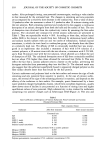
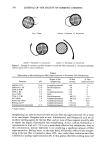
312 JOURNAL OF THE SOCIETY OF COSMETIC CHEMISTS BALLAST AIR L HOUSE AIR hANDmETER FI(IJRE la TREATaENT TREATaENT SOLUTION SOLUTION TEST RESERVOIR RESERVOIR SOLUTION 1 2 RESERVOIR v PRESSURE V TRANSDUCER O? V3 FL O COAPDTER-ACTDATED 2-rAY SOLENOID X •ANUAL 2-rAY VALVE • • •ANDAL 3-rAY VALVE DRA I N Figure 1. The schemes of the apparatus performing dynamic electrokinetic and permeability measurements of fiber plugs: (a) the valve diagram (b) control system diagram. •./R = 1 - (Qa/Q) ø-25 (2) where Q and Qa are the flow rates before and after deposition, respectively, and R is the average radius of the pores through which the test solution is passed. For the experi- ments described in this report, the calculated average pore radius, R, in the fiber plug is equal to 21.4 I. tm (3). Based on the calculated thickness of the deposited conditioning layer, a buildup coef- ficient could be defined as:
Purchased for the exclusive use of nofirst nolast (unknown)
From: SCC Media Library & Resource Center (library.scconline.org)