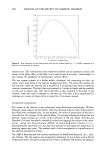
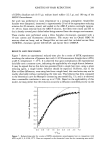
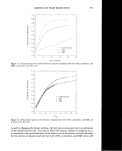
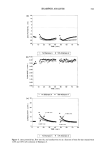
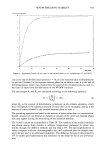
SHAMPOO ANALYSIS 329 (a) 20 • 10- E • s- Z 0- O n -5- UJ -10- N -20 0 1 '0 2'0 3'0 4'0 S'0 6•0 7'0 80 TIME ( min ) [] Shampoo H + Shampoo I (b) 4.50 4.00- 3.50- 3.00- 2.50- 2.00- 1.50- 1.00- 0.50- 0,00 0 (C) 30 1•0 2'0 3'0 4•0 5'0 6•0 7'0 80 TIME ( min ) L [] Shampoo H + Shampoo I I 25- (,.) r-, 10- z o 5- •LLL•LU• 0.0837 l/rain [] • [] • 0,0859 1/min 1'0 2'0 3'0 4'0 50 60 70 80 TIME ( min ) [] Shampoo H + Shampoo I Figure 9. Zeta potential (a), flow rate (b), and conductivity (c) as a function of time for hair treated with 1.0% solutions of Shampoos H and I.

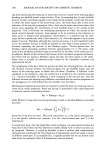
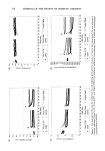
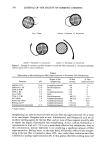
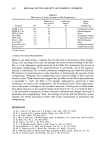
330 JOURNAL OF THE SOCIETY OF COSMETIC CHEMISTS lowing the treatment at about 8 •xmho/cm. This value is then slowly reduced to about 6 •xmho/cm after extended rinsing with the test solution. CONDITIONING SHAMPOOS BASED ON CATIONIC SURFACTANTS Figure 10a-c presents the results obtained for two formulations based on ammonium lauryl sulfate, sodium laureth sulfate, and cocamidopropyl betaine as a surfactant sys- tem, with and without ricinoleamidopropylethyldimonium ethosulfate as a conditioning agent [Shampoo J and a Shampoo K, respectively]. Comparison of the zeta potential traces provides evidence for the participation of the cationic surfactant in the process of interaction of Shampoo J with the fiber surface. For hair exposed to this formulation, there is a significant rise in the value of zeta potential immediately after the treatment, followed by a gradual decrease to an equilibrium level higher than that recorded for the untreated hair. This points to binding of cationic surfactant to hair, probably in com- bination with anionics that are present in the formulation in a large excess. On the other hand, treatment of hair with Shampoo K produces more negative zeta potentials, suggesting a higher concentration of negatively charged species on the surface of the hair as a result of adsorption of only anionic surfactants. Repeated application of both compositions demonstrates no significant variation in the equilibrium values of zeta potential, suggesting that there is no buildup of both conditioning and cleansing agents on the hair surface. In addition to this, the flow rate data do not indicate the formation of conditioning layers with measurable thickness as a result of shampooing with both formulations, as there is no change in the plug permeability even after four treatments. Conductivity data allowed quantitation of the desorption kinetics of the anionics. The calculated rates, which are relatively high, suggest that there is no significant change in the rinse-off rates between the first and subsequent shampooings. The results point to fast desorption of residual surfactants and the lack of their buildup in repeated treat- ments. SHAMPOOS BASED ON AMPHOTERIC OR WEAKLY ANIONIC SURFACTANTS The experimental traces obtained for the conditioning shampoo formulations based on amphoteric or weakly anionic surfactants are shown in Figure 1 la-c. Shampoo L, containing both cationic guar gum and cationic cellulose (Polymer JR), in combination with an amphoteric surfactant and a highly ethoxylated anionic detergent, 3-deceth carboxylic acid, produces a very significant surface modification of hair. The plug permeability is also reduced after the first treatment, indicating a deposition of a measurably thick conditioning layer on the fiber surface. Second application of the shampoo results in electrokinetic and permeability traces virtually identical to those obtained after the first treatment. The lack of additional adsorption after the second shampoo application may be caused by repulsive interactions between cationic species in the formulation and the hair, due to a high positive charge of its surface after the first shampooing. The high extent of surface modification in terms of charge could also be achieved by the application of Shampoo M, which contains a complex of cationic surfactant-anionic surfactant dissolved in the excess of betaine-type amphoteric detergent (Figure 1 la-c) (9). The electrokinetic data point to a high concentration of cationic species on the surface, which results in a relatively high, positive zeta potential after the first treat-
Purchased for the exclusive use of nofirst nolast (unknown)
From: SCC Media Library & Resource Center (library.scconline.org)