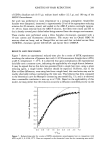
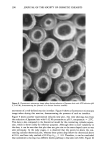
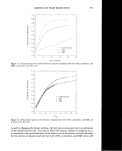
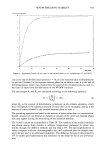
SHAMPOO ANALYSIS 3 3 5 sorption on rinsing with the test solution. Note that the conditioning shampoo used in this experiment does not affect the permeability of the plug. CONCLUSIONS The application of streaming potential, conductivity, and permeability measurements in a dynamic mode, by using hair plugs as substrates and shampoo solutions as adsorbates, allows a detailed analysis of the sorption/desorption phenomena occurring during the process of shampooing hair. Streaming and zeta potentials were found to be sensitive to the presence of both negatively and positively charged species in the formulations, while the permeability of a fiber plug was affected by the surface deposition of conditioning layers thick enough to restrict the flow of the test solution. The conductivity data provide a measure of the rate of desorption of ionic surfactants or polymers ad(b)sorbed during the treatment stage. They were analyzed by taking into consideration two parameters: (1) the value of conductivity at the beginning of the rinsing with the test solution (one rinsing cycle after the treatment stage), and (2) the rate constant of the conductivity decrease during the rinsing stage, calculated by assuming the first-order kinetics in the range of conversions 0-80%. It should be stressed that the observed conductivity changes are related to the removal of strongly bound ionic species. Unad- sorbed or weakly bound surfactants or polymers from the treatment solution, which give rise to the plug conductivity of the order of mmho/cm, i.e., 2-3 orders of magnitude higher than the values recorded during the rinsing stage, are quickly washed off the plug (within 1-2 rinsing cycles after the treatment), unless the treatment reduces the per- meability of the plug, which may delay this process by several rinsing cycles. Nonconditioning shampoos, based on anionic surfactants, show the binding of deter- gents to hair by making it more negatively charged than untreated hair. The effect is transient, and zeta potentials return to the values characteristic for untreated hair as a result of desorption of anionic surfactant during the rinsing with the test solution. The kinetics of this process could be further monitored by the conductivity measurements, which showed relatively high values at the beginning of the rinsing cycle (8-14 }xmho/ cm for 1% treatment solutions) and rate coefficients ofdesorption in the range from 0.08 to 0.19 min- • The rates of desorption were usually higher for more concentrated shampoo solutions, and also increased with the number of consecutive treatments with the same composi- tion. The dependence of the desorption rate on concentration makes the comparisons of various commercial formulations difficult, since the quantitative content of surfactants in the investigated formulas was not known. Since it was also demonstrated that the rates of desorption of single anionic surfactants depend on their chemical structure (3), it may be further presumed that the surfactant residues of shampoos would desorb with different rates, depending on the surfactant blend used in the formulation. In addition to this, other formulation components, including nonionic or amphoteric surfactants or emulsifiers, which form mixed micelies or other colloidal structures with the primary surfactants and are largely invisible by the employed technique due to the lack of the electrical charge, may codeposit on the fiber surface and affect the process of desorption. Relationship between the shampoo composition in terms of the employed surfactant type (or other auxiliary ingredient) and the process of their deposition and desorption was not investigated in this paper.

336 JOURNAL OF THE SOCIETY OF COSMETIC CHEMISTS Conditioning shampoos containing cationic polymers produce a durable modification of the surface by significantly increasing the values of zeta and streaming potentials. The extent of change varied for different formulations, being probably primarily determined by the type and concentration of a conditioning agent. The shape of the curves, zeta potential as a function of rinsing time, obtained for the systems based on anionic detergents with cationic polymer as a sole conditioning agent, suggest an initial depo- sition of a polymer-surfactant complex followed by desorption of anionic detergent, leaving the surface progressively less negatively charged. The experiments also provided evidence for the deposition of cationic surfactants on hair from formulations containing an excess of anionic detergents. The effect in this case is smaller than that observed for the systems based on high-molecular-weight cationic polymers. The modification of fibers by a composition containing uncharged silicone oil as a conditioning agent could only be detected by permeability measurements. Adsorption of silicone from this system was found not to affect the surface charge of hair fibers. The largest extent of surface modification was observed for the compositions based on amphoteric surfactants or blends of amphoteric surfactants with highly ethoxylated anionic detergents. Two investigated systems containing either cationic polymers or cationic surfactant-anionic surfactant complex as the conditioning agents were shown to reverse the surface charge of hair from negative to high-positive. Permeability measure- ments, on the other hand, indicated that the treatment of hair with these two compo- sitions produced relatively thin conditioning layers on the fiber surface. Finally, the technique can be employed to investigate the removability of conditioning layers left by the application of conditioning shampoos by nonconditioning cleansing formulations. The efficacy of this process can be estimated by using both the electroki- netic parameters (zeta potential) or the thickness of adsorbed layers calculated from the permeability data. The results presented in this paper suggest incomplete removal of adsorbed cationic polymer or cationic surfactant-anionic surfactant complex by an all- anionic composition. REFERENCES (10) (1) M. M. Breuer, Cleaning ofhair, J. Soc. Cosmet. Chem., 32, 437 (1981). (2) G. Barker, "Surfactants in Shampoos," in Surfactants in Cosmetics, Surfactant Science Series, Vol. 16, M. M. Rieger, Ed. (Marcel Dekker, New York, 1985), p. 251. (3) J. Jachowicz, C. Williams, and S. Maxey, Sorption/desorption of ions by dynamic electrokinetic and permeability analysis, Langmuir, 9(11), 3085 (1993). (4) A. W. Adamson, Physical Chemistry of Surfaces (John Wiley & Sons, Inc., New York, 1990), p. 207. (5) E. D. Goddard, J. A. Faucher, R.J. Scott, and M. E. Turney, Adsorption of polymer JR on keratinous surfaces•Part II, J. Soc. Cosmet. Chem., 26, 539 (1975). (6) J. A. Faucher, E. D. Goddard, and R. B. Hannan, Sorption and desorption of a cationic polymer by human hair: Effects of salt solutions, Text. Res. J., 47, 616 (1977). (7) H. Rushton, C. L. Gummer, and H. Flesh, Effects of shampooing on hair. Presented at the III Annual Meeting of the European Hair Research Society, Berlin, October 2-3, 1992. (8) D. H. Birtwistle, Shampoo composition containing surfactants and silicones, and guar gum deriva- tives, EP 468721 (1992), assigned to Unilever. (9) F. Harusawa, Y. Nakama, and M. Tanaka, Application of the anionic-cationic mixed surfactants to shampoos as conditioning agents. Preprints of the 16th IFSCC Congress, New York, October 8, 1990, Volume 2, p. 382. M. L. Garcia and J. Diaz, Combability measurements on human hair, J. Soc. Cosmet. Chem., 27, 379 (1976).
Purchased for the exclusive use of nofirst nolast (unknown)
From: SCC Media Library & Resource Center (library.scconline.org)