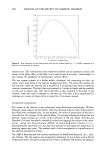
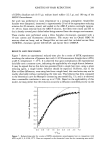
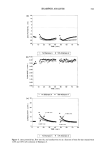
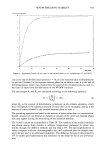
SHAMPOO ANALYSIS 321 (a) 20 15- E v 5- z o • -15-",,- -20- -25 0 1'0 2'0 30 40 5• 6b 7b 80 TIME ( min ) (b) 4.50- 4.00- • 3.50- •n 3.00- v 2.50- t 2.00- •o 1.50- 1.00- 0.50- 0.01 (C) 30 25- •_ 15- 0 • 10- z 0 (,.) 0 0 Shampoo A ß 10% Shampoo A ] 1'0 2b 3b 4b 5b 6'0 7'0 TIME ( min ) [] 1%ShampooA ß 10%ShampooA ] 8O ß 0,1199 l/rain ß 0.1556 l/rain ß 0.0937 l/rain 0.1035 1/rnin 1'0 20 30 4'0 50 6'0 7'0 TIME ( min ) 8O D 1%ShampooA ß 10%ShampooA ] Figure 4. Zeta potential (a), flow rate (b), and conductivity (c) as a function of time for hair treated with 1.0% and 10% w/w solutions of Shampoo A.

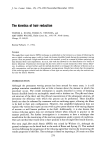
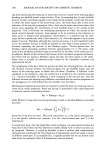
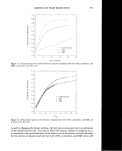
322 JOURNAL OF THE SOCIETY OF COSMETIC CHEMISTS and containing only a small amount of a cationic surfactant. Each treatment was re- peated twice in order to estimate the extent of surfactant buildup on the fiber surface. Zeta potential traces suggest binding of the anionic detergent to the hair surface, as indicated by the potential values more negative than those obtained for untreated hair (corresponding to the first five datapoints on each curve). The shape of the zeta potential vs time of rinsing curves may also point to the existence of a shallow minimum that could correspond to the highest density of adsorbed anionic species, gradually removed from the surface by prolonged rinsing with the test solution. The position of this minimum is shifted toward shorter times after the second treatment, which is clearly evident for the 10% shampoo solution. The variation in streaming potential coincides with a relatively slow decrease in the conductivity of the plug, which is probably mostly related to a continuous desorption of the surfactants from the bulk of the fiber. As in the case of single-component anionic surfactant solutions, the rate of desorption after the second treatment is higher than that observed after the first treatment cycle (Table I). As suggested previously (3), this may reflect a limited capacity of the fiber to bind surfactant, leading to the saturation of the ad(b)sorption sites after the first treatment and consequently faster desorption of unbound or weakly bound species after the second treatment. Similar explanation can be given for the observed higher rates of desorption in experiments involving 10% shampoo solutions (Figure 4c). Also, there is no change in plug permeability as a result of hair exposure to both dilute and concentrated shampoo solutions, suggesting that no surface deposition occurs in the process of sham- pooing with this nonconditioning formula. The electrokinetic and permeability traces for another nonconditioning system, based on a combination of anionic and amphoteric detergents, are presented in Figure 5a-c. Three plug treatments were performed in this experiment in order to assess a potential depo- sition of cationic agents (included in the formulation at a low concentration) as well as the buildup of surfactants on hair. Zeta potential results (Figure 5a) suggest the lack of any significant modification of the fiber surface, with only a very small decrease in zeta potential after the treatment. In accordance with this result are the permeability data (Figure 5b), which also point to the lack of formation of thick deposits on the fiber surface. A decrease in the flow rate observed immediately after the treatment is probably related to an increased viscosity of a shampoo solution as compared to the test solution. Conductivity measurements (Figure 5c) yielded relatively high desorption coefficients that might be related to the use of SLES-2, an ethoxylated surfactant with a high rate of desorption from hair (Table I), as a primary detergent in this formulation. CONDITIONING SHAMPOOS BASED ON CATIONIC POLYMERS The electrokinetic and permeability traces of four different commercial shampoo for- mulations based on anionic detergents containing either a cationic guar gum (Shampoos C, D, and F) or a cationic cellulose in combination with Merquat 550 (co(acrylamide- dimethyldiallyl ammonium chloride)) (Shampoo E) as a conditioning agent are presented in Figure 6a-c. The zeta potential traces for hair treated with all compositions clearly show less an anionic nature of the hair surface as a result of the adsorption of cationic polymer. The extent of modification of the surface charge is highest after the treatment with Shampoo C and lowest as a result of washing with Shampoo F. The differences in the ability of various products to alter the hair surface can be probably attributed to the
Purchased for the exclusive use of nofirst nolast (unknown)
From: SCC Media Library & Resource Center (library.scconline.org)