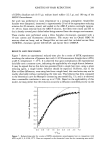
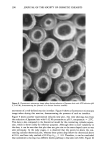
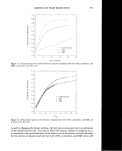
W/O/W EMULSION STABILITY 339 min to 1250 rpm and to 750 rpm. The initial temperature of the two solutions was set at 70øC, and was lowered to room temperature (25øC) during the emulsification process. The total mixing time was 30 min. This emulsion was incorporated into an aqueous solution of hydrophilic emulsifier at room temperature (25øC). The mixture was agitated at 200 rpm for 30 min. DESCRIPTION OF ASSAYS The assays were the following: a macroscopic analysis, a thermal stability test at 25øC -+ IøC and 40øC -+ iøC, and spectrophotometric and chromatographic analyses to monitor the stability. SAMPLE TREATMENT FOR SPECTROPHOTOMETRIC ANALYSIS Samples were diluted with sodium chloride solution 4.32 g/l (1:10). The suspension was decanted for one hour. The lower phase was pipetted and then clarified by dilution with tetrahydrofuran (1:2). The absorbance of this solution was determined using a Kontron 930 spectrophotometer at a wavelength of either 309.5 nm for dihydralazine alone or 488.5 nm after derivatization with ninhydrin. SAMPLE TREATMENT FOR CHROMATOGRAPHIC ANALYSIS Samples were diluted with the sodium chloride solution (1:1) prior to injection. Chro- matographic measurements were made with a Jasco PU 980 pump (Prolabo, Paris, France) equipped with a 20-1xl loop Rheodyne 7125 injection valve. UV detection at 310 nm (maximum absorbance of dihydralazine in mobile phase) was effected with a Shimadzu SPD-2A UV spectrophotometer (Touzart et Matignon, Vitry-sur-Seine, France). The flow rate was set to ! ml/min. The chromatograms were recorded using a Hewlett-Packard 3395 integrator. A Merck C 8 RP-Select B analytical column (5-mm, !25 X 4-mm ID) was employed (Merck, Nogent-sur-Marne, France). The mobile phase was methanol/water (50:50), potassium dihydrogen phq,sphate (2.5 X !0-2 M) and heptan-! sulfonic acid sodium salt (2.5 x !0-2 M). Methanol, obtained from Prolabo, was HPLC grade. Ultra-high quality water was obtained from a Milli-Q plus !85 (Millipore, St-Quentin, France). Potassium dihydrogen phosphate was ob- tained from Merck. pH mobile phase was adjusted to 4.4 using o-phosphoric acid. Heptan-! sulfonic acid sodium salts of Lichropur © quality were obtained from Merck. The mobile phase was filtered through a 0.22-1xm Millipore filter under vacuum. MATHEMATICAL TREATMENT Calculations were done using the non-linear regression package Minim !. 8 from R. D. Purves (University of Otago, Dunedin, New Zealand). The Gauss-Newton-Macquardt algorithm was used to model the parameters of the appearance kinetic of the tracer in the external phase.

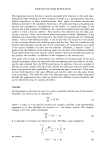
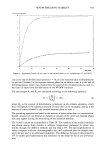
340 JOURNAL OF THE SOCIETY OF COSMETIC CHEMISTS RESULTS AND DISCUSSION CHOICE OF DIHYDRALAZINE SULFATE AS A TRACER We decided to choose an active substance since the use of W/O/W emulsion is of primary interest for the cosmetic and pharmaceutic industries and will grow in the future. Several general requirements accounted for the choice of the tracer. As it was used to quantify the emulsion breakdown, this compound should not diffuse through the oil barrier. It should present the lowest oil/water diffusion coefficient possible. Its stability must be established under various conditions of pH and temperature. It should be easily detected at small levels within the emulsion. The determination of these parameters was decisive for performing rigorous breakdown studies. Among the possible candidates usable as tracer, dihydralazine was selected for potential properties concerning oil/water diffusion and UV-visible detection as well as for its stability. This vasodilatator drug remains stable below pH = 12 and between 0 and 180øC. Since none of the processing steps of the W/O/W emulsion formulation involved temperature above 70øC, it can be considered that the tracer remains stable during the fabrication. The molecular extinction coefficient (e3o9.5), calculated at pH = 4.4 was 5150 mol- •.1. In order to determine the pH that ensures the absence of diffusional transport through the oil layer, the pKa of dihydralazine were measured by potentiometric titration in aqueous solution this compound exhibits two pK a at 6.4 and 10.5, corresponding to the two amine functions. The partitioning coefficient of dihydralazine was then determined at pH = 4.4, en- suring a full ionization of the two amine functions. The composition of the liquid media was chosen to meet the W•/O/W2 emulsion with relative phase volumes of W• (inner aqueous phase) and O (oil layer) of 1:4 and identical concentration of lipophilic surfac- tants. The yield of extraction was calculated after spectrophotometric measurements of dihydralazine concentrations' aqueous phase at 309.5 nm, according to the following equation: 1 x00:(,aO o where A o is the absorbance of the aqueous phase prior to the addition of the oil solution, Ar is the absorbance of the aqueous phase after the partition equilibrium is completed, e is the extinction coefficient of dihydralazine at 309.5 nm, and V^Q is the aqueous phase volume (in ml). The R average value of 0.41% allows us to consider that dihydralazine will remain in the inner aqueous phase of the W/O/W emulsion. Three samples were analyzed in triplicate for the partitioning coefficient determination. Hence, dihydralazine appears to be a suitable marker molecule to evaluate the emulsion instability.
Purchased for the exclusive use of nofirst nolast (unknown)
From: SCC Media Library & Resource Center (library.scconline.org)