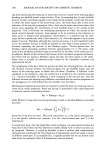
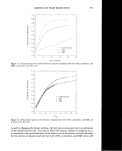
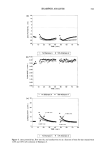
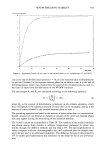
SHAMPOO ANALYSIS 3 3 3 ment. Second shampooing, however, leads to a further increase of zeta potential as a result of the accumulation of the conditioning agent. On the other hand, there is no reduction of plug permeability, implying that the surface deposits are very thin. Also, unlike the compositions based on anionic surfactants, both amphoteric-based shampoos produce little increase in conductivity of the hair plug after the treatment. It is also noteworthy that Shampoos L and M deliver much more pronounced condi- tioning effects than other systems reported in this study. This observation is based on the mechanical measurements of combing forces on hair tresses of virgin brown hair subjected to one or multiple treatments with various shampoos (10). In these experi- ments, both compositions L and M were found to reduce the wet combing work to a significantly larger extent than other conditioning formulations, including those con- taining cationic guar gum. REMOVABILITY OF CONDITIONING SHAMPOO RESIDUES BY NONCONDITIONING SHAMPOOS Repeated use of conditioning shampoos usually leads to a gradual buildup of the conditioning agent, and ultimately, an excessive coating of hair. Nonconditioning shampoos, on the other hand, are formulated to remove residues from hair. Figure 12a-c presents the results of an experiment in which hair was first treated with a 1% solution of a conditioning shampoo containing a cationic guar gum (Shampoo C) and then exposed to a nonconditioning formulation based on sodium alkyl olefin sulfonates at the concentration of 1% and 10% (Shampoo A). A treatment with a conditioning shampoo leaves a layer of an adsorbed cationic guar gum, probably in the form of a complex with an anionic surfactant, as evidenced by an increased value of zeta potential in comparison with untreated hair (compare Figures 6 and 12). During rinsing with the test solution there is a further increase in zeta potential, probably as a result of desorption of anionic surfactant from the outermost layers of the surface complex. Also, a deposition of a conditioning layer reduces the permeability of the plug, as reflected by a decrease in the flow rates after the treatment. The estimated thickness of the deposited layer according to equation 2 is 1.5 }xm after 30-minute rinsing with the test solution. An exposure of the guar gum-modified fibers to a nonconditioning shampoo at a concentration of 1% produces only a small decrease in streaming and zeta potentials. There is also a very small increase in the permeability of the plug. Both results suggest that only a small fraction of the conditioning agent was desorbed. The change in zeta potential might be actually caused by binding of an anionic detergent to guar gum and its neutralization, rather than by the desorption of the polymer. The use of a treatment at 10% produces a more significant effect in terms of zeta potential, by decreasing their values to nearly the level characteristic for untreated hair. On the hand, the permeability of the plug increases only slightly, suggesting that the shampooing removes a small fraction of the surface deposits. An incomplete removal of the surface deposits left after the application of a conditioning shampoo based on a cationic surfactant-anionic surfactant complex (Shampoo M) is illustrated by the data presented in Figure 12a-c. The zeta (streaming) potential trace demonstrates a significant modification of hair surface as a result of shampooing, and the partial removal of a conditioning layer following the application of a 1% solution of the nonconditioning shampoo. The zeta potential trace indicates initial binding of the anionic surfactant to the positively modified surface with its subsequent gradual de-

334 JOURNAL OF THE SOCIETY OF COSMETIC CHEMISTS (a) 20 15- •' 10 • E v 5- z O- LU o uJ -10- N -2( 0 1 '0 2'0 3'0 4'0 5'0 6'0 7'0 TIME ( min ) 80 (b) 4.50 4.00- 3,50- (.3 • 3.00- v 2.50- 2.00- O 1.50- ._1 LL 1.00- 0.50- 0.00 0 [] C(1%)/A(1%) + C(1%)/A(10%) • M(1%)/A(1%) 1 ..•1-•+4'++ ++ +.4+ + ++•. 1'0 2'0 3'0 4'0 5'0 6'0 7'0 TIME ( min ) 80 (c) -- o z o o [] 0(1%0)/A(1%) + 0(1%)/A(10%) • M(1%)/A(1%) 30 20- 15- 10- 5- •!t• 0 0 1'0 2'0 3'0 4'0 5'0 6'0 7'0 80 TIME ( min ) [] C(1%)/A(1%) + C(1%)/A(10%) • M(1%)/A(1%) J Figure 12. Zeta potential (a), flow rate (b), and conductivity (c) as a function of time for the following combinations of treatments: (1) 1% Shampoo C-1% Shampoo A, (2) 1% Shampoo C-10% Shampoo A, and (3) 1% Shampoo M-l% Shampoo A.
Purchased for the exclusive use of nofirst nolast (unknown)
From: SCC Media Library & Resource Center (library.scconline.org)