348 JOURNAL OF THE SOCIETY OF COSMETIC CHEMISTS unique in themselves and have led us to believe that permanent hair straightening is governed by a different molecular process. EXPERIMENTAL HAIR SAMPLES Two types of hair samples were used in the experiments. Curly hair samples, obtained from Afro-Americans, were used to assess the efficacy of hair straightening. Typically, these hair samples consisted of coils of about 0.5 cm in diameter. To study the fiber swelling and supercontraction characteristics, Caucasian dark brown hair was used. All hair samples were cleaned with a solution of 12.5% sodium lauryl sulfate prior to treatments. EVALUATION OF HAIR STRAIGHTENING EFFICACY Temporary hair straightening is typically characterized by a ready reversion of the hair fiber to its original curliness after even one washing. A criterion that we used in this study to determine the permanency of hair straightening was how well the hair fiber remained in a straight configuration after the fiber was immersed in water (at room temperature) for five minutes and dried. The degree of hair straightness was determined visually: the hair fiber was considered straight when there was no evidence of curliness. EVALUATION OF HAIR SWELLING AND HAIR SUPERCONTRACTION To determine the degree of hair swelling, the diameter of a wet hair fiber was measured prior to treatment using a stereoscopic microscope equipped with an eyepiece that has a micrometer scale. The diameter of the same hair fiber was again measured after exposure to a treatment reagent. To determine the extent of fiber supercontraction, the length of straight Caucasian hair fiber was immersed in water and measured in a microcapillary before and after the treatment. ANALYSIS OF CYSTINE AND LANTHIONINE CONTENT Hair samples were first hydrolyzed by heating with 6 N HCI in a sealed tube for 24 hours at 110øC. After removal of the acid in a rotary evaporator at 30øC and dilution with 0.2 N sodium citrate buffer (pH 2.2), the amino acid content was determined with a Beckman 120-C amino acid analyzer. RESULTS AND DISCUSSION HAIR STRAIGHTENING WITH THIOGLYCOLATE/HYDROGEN PEROXIDE SYSTEM One of the unusual aspects of hair straightening is the fact that conventional hair waving products are not particularly effective in achieving permanent hair straightening. When a straight hair fiber is set in a curly configuration (wound on a rod, for example) and

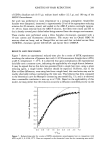
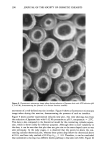
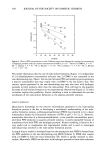
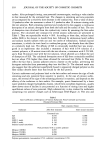
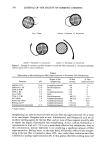
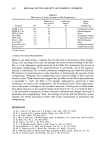
HAIR STRAIGHTENING 349 treated with a commercial thioglycolate waving lotion for 30-40 minutes, followed by a neutralization step, the hair fiber will acquire a curly configuration that will survive subsequent washing. On the other hand, if a curly Afro hair fiber is set in a straight configuration (the fiber is held straight under a small strain, for example), and treated with a similar thioglycolate waving lotion and neutralization step, the hair fiber will acquire a temporary straight configuration. However, the hair fiber will revert to most of its original curliness on even one subsequent washing. The failure of this reduction/ re-oxidation scheme to impart a more permanent straightness to the hair fiber suggests that a molecular model comparable to hair waving may not be entirely applicable. THE PHENOMENON OF SPONTANEOUS HAIR UNCOILING Another unique aspect of hair straightening is the spontaneous uncoiling of the hair fiber. Placed in a solution of appropriate reagent, a curly hair will uncoil itself without the help of an external force. This phenomenon can be demonstrated by the following experiment: A curly hair fiber is immersed in a 1 N sodium hydroxide solution. The curvature of the hair is observed and can be seen to increase slowly, and in about 10 to 15 minutes, the hair fiber becomes practically straight. In other words, unlike hair waving, hair straightening can be achieved without the application of an external force to strain the hair fiber. The question arises as to what causes the curly hair fiber to uncoil and allow hair straightening to proceed. We thought of two possibilities: One explanation could be the swelling action of the reagent, since sodium hydroxide is an excellent swelling agent for keratin fiber. In fact, it has been pointed out in the literature (5,6) that, based entirely on geometrical consideration, any radial swelling of a curved segment of a fiber should result in an increase in the radius of curvature of the fiber. Another explanation could be the result of fiber supercontraction (7). In fact, under closer examination, as shown in Figure 1, it can be seen that in a 1 N sodium hydroxide solution, the uncoiling of the hair fiber is accompanied by some changes in fiber geometry. HAIR SWELLING AND HAIR SUPERCONTRACTION To assess the relative importance of these two factors to permanent hair straightening, we proceeded to examine the swelling and supercontraction behavior of hair fibers in a variety of reagents and to establish how they would impact on hair straightening. In this set of experiments, curly Afro hair fibers were treated with various reagents, some of which are known to be good keratin swelling agents, while others are also known to cause supercontraction in keratin fibers. These reagents included sodium hydroxide, resorcinol, lithium chloride, urea, dithiothreitol (DTT), thioglycolic acid (TGA), tris (hydroxymethyl)phosphine (THP), boiling water, and cuprammonium hydroxide. The degree of hair swelling and the amount of fiber supercontraction were measured and correlated with the corresponding degree of permanent hair straightening. Results are shown in Table I below. It is interesting that while all the reagents in the study are effective hair swelling media, permanent hair straightening is achieved only by those that are also able to induce hair supercontraction. From the data shown in Table I, it is obvious that effective hair
Purchased for the exclusive use of nofirst nolast (unknown)
From: SCC Media Library & Resource Center (library.scconline.org)