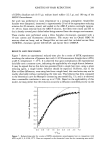
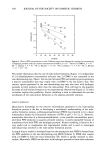
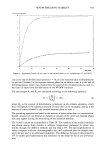
SHAMPOO ANALYSIS 313 TREATPENT I I--[-- -- .,•--•--• SOLUTION • ........... 1 ANO 2 • TEST L_• • • • OlC•T^L SOLENOlO AIxD RELAY CONTROl- "n-r PRESSLT• __ TRAN•R REt42•UT OPOT RELAY CONOJCT I V I TY METER Rr'o AOC BOARO, DIGITAL [/O PORTS PORTS 1 & 2. 11•PUT COM1 BALANCE FIQJRE lb COMPUTER OIGITAL [/0 BOARID. PC•T 8. OUTPUT DIGITAL IYO EOARO. PORTS 3 & 4. IlXl:4JT Figure 1. Continued. (after treatment) - 8 a (before treatment)] X 100%/8 a (before treatment) (3) 3. A parameter characterizing buildup can also be derived from the zeta potential (•) measurements. In this case, it is assumed as an approximation that the zeta potential is proportional to the number of charged sites on the surface (4), and thus reflects the surface concentration of the conditioning species. The buildup coefficient is defined as' (after treatment) - • (before treatment)] X 100%/1• (before treatment) (4)

314 JOURNAL OF THE SOCIETY OF COSMETIC CHEMISTS MATERIALS SAMPLES OF HAIR All fiber samples were commercially blended virgin brown hair purchased from DeMeo Brothers, New York. The hair was precleaned with a nonionic surfactant, Triton X-100, and thoroughly rinsed under deionized water. Hair samples were then soaked in three 500-ml water baths for 15 min each to ensure a complete removal of any residual surfactant. Hair swatches were dried at 37øC. SURFACTANTS AND POLYMERS Sodium lauryl ether sulfate with two moles of ethoxylation (SLES-2) was a commercial sample in the form of 25% aqueous solution, obtained from Rhone-Poulence. Cocam- idopropyl betaine (CAPB) was in the form of 35% aqueous solution with NaC1 content 5.6% maximum, and was obtained from Witco Chemical Company. Cocamidopropyl hydroxysultaine (CAPHS, Lonzaine CS) was obtained from Lonza. Isolaureth-6 (Tergitol TMN-6, 90% aqueous solution), octoxynol-10 (octylphenoxypolyethoxyethanol, Triton X-100) and octoxynol-40 (Triton X-405, 70% aqueous solution) were obtained from Union Carbide. Cationic polymer, guar gum 2-hydroxy-3-(trimethylammonium)-propyl ether, chloride (Jaguar C-17) was obtained from Rhone-Poulenc. The polymers under the tradenames of Merquat 100, 550, and 280 were obtained from Calgon Corp. and were used without additional purification. Cationic surfactant, Bis(amidopropyl-N,N-dimethyl-N- ethylammonium ethosulfate (Schercoquat DAS, 90% aqueous solution) was supplied by Scher Chemicals, Inc. SHAMPOOS Shampoos were both commercial formulations or prototypes prepared from commer- cially available raw materials. Qualitatively, the compositions are given below: Shampoo A. Water, sodium C 14-C16 olefin sulfonate, lauramide DEA, cocarnidopropyl betaine, fragrance, quaternium-60 (lanolin/isostearamidopropyl ethyl dimethyl ammo- nium ethosulfate), citric acid, sodium chloride, ethyl hexanediol, DMDM hydantoin, disodium EDTA, FD&C Yellow No. 5, FD&C Blue No. 1, FD&C Red No. 33. Shampoo B. Water, SLES, SLS, cocamidopropyl betaine, lauramide DEA, ricinoleami- dopropyl ethyldimonium ethosulfate (0.5%), panthenol, dimethicone copolyol, amodimethicone (and) tallowtrimonium chloride (and) nonoxynol-10, polyquaternium- 11, mica (and) TiO2, citric acid, fragrance, DMDMH and iododpropynyl butylcarbam- ate, Lonza-Glydant Plus. Shampoo C. Sodium lauryl sulfate, sodium laureth sulfate, guar hydroxypropyltrimo- nium chloride, PEG-15 tallow polyamine, cocamide MEA, cetearyl alcohol and cete- areth-20, glycol distearate, methylparaben, DMDM hydantoin, sodium sulfite, citric acid, deionized water, panthenol, fragrance, DEA methoxycinnamate. Shampoo D. Water, sodium lauryl sulfate, sodium laureth sulfate, cocamidopropyl be- taine, glycol stearate, lauramide DEA, dimethicone copolyol, guar hydroxypropyltri-
Purchased for the exclusive use of nofirst nolast (unknown)
From: SCC Media Library & Resource Center (library.scconline.org)