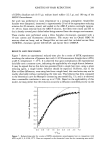
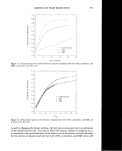
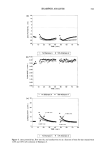
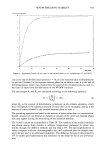
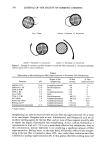
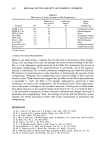
SHAMPOO ANALYSIS 327 consecutive shampooing led to a precipitation of an additional layer of the polymer or polymer-surfactant complex, as evidenced by both electrokinetic and permeability data. The buildup coefficients were calculated from both flow and electrokinetic data. Both methods gave very similar results, showing that the largest increase in the surface coating occurs after the second shampooing. CONDITIONING SHAMPOOS BASED ON SILICONE OILS Figure 8a-c presents the electrokinetic and permeability data obtained for 1% and 10% solutions of a shampoo formulation based on anionic detergents, comprising dimethi- cone (nonionic silicone oil) and tricetylammonium chloride as conditioning agents (Shampoo G). For the 1% solution, both electrokinetic and permeability data do not provide convincing evidence for alteration of the hair surface by either the silicone oil or the cationic surfactant. Note, however, that there is no increase in the plug permeability after the first treatment and a very small decrease after the second treatment (Figure 8b). This contrasts with the corresponding small increases in the flow rate observed in control runs with the test solution as well as in experiments employing nonconditioning, cleansing compositions such as Shampoo A (Figure 4b). The zeta potential and conduc- tivity traces are characteristic of the system containing a high concentration of an anionic detergent. The plot of zeta potential as a function of time shows a shallow minimum, probably corresponding to the maximum concentration of the anionics on the surface, and the conductivity data suggest their relatively slow rate of desorption. The deposition of a conditioning layer of silicone oil becomes evident from the measurements performed on a hair plug treated with a 10% solution of Shampoo G. A reduction in the plug permeability occurs both after the first and second treatment cycles, which points to a buildup of a modifying oil layer on the fiber surface. This result is consistent with the data reported by Rushton et al. (7), which shows a gradual increase in silicone concen- tration on hair from 0 to 275 ppm within the first five shampooings. Figure 9a-c presents the results obtained for a composition containing anionic deter- gents with nonionic silicone oil (dimethicone) and cationic guar gum as conditioning agents (Shampoo H). This kind of a shampoo is very effective in reducing the combing forces of wet hair (8). Both zeta potential and permeability data suggest a very complex mechanism of interactions between the components of this formulation and the hair surface. The zeta potential is initially increased by adsorption of the cationic guar gum, but then becomes more negative, probably as a result of desorption of the polymer or precipitation of a nonionic silicone oil. Permeability is also significantly reduced im- mediately following the treatment cycle, but then increases as a result of desorption or rearrangement processes occurring on the surface of the hair. The desorption rate of ionic surfactant from this formulation is relatively slow, as indicated by the calculated rate coefficient of the conductivity decrease shown in Figure 9c. A composition containing dimethicone and cyclomethicone in combination with two dialkyl quats and one monoalkyl quat yields still different electrokinetic and perme- ability characteristics (Shampoo I, Figure 9a-c). Zeta potential traces clearly demon- strate the adsorption of cationics by becoming less negative following the treatment. The permeability is also gradually reduced in the process of rinsing. Also, most of the conductivity drop occurs in the first measurement cycle, with the first datapoint fol-

328 JOURNAL OF THE SOCIETY OF COSMETIC CHEMISTS (a) 20- 15- •' 10- • 5- Z 0- 0 m -5- w -10 -•5-•li•, -20 0 (b) 4.50 4.00- • 3.50- • 3.00- -.._ 8 v 2.50- 2.00 O• • .50- LL 1.00- 0.50- O.OC 0 1'0 2'0 3'0 4'0 5'0 6'0 7'0 TIME ( rain ) [] 1%ShampooG ß 10%ShampooG 80 1 46 urn 10 20 30 40 50 •0 7b 80 TIME ( min ) (C) 30 25- • 20- Q 1o- z o o o o [] 1% Shampoo G ß 10% Shampoo G ß 0 1111 1/min / 0,1198 1/rnin 10 20 30 40 TIME ( rain ) ß / 0.1462 1/min 0.1308 1/rn•n 50 60 7'0 80 [] 1%ShampooG ß 10%ShampooG ] Figure 8. Zeta potential (a), flow rate (b), and conductivity (c) as a function of time for hair treated with 1.0% and 10% solutions of Shampoo G.
Purchased for the exclusive use of nofirst nolast (unknown)
From: SCC Media Library & Resource Center (library.scconline.org)