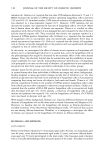
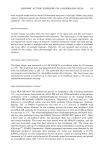
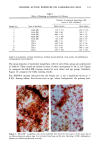
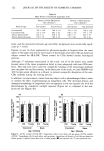
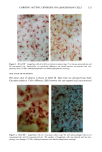
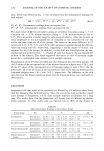
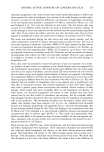
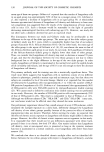
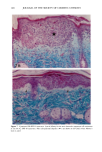
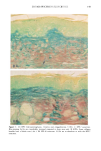
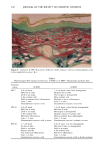
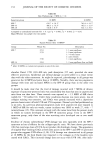
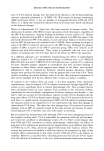
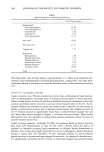
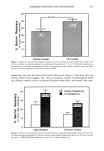
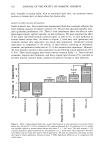
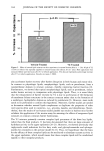
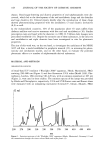
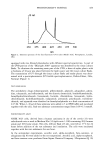
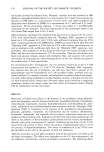
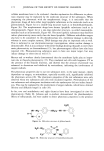
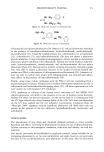
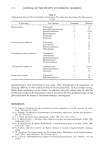
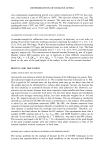
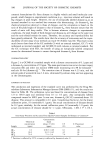
PHOTOTOXICITY TESTING 173 NH-- ((•2) 2-- (•{ 3 Figure 4a. Molecular structure of chlorpropamide. C Nil" (:I'I2 • Figure 4b. Molecular structure of furosemide. of furosemide and hydrochlorothiazide (20). Matsuo et al. induced phototoxic hemolysis in the presence of benzylhydrochlorothiazide, hydrochlorothiazide, methiclothiazide, and penflutizide (15). Using the Candida albicans test, tolbutamide (21), acetazolamide (22), chlorothiazide (21), and hydrochlorothiazide (20) have not shown a phototoxic growth inhibition. Using trichophyton mentagrophytes, Horio was able to demonstrate phototoxic growth inhibition with tolbutamide, whereas the tested diuretics chlorothi- azide, hydrochlorothiazide, methiclothiazide, and trichlormethiazide did not induce phototoxic effects (23). Morison and co-workers, utilizing the sensitive thymidin-uptake test, were able to induce a phototoxic decrease in the uptake of tritium-marked thy- midine into DNA in the presence of chlorpropamide and furosemide (24). Johnson et al. were not able to confirm their results with chlorpropamide, but demonstrated photo- toxic effects in the presence of hydrochlorothiazide (20). Finally, using tissue culture techniques with the HEp-2 cell line originating from a human laryngeal carcinoma, Freeman and co-workers demonstrated phototoxicity due to tolbutamide and hydrochlorothiazide among others (25). All these experiments in vitro were carried out with longwave UV irradiation. UVA irradiation to cultures of the human cervix carcinoma cell line NHIK 3025 induced phototoxic cell death in the presence of ten out of fourteen tested diuretics. Neither UV alone, nor the test substances, nor the solvent alone or in combination with the UV light reduced the colony-forming ability of the cells. Cell death was dependent on the UV dose applied and the test substance concentration. Irradiation from the "Bluelight 2000" apparatus induced significant phototoxic cell death after only one minute in the presence of the test substances bendroflumethiazide, bemetizide, and polythiazide. CONCLUSIONS The introduction of new drugs and chemicals demands methods to detect possible hazardous side effects. Screening for photosensitivity should be one of these precautions. Adverse reactions to electromagnetic irradiation, both acute and chronic, are well doc- umented. Our model, previously well-established in porphyrin research, seems valuable for in- vestigating phototoxicity, as two oral antidiabetics and eight diuretics, not previously detected in vitro as photosensitizers, were phototoxic in this assay. But not all known

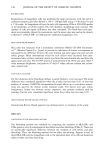
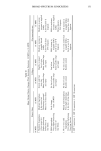
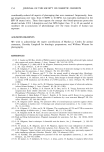
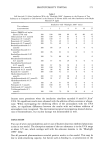
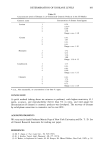
174 JOURNAL OF THE SOCIETY OF COSMETIC CHEMISTS Table II Sulphonamide-Derived Oral Antidiabetics and Diuretics That Have Been Investigated for Phototoxicity In Vitro In vitro assay Test substance Phototoxic Reference Photohemolysis Candida growth inhibition Trichophyton growth inhibition 3H-Thymidine-uptake test Tissue culture model Tolbutamide + 20 Benzylhydrochlorothiazide + 15 Hydrochlorothiazide + / - ! 5/20 Methiclothiazide + 15 Penflutizide + 15 Furosemide - 20 Tolbutamide - 21 Acetazolamide - 22 Hydrochlorothiazide - 20 Chlorothiazide - 21 Tolbutamide + 23 Chlorothiazide - 23 Hydrochlorothiazide - 23 Methiclothiazide - 23 Trichlormethiazide - 23 Chlorpropamide + / - 24/20 Hydrochlorothiazide + 20 Furosemide + 24 Tolbutamide + 25 Hydrochlorothiazide + 25 photosensitizers were phototoxic in our assay. This demonstrates the importance of utilizing different in vitro models as well as in vivo procedures, such as animal testing, before final conclusions can be drawn. In addition, this cell culture may be used for mechanism studies with antioxidants, and in the search for the subcellular target of the photosensitizers by means of electronmicroscopic investigation. REFERENCES (1) N. Loprieno, Guidelines for safety evaluation of cosmetic ingredients in the EC countries. Fd. Chem. Toxic., 30, 809-815 (1992). (2) G. Domagk, Ein Beitrag zur Chemotherapie der bakteriellen Infektionen, Deutsche med. Wochenschr., 61, 250-253 (1935). (3) I. J. Frank, Dermatitis from sulfanilamide, JAMA, 109, 1011-1012 (1937). (4) J. G. Menville and J. J. Archinard, Skin eruptions in patients receiving sulfanilamide, JAMA, 109, 1008-1009 (1937). (5) B. A. Newman and H. Sharlit, Sulfanilamide, a photosensitizing agent of the skin, JAMA, 109, 1036-1037 (1937). (6) R. Toeliner, lllustrierte Geschichte der Medizin (Andreas & Andreas Verlagsbuchhandel, Salzburg, 1986). (7) W. Burckhardt, K. Schwarz-Speck, and M. Schwarz-Speck, Photoallergie durch Nadisan (Carbuta- mid), Schweiz. Med. Wochenschr., 87, 954-956 (1957). (8) A. L. Norins, Chlorothiazide drug eruption involving photosensitization, Arch. Dermatol., 79, 592 (1959).
Purchased for the exclusive use of nofirst nolast (unknown)
From: SCC Media Library & Resource Center (library.scconline.org)