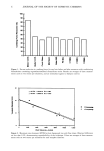
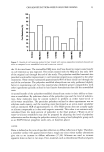
ORGANOFUNCTIONALIZED SILICONE RESINS 17 water. Neither one of these compositions, however, demonstrated "water proof," or "very water resistant" properties from this particular formulation, with the SPF values of both treatments falling to 13 after an 80-min water exposure. Since the isostearyl ester-functional silicone resin demonstrated somewhat substantive film-forming properties in the above experiments, a series of experiments was planned to investigate whether this film could reduce pigment transfer in color cosmetic prod- ucts, particularly lipsticks. Both the C•2 and the C•8 ester resins were evaluated in this study. The lipstick composition used in these evaluations is presented in Formulation 4 listed in Appendix A. Panelists applied each product to one half of their lips, top and bottom of one side. After a 60-sec set time the lips were blotted with tissue and the amount of pigment transfer rated visually. In all cases the amount of pigment visible on the tissue was dramatically lower on the side of the lips to which the C18 composition had been applied. Panelists then reapplied the products and evaluated wear and feath- ering characteristics throughout the day. In all cases, the panelists reported that the side of their lips treated with the composition containing the C18 isostearyl ester-functional resin maintained color longer and did not noticeably feather or bleed to surrounding skin. The C12-functional material did not perform as well in any of the evaluations. Similar results have been reported by other authors in unrelated experiments involving numerous lipstick formulations (17-20,22). CONCLUSIONS It is possible to modify siloxysilicate resins to obtain or enhance various properties desired in cosmetic formulations including skin substantivity, hair body, and shine. Organic modification of siloxysilicate resins is readily accomplished through hydrosi- lylation chemistry, the resulting molecules demonstrating enhanced compatibility with common cosmetic ingredients and thus providing greater formulation flexibility and product stability. It has been shown that ester-modified resins provide some condition- ing benefits to hair while imparting resistance to water wash-off in skin care composi- tions. These particular silicone resin esters are completely non-irritating to the skin and eyes. This property, combined with the excellent film-forming characteristics of siloxy- silicate resins renders the ester-functional materials efficacious in skin care and color cosmetic applications to help reduce pigment transfer and to impart water-resistant characteristics to the formulations. The siloxysilicate resins modified with alkyl moieties of less than ten carbon atoms per chain were found to perform similarly to the unmodified compounds in all evaluations. The resins containing olefin chains of ten or more carbon atoms were found to slightly reduce wet combing forces. Surprisingly, the compounds containing olefin chains of sixteen or more carbon atoms were found to act as volumizing agents in hair care applications, increasing maximum tress diameter by 8 and 20 percent for the C•6_18 and C2o_24-modified materials, respectively. The formulation containing the C•o-modified compound provided a minor increase in tress diameter as compared to the base condi- tioner (-10% versus -12% for the base), but this value was still significantly less than for the untreated hair. While conditioning benefits were found to be independent of alkyl chain length within experimental error, the hair volume or maximum tress diam-

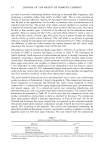
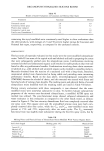
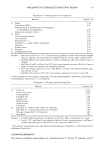
18 JOURNAL OF THE SOCIETY OF COSMETIC CHEMISTS eter was found to increase with increasing alkyl chain length of the substituent group attached to the siloxysilicate molecule. Further experimentation is planned to investigate the effect on volumizing performance of maintaining constant alkyl chain length while altering the degree of substitution. These materials were also evaluated in curl retention studies where they were found to offer no improvement in hold. The hair treated with the various alkyl-modified resins was characterized by lower curl retention values than the water-set control. Styryl modification of the silicone resins resulted in compounds having a high refractive index as compared to phenyl-functionalized silicone fluids, e.g., phenyltrimethicone. The resulting phenethyl siloxysilicates were found to dramatically increase apparent luster or shine of hair when applied from a cuticle coat formulation. The polyether- modified silicone resins were shown to improve curl retention when applied to hair from aqueous dilutions. Preliminary experiments suggest that by judicious choice ofpolyether type and level of substitution these molecules may be tailored to perform as either water-in-oil or oil-in-water emulsifiers. Further experiments are required to optimize these performance attributes. Organomodified siloxysilicate resins other than those re- ported herein have also been synthesized and are currently under evaluation in personal care applications. APPENDIX A: FORMULATIONS UTILIZED FOR EVALUATIONS OF ORGANOMODIFIED SILOXYSILICATE RESINS Formulation 1: Prototype Hair Conditioner Material Amount (%) Water 87.70 Organofunctional silicone resin 3.00 Behenyltrimonium methosulfate 2.70 Stearamidopropyl dimethylamine 2.50 Cetyl alcohol 2.30 Pentaerythrityl tetrastearate 1.50 Methylparaben 0.20 Propylparaben 0.10 Procedure: 1. Add parabens to water. With good stirring, bring temperature to 65-70øC. 2. Combine remaining ingredients and heat to -70øC. 3. Add wax phase to water phase with good stirring. Remove heat and continue stirring through COO1. Formulation 2: Cuticle Coat Conditioner Material Amount (%) Cyclomethicone (&) Dimethicone 60 Isohexadecane 10 Phenethyl siloxysilicate 30 Procedure: Combine all ingredients with moderate propellar agitation. Continue stirring until solution is homogeneous.
Purchased for the exclusive use of nofirst nolast (unknown)
From: SCC Media Library & Resource Center (library.scconline.org)