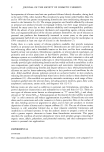
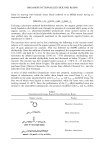
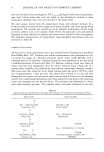
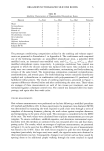
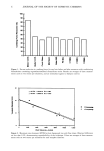
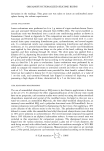
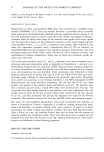
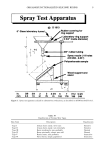
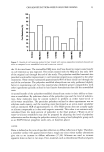
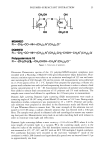
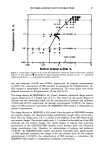
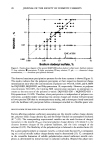
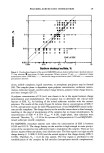
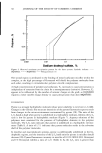
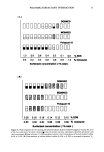
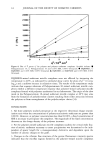
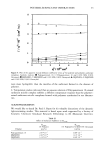
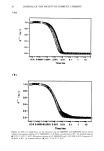
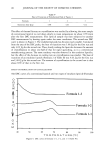
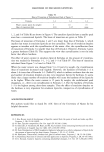
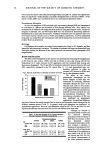
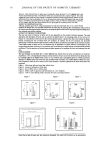
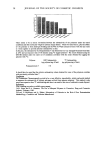
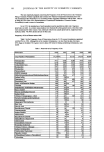
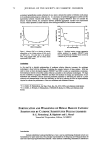
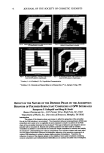
56 JOURNAL OF THE SOCIETY OF COSMETIC CHEMISTS However, when delivered from an infinite dose, lowering the vehicle pH from 7.0 to 3.8 did not lead to any increase in penel•ation and only a small fraction of the lactic acid penetrated the comeurn (Figure3). The results suggest that water soluble acid may permeate a completely hydrated comeurn through aqueous channels. So, the rate limiting factor may be adsorption of active to comeurn protein matrix rather than transfer from water to lipid bilayer. As both the acid and ionized forms are highly soluble in water, pH will have minimal effect on delivery. In vivo irritation data also show more irritation at lower pH (Figure 4) correlating with in vitro data. EFFECT OF PROPYLENE GLYCOL: Although, propylene glycol at 5%, enhanced peneU•ation for both finite and infinite dose, it was a more efficient enhancer at infinite dose. The possible mechanisms of action may be reducing the concentration of the active in the vehicle and affecting the barrier function by solvating the alpha-keratin and occupying hydrogen-bonding sites, thus reducing active/tissue binding. EFFECT OF PRODUCT STRUCTURE: The rate and extent of delivery of lactic acid is also dependent on the product (vehicle) sUucture. The total deposition and absorption of lactic acid as a percent of applied dose is in increasing order of o/ww/o/ww/o (Figure 5). Concentration of the active in the external aqueous phase, is greater than that in the internal oil phase, thereby increasing the rate of release from o/w emulsion. In contrast, for the w/o emulsion, the favorable partitioning towards the internal aqueous phase renders the lactic acid almost unavailable in the external oil phase .Thus higher uptake of lactic acid in o/w emulsion may be attributed to a higher effective concentration in the external aqueous phase and from w/o/w emulsion may be attributed to a larger stratum comeurn/vehicle partition coefficient. Thus the presence of external aqueous phase appears to be important for lactic acid transport into the skin. CONCLUSIONS: The key findings are (a) finite dose is more efficient than infinite dose for lactic acid delivery (b) reduction ofpH (from 7.0 to 3.8) significantly enhances dermal delivery of lactic acid when delivered from finite dose but has minimal effect in an infinite dose system. In vivo irritation data (c) propylene glycol is a better penetration enhancer at infinite dose than finite dose and (d) Oil-in-water emulsion was a better delivery vehicle for lactic acid compared to water-in-oil or water-in-oil-in-water emulsion. Possible explanations for these observations are suggested. Figure 1: Finite dose delivered more than infinite dose Figure 2: Lower pH enhances at finite dose Figure 3: No pH effect seen at infinite dose Figure 4: Effect of pH on slycolic acid formulation (in -vivo irritation) Figure 5: O/W is most efficent product structure for lactic acid tissue delivery Figure I Figure 2 Figure 3 Figure 4 1 Figure5 ll*lll !l l" !l IIIIllllll ! II.lllll II o i•lllll ]lil Note: Due to lack of space only few results are illustrated. All results will be shown in the presentation

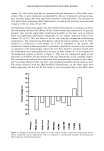
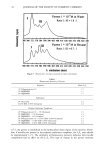
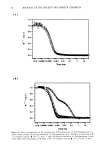
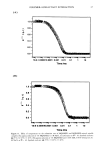
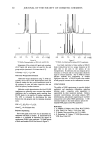
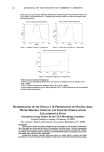
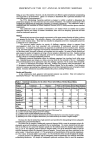
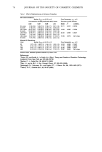
PREPRINTS OF THE 1997 ANNUAL SCIENTIFIC SEMINAR 57 GEL PERMEATION CHROMATOGRAPHY: AN EFFECTIVE METHOD OF QUANTIFYING THE ADSORPTION OF CATIONIC-POLYMERS BY BLEACHED HAIR Beatriz Blanco, Barbara A. Durost, Ronald R. Myers Calgon Corporation, Pittsburgh PA 15230 INTRODUCTION Gel Permeation Chromatography (GPC) has been validated and proved to be an effective, reproducible, simple and quick method to measure the substantivity of cationic polymers on hair from aqueous solutions. The uptake of eight cationic conditioning polymers on bleached hair was measured indirectly by determining the difference in polymer concentration in the solutions before and after the treatment of the hair. A previously published result for the uptake on very damaged bleached blond hair of polyquaternium 7, measured by radiolabeling using 14C, correlates with the result obtained by GPC. EXPERIMENTAL Conditions Type of hair: Polymers tested: Treatment solutions: bleached blond hair from DeMeo Brothers. polyquaterniums 4, 6, 7, 10, 11, 22, 28 and 39. 0.10% polymer solids aqueous solutions pH= 6.0+ 0.1. Solutions were made with deionized water. 22øC Temperature: Sample Preparation 2.30 g of thoroughly washed • hair were allowed to soak in 150.0 g of treatment solution for 30 minutes. A reciprocating mixer with a speed of 420 min 4 was used to agitate the samples. At the end of the treatment time, the hair was squeezed with a pair of tweezers and removed from the treatment solution. The remaining solutions were called post-treatment solutions. The hair was then rinsed three times with 50.0 ml of distilled water each time. Untreated treatment solutions (without hair) were subjected to the same conditions. All experiments were performed in triplicate. Sample Analysis The treatment solutions, rinses, post-treatment solutions and untreated treatment solutions were analyzed using the following equipment: Instrument: Water's GPC Detectors: Water's 410 RI, Wyatt MALLS Column: TSK PW3000 Eluent: 0.15M Na2SO 4 + 1% Acetic Acid, pH 3.3 Flow: 1.0ml/min, Temp: 25øC, Vol: 200/zL Two injections of each treatment solutions were made. Based upon the polymer mass injected and the RI polymer peak area the specific refractive index (dn/dc) of each sample was computed. These two dn/dc values were averaged. Two injections of each post-treatment solution were made. The mass of polymer injected was then determined based upon the RI polymer peak area and the dn/dc measured from the treatment solution. The same procedure was used to compute the mass of polymer in each rinse. The average of the three polymer mass determinations for each experiment was obtained. The amount of polymer found in the rinses was negligible. The calculated difference in the amount of cationic conditioning polymer present in the treatment and post-treatment solutions represents the cationic polymer uptake by the hair sample. No shear degradation of polymer was observed in the untreated treatment solutions. The precision study of this test method showed that at the 99% confidence level (3 sigma) the confidence range was 3 %. The error of the method was 1.8 % A t test was used to determine whether the measured polymer mass in the treatment and post-treatment solutions were statistically different. The substantivity of two lots of polyquaternium 39 was determined by two analysts on separate occasions. Both analysts obtained the same substantivity value for this polymer. This result demonstrates that the method is reproducible. Results and Discussion The graph below depicts the substantivity values obtained for the different polymers.
Purchased for the exclusive use of nofirst nolast (unknown)
From: SCC Media Library & Resource Center (library.scconline.org)