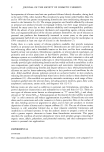
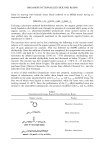
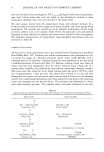
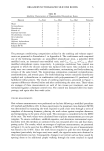
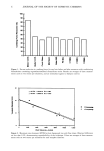
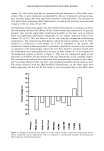
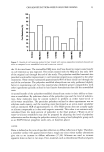
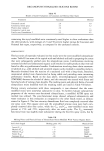
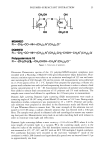
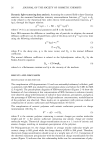
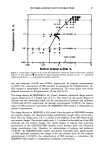
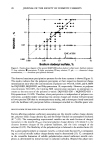
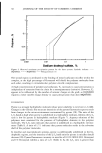
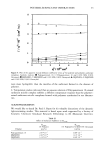
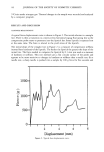
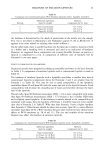
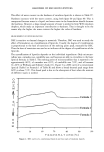
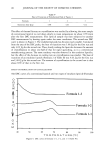
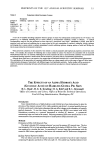
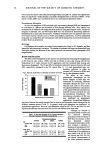
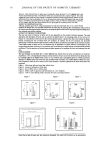
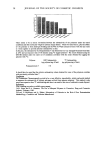
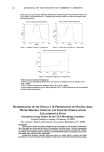
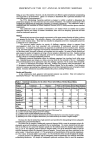
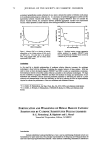
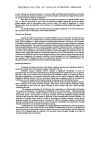
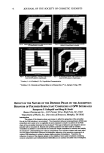
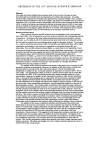
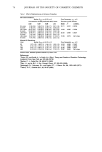
ORGANOFUNCTIONALIZED SILICONE RESINS 5 Table III Solubility Characteristics of Organomodified Siloxysilicate Resins Material %8 Ester %0 Alkyl C20 Alkyl Polyether Water I I I S Cyclomethicone I S S I Dimethicone I I I I Mineral oil S S S S Isopropyl myristate S S S Octylmethoxy cinnamate S I I S Octyl salicylate S -- -- -- Glycerin I I I S Aliphatic hydrocarbons S -- -- -- Myristyl propionate S S S I Ethanol SD-40 I I I S The prototype conditioning compositions utilized in the combing and volume experi- ments are presented in Formulation 1 in Appendix A. The conditioners each comprised one of the following materials: an unmodified siloxysilicate resin, a polyether (EO) modified resin, an isostearyl ester-modified resin, and C•o , C•6_•8 , or C20_24 alkyl- modified siloxysilicate resins, respectively. A prototype conditioner base control was prepared in which the silicone content was replaced with water. Also included in this study were two commercially available conditioners, moisturizing and body-enhancing versions of the same brand. The moisturizing composition contained cyclomethicone, amodimethicone, and several quats. The body-enhancing version contained dimethicone copolyol and cyclomethicone in combination with polyquaternium-10, panthenol, and hydrolyzed wheat protein. The results of combing experiments, presented in Figure 1, represent differences observed before and after conditioning the same tress. These values are averages of three measurements on each of two tresses per treatment, and were normalized against a shampoo control tress. The control was measured after two sham- pooings, and again after four wash cycles. VOLUME MEASUREMENTS Hair volume measurements were performed on dry hair following a modified procedure of Crawford and Robbins (26). In these experiments the maximum tress diameter (MTD) was determined by measuring the work required to pull a hair tress through a series of templates of decreasing diameter, plotting the work values against template diameter, and extrapolating to the point of zero work. This intercept is considered to be the MTD of the tress. The work values were calculated from triplicate measurements per tress per template. To ensure confidence, establish expertise, and determine instrumental repro- ducibility with this method, an untreated tress was measured after two and four sham- pooing cycles. The results, which are averages of triplicate measurements, are presented in Figure 2. It can be seen that the difference in MTD for these two sets of measurements was found to be 0.46%. Since the work forces required to pull the tress through the templates (particularly the larger ones) were small, the signal-to-noise ratio obtained in these experiments was low. Consequently, changes in air current such as those caused by opening doors or by additional people walking through the room resulted in signal

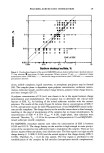
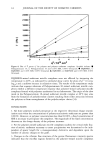
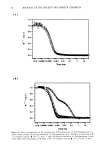
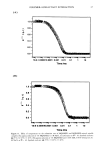
6 JOURNAL OF THE SOCIETY OF COSMETIC CHEMISTS lOO i i C7 C7 C7 Figure 1. Percent reduction in combing forces for wet hair before and after treatment with conditioning formulations containing organofunctionalized siloxysilicate resins. Results are averages of three measure- ments each on two tresses per treatment, and are normalized against a shampoo control. 40 1 y=30.754-1 3SOle-3x R^2=0.901 •o 0 2000 4000 6000 8000 10CX30 12000 Work Values (I.•-Joules) ß 4 Sharnl:x)oin• Figure 2. Maximum tress diameter (MTD) for hair shampooed two and three times. Observed differences are less than 0.5%, demonstrating reproducibility of the technique. Values are averages of three measure- ments each on two tresses per treatment for each template diameter.
Purchased for the exclusive use of nofirst nolast (unknown)
From: SCC Media Library & Resource Center (library.scconline.org)