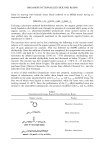
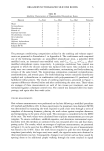
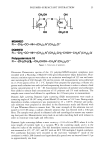
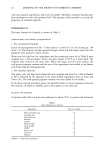
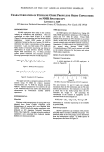
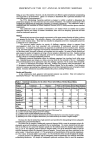
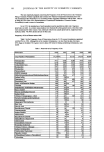
ORGANOFUNCTIONALIZED SILICONE RESINS 3 house by starting with hydride silane fluids (referred to as MHQ resins) having an empirical formula of: [HSi(CH3)201/g]x[(CH3)3SiOl/2]y[SiO4/g]z Utilizing a platinum-catalyzed hydrosilylation reaction, the organic groups were cova- lently bonded to the hydride resin through the presence of a terminal olefin group in the organic moiety, i.e., phenethyl-modified siloxysilicate resins utilized styrene as the coreactant, alkyl resins utilized alpha-olefin hydrocarbons, etc. The various functional- ities grafted onto the compounds examined in the experiments reported herein are represented in Table I. The reactions were carried out by first combining the following in the reaction vessel: solvent, a 3% molar excess of the organic group (10% excess in the case of the polyether), and 10 ppm platinum for catalysis. This was followed by SLOW addition of the silylhydride. Once the addition of hydride was completed, the temperature was raised to 110-120øC and held for 3-4 hr. At this time the amount of residual silylhydride was monitored by infrared spectroscopy (2160 cm -• Si-H absorption), maintaining tem- perature until the residual silylhydride levels had decreased to below 50 ppm (95% reacted). The reaction was then stripped under vacuum at -150øC @ 25 mm Hg to remove volatiles to a level below 50 ppm. The alpha olefins used in these reactions were purchased from Chevron Chemicals, the styrene from Aldrich Chemical Co., and the polyether from Dow Chemical. A series of alkyl-modified siloxysilicate resins was prepared, maintaining a constant degree of substitution, while the olefin chain length was varied from C 6 to C3o+. Included in the study reported herein were C•o, C•6_•8, and C2o_24-modified resins, the first two of which were liquids at room temperature, while the latter was a soft wax melting around 35-40øC. Since the performance of the C•o alkyl-modified resin was similar to the unmodified siloxysilicate, the products modified with C 6 and C 8 olefins Table I Organofunctional Groups Reacted Onto Siloxysilicate Resins Organic reactant Product ---• Phenethyl siloxysilicate • (CH2)xCH3 o .•v/ORO• (CH2)xCH3 where R = diol or higher alkanol • (CH2CH20)x(CH2CHRO)y R' where R = CH 3 and R' = H, CH 3, or COCH3 Alkyl siloxysilicate Ester siloxysilicate Polyether siloxysilicate

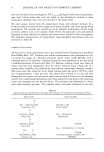
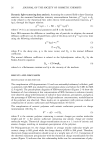
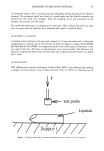
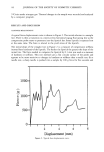
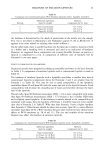
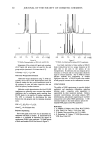
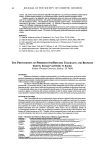
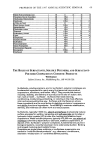
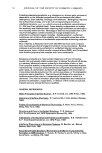
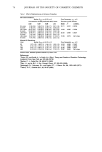
4 JOURNAL OF THE SOCIETY OF COSMETIC CHEMISTS were not included in this investigation. The C26_28 and higher olefin functional products were hard, brittle waxes that were not stable in the formulation utilized in these evaluations therefore, they were not included in the study either. The ester groups reacted onto the siloxysilicate resins were prepared in-house by a Fischer esterification reaction of an organic acid and an alcohol--one of the groups being unsaturated. The reaction was carried out in an aliphatic hydrocarbon solvent using p-toluene sulfonic acid as the catalyst. Table II lists the particular acids and alcohols employed in these reactions to produce the various esters utilized in this investigation. The solubility characteristics of representative organomodified siloxysilicate resins are presented in Table III. COMBING EVALUATIONS All hair used in these experiments was virgin medium-brown European hair purchased from DeMeo Bros., NY. Combing and volume measurements were performed on 6-in, 3-g tresses by means of a Diastron miniature tensile tester, model MT600, with a crosshead speed of 50 ram/min. Combing evaluations were performed on wet hair using a modified procedure of Garcia and Diaz (25). Baseline combing values were taken on tresses that had been shampooed twice for 30-sec intervals using 0.5g/g hair of a commercially available non-conditioning (non-silicone containing) shampoo product. The tresses were then rinsed for 30 sec under running warm tap water (-80øF) at a flow rate of approximately 1 liter per min. The tresses were allowed to air dry and then shampooed twice again, and one pair of tresses was set aside to function as the shampoo control. The conditioning formulations were then applied (2.0 g/g hair) to the remaining tresses and massaged into the hair for 60 sec. This procedure was followed by a 30-sec rinse under running tap water. The combing values were again measured on wet hair. Table II Typical Acids and Alcohols Used to Prepare Ester Groups to be Grafted Onto Siloxysilicate Resins Typical acids Typical alcohols O CH 2 = CH(CH2)sCOH CH3(CH2)•7OH Undecylenic acid Stearyl alcohol O II CH•(CH2)•6COH CH2 = CHCH2OH Stearic acid Allyl alcohol O CH3(CH2)•oCOH Lauric acid CH 3 O I II CH3CH(CH2)•4COH Isostearic acid CH2OH I CH 2 = CHCH2OCH2-C-CH2CH 3 I CH•OH Trimethylol propane monoallyl ether TMPMAE
Purchased for the exclusive use of nofirst nolast (unknown)
From: SCC Media Library & Resource Center (library.scconline.org)