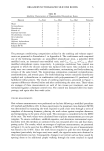
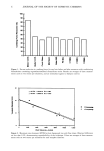
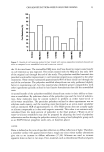
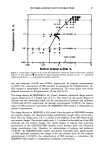
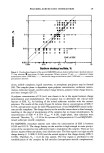
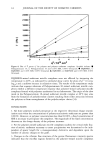
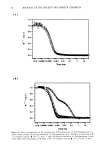
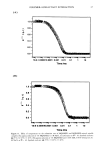
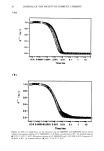
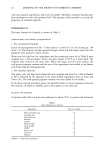
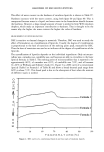
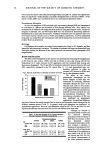
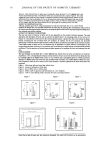
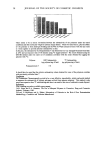
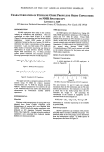
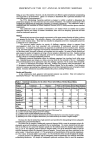
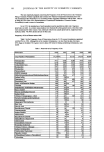
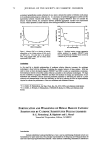
34 JOURNAL OF THE SOCIETY OF COSMETIC CHEMISTS 24000 21000 18000 15000 12000 9000 6000 3000 _. _- _ I I i I , I • I • I , 0 I 2 3 4 5 6 (:12 1 101ø CI'• 2 Figure 8. Plot of I • versus q2 for polymer and polymer-surfactant complexes. Symbols indicate: ß Polyquaternium 10 [] Polyquaternium 10 and 0.10% SDS, 0.90% Octoxynol ß MQNNED O MQNNED and 0.10% SDS, 0.90% Octoxynol ß DQNNED A DQNNED and 0.10% SDS, 0.90% Octoxynol. DQNNED-mixed surfactant micelie complexes were not affected by increasing the temperature to 40øC, as indicated by unimodal decay curves for plots of g(•) (t) versus 1og•ot and a uniform increase in relaxation times. The results of the temperature study indicate that aqueous solutions of Polyquaternium 10-mixed surfactant micelle com- plexes exhibit a different temperature response than polymer-mixed surfactant micelie complexes formed with polymers synthesized in our laboratories. The origin of the slow mode in the Polyquaternium 10-mixed surfactant micelie complex at 40øC may arise from the formation of polyelectrolyte clusters resulting from either attraction between the polyions or from entanglement of the polyelectrolyte chains (34). CONCLUSIONS 1. All three polymers studied precipitate at the respective theoretical charge neutral- ization ratio when the concentrations of polymer and anionic surfactant are greater than 0.010%. However, at polymer concentrations less than 0.010%, a fixed concentration of SDS is necessary to precipitate the complexes. The magnitude of the fixed concentration decreases as the charge density of the polymer increases. 2. For the polymer-mixed surfactant micelle complexes studied, the critical mole frac- tion of anionic surfactant necessary to cause precipitation was determined to be inde- pendent of spacer length for a monoquaternary derivative and dependent upon the number of cationic charges on the graft. 3. Changes in the vibronic fine structure of the pyrene fluorescence intensity spectra indicated that the miceliar regions formed in the polymer-mixed micelle complexes

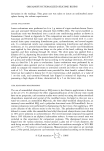
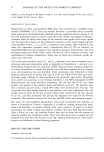
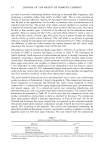
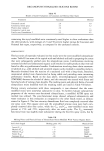
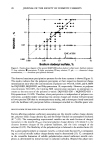
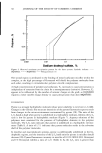
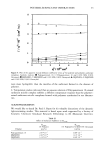
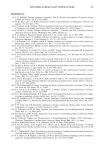
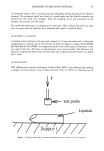
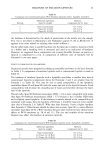
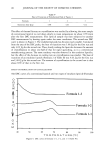
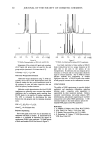
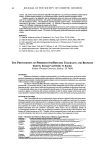
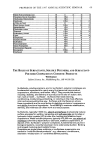
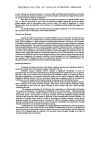
POLYMER-SURFACTANT INTERACTION 35 , • I ,•1 0 I o 1 2 I I I , 4 5 6 q2 1 10 •ø cni 2 Figure 9. Plot of the apparent mutual diffusion coefficient versus q2 for polymer and polymer-surfactant complexes. Symbols indicate: ß Polyquaternium 10 [] Polyquaternium 10 and 0.10% SDS, 0.90% Octoxynol ß MQNNED ¸ MQNNED and 0.10% SDS, 0.90% Octoxynol ß DQNNED /• DQNNED and 0.10% SDS, 0.90% Octoxynol. were more hydrophilic than the micelies of the surfactant formed in the absence of polymer. 4. Temperature studies indicated that an aqueous solution of Polyquaternium 1 O-mixed surfactant micelie complex exhibits a different temperature response than the polymer- mixed surfactant micelie complexes formed with polymers synthesized in our laborato- ries. ACKNOWLEDGMENTS We would like to thank Dr. Paul S. Russo for his valuable discussions of the dynamic light-scattering studies. This material is based upon work supported by a Society of Cosmetic Chemists' Graduate Research Fellowship to M. Manuszak Guerrini. Table II Effect of Surfactant Addition on Dm,ap p Polymer Dm,app 1% Polymer (cm2/s) Dm ,app 1% Polymer/0.1% SDS/0.9% Octoxynol (cm'/s) Polyquaternium 10 MQNNED DQNNED 2.97* 10 -7 2.61' 10 -8 3.13' 10 -8 3.98* 10 -7 1.13' 10 -8 3.94* 10 -8
Purchased for the exclusive use of nofirst nolast (unknown)
From: SCC Media Library & Resource Center (library.scconline.org)