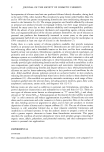
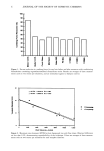
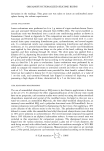
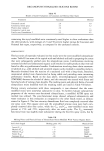
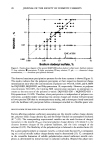
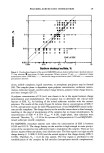
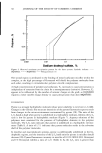
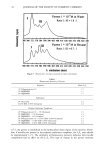
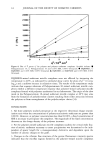
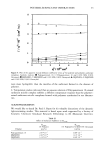
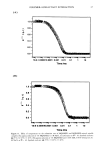
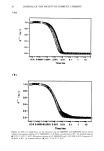
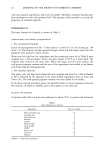
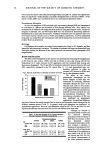
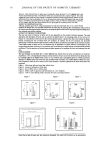
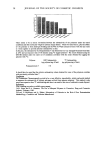
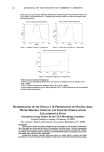
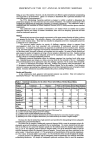
58 JOURNAL OF THE SOCIETY OF COSMETIC CHEMISTS There seems to be no direct correlation between the substantivity of the polymers under the tested conditions and their molecular weight or cationic charge density. These two latter factors, plus the ability of the polymer to form hydrogen bonding and the Wan de Waals attraction forces with the hair seem to work together to provide polymer substantivity on hair. In the past, the substantivity of polyquaternium 7 was determined on very damaged bleached blond hair at 22øC and an exposure time of 30 minutes using •4C tagged polymer •. The result obtained using the GPC/RI method under the same set of conditions correlated with the result obtained by tagging the polymer with •4C. Polymer GPC Substantivity •4C Substantivity (/zg polymer/mg of hair) (/zg polymer/mg of hair) Polyquaternium 7 7.0 7.1 It should also be noted that the relative substantivity values obtained for some of the polymers correlate with previously published data •'3. Conclusion Gel Permeation Chromatography proved to be a very effective, reproducible, simple and quick method to measure the substantivity of cationic polymers on hair from aqueous solutions. This method is also much less expensive than •4C radiolabeling and there is no need to take care of radioactive waste disposal. References •Hair washing procedure available upon request. 2A.R. Sykes and P.A. Hammes, The Use of Merquat Polymers in Cosmetics, Drug and Cosmetics Industry, February 1980. 3D.Lutz, G Holtzinger and A. Khaiat, Substantivty of Cationics to the Hair-A New Determination Methodology, Cosmetics and Toiletries Manufacture.

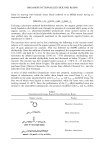
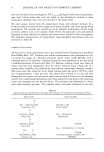
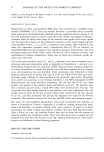
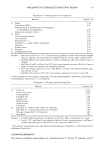
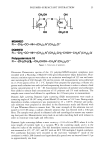
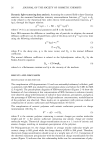
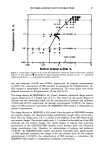
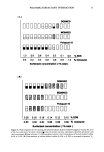
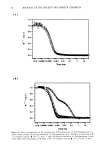
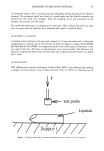
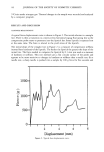
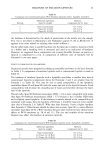
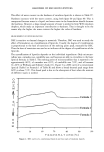
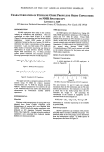
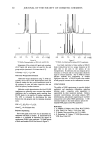
PREPRINTS OF THE 1997 ANNUAL SCIENTIFIC SEMINAR 59 CHARACTERIZATION OF ETHYLENE OXIDE PROPYLENE OXIDE COPOLYMERS BY NMR SPECTISCOPY Lawrence A. Goff ICI Americas Technical Innovation Center, ICI Surfactants, New Castle, DE 19720 I•TRODUCTION EO-PO copolymers have utility in the cosmetic industry as solubulizers and emulsifiers. They are synthesized as either block (Figure I) or random (Figure II) systems depending upon the desired end use application. Initial NMR studies of EO-PO copolymers focused on the use of proton (•H) NMR to determine the relative concentrations of the separate toohomers •. Later, low field carbon (•C) NMR (25 MYl. z) studies of monomer sequencing was limited to observations of dyads (EO-EO, EO-PO, PO-PO) 2. Higher field instruments (•3C, 75 M14_z) provided greater spatial resolution and increased sensitivity allowing spectroscopic analyses of triad sequences •. Figure I. Block EO-PO Copolymer Figure II. Random EO-PO Copolymer This paper provides a composite analysis of EO-PO systems using •H NMR for relative monomer concentrations and •C NMR for detailed structural analysis. Spectral assignments were aided by the use of the Attached Proton Test (APT) and distortionless enhancement by Polarization transfer (DEPT) experiment. EXPERIMENTAL Materials Ethylene oxide homopolymers of varying MW were obtained from Union Carbide. Propylene oxide homopolymers of varying MW were obtained from Aldrich. EO-PO block and random copolymers were produced at ICI Americas Technical Innovation Center, New Casfie DE. Average molecular weights of copolymers were calculated from hydroxyl number analysis (wet chemical method). NMR Spectroscopy All NMR spectra were obtained on a Varian 300 MYIz NMR spectrometer operating at 299.9 MYIz for proton and 75.4 MHz for carbon. Proton NMR samples were prepared as 30% solutions in d 6 acetone (Isotec, 99.9%) with 5% trifiuoroacetic acid added to remove residual water and labile hydroxyl resonances. Quantitative •H • analysis was performed using a ten second delay between NMR pulses. Tetramethylsilo.xane (TMS) and dcacetone were used as the internal references for the proton and carbon NMR studies respectively. RESULTS AND DISCUSSION Monomer Concentration A proton spectrum of a EO-PO copolymer is sho•'n in Figuxe III. 7 6 5 4 3 2 1 PP• Figure 1• 300 MI4.z lH proton NMR spectrum ofEO-PO copobzaer The area between 3.4 and 3.9 ppm (A) includes resonances from the EO methylenes and the PO ether methine and methylene. The resonance at 1.2 ppm (B) is solely due to the methyl group from the PO. Therefore the weight 5'o EO (assuming the contribution of the initiator is negligible) can be calculated from the area integrals (/). % EO (wt) = (111^ - 1 l/B) / (111^ - 8.33 I•) x 100 Information on toohomer sequencing is not available by proton NMR_ End Group Analysis EO-PO copolymers can terminate with primary (CI-I•OI-I) and/or secondary (CHOH) end groups. The chemical shifts of the end groups can be determined from the homopolymer spectra. nC NMR spectra of homopolymers are shown in Figure IV.
Purchased for the exclusive use of nofirst nolast (unknown)
From: SCC Media Library & Resource Center (library.scconline.org)