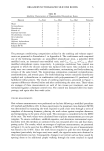
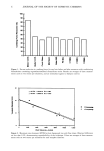
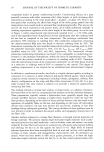
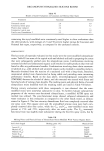
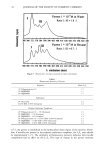
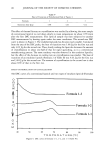
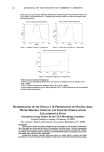
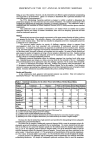
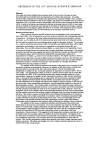
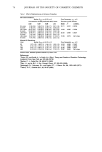
64 JOURNAL OF THE SOCIETY OF COSMETIC CHEMISTS criteria. The results obtained from forty-eight (48) of the filly-one (51) preserved conditioner samples met the criteria. All three samples analyzed by one collaborator failed to meet the specified acceptance criteria. Triplicate samples of an adequately and an inadequately preserved water-in-oil emulsion were tested by each of the collaborating laboratories. All samples of inadequately preserved water in oil emulsions failed to meet the acceptance criteria. One collaborator reported one false negative outlier. Several factors may have contributed to the outlier. Critical factors include: (1) Difficulty in dispersing the inoculum throughout the sample. (2) Difficulty in dispersing the sample in the diluent. Triplicate samples each of adequately and inadequately preserved oil in water emulsion were tested by each of the collaborating laboratories. The results from all samples of inadequately preserved oil in water emulsions failed to meet the acceptance criteria. The results of all adequately preserved formulations met the acceptance criteria. References 1.) Susan M. Lindstrom and Joyce D. Hawthorne, d. Soc. Cosmet. Chem., 37,481 (1986). 2.) Daniel K. Brann• James C. Dille, and David J. Kaufman, Appl. and Environ. Microb., 53(5), 1827 (1987). 3.) R.E. Leak and R. Leech, Microbiological Quali• Assurance in Pharmaceuticals, Cosmetics and Toiletries, 129 (1989). 4.) Anita S. Curry, Joyce F. Graf, and G.N. McEwen, Jr., eds., CTFA Microbiology Guidelines, (1993). 5.) Antimicrobial Preservatives - Effectiveness, The United States Pharmacopeia, XXII, (1990). 6.) Foster D. McClure, d. Assoc. Off. Anal. Chem., 73, 953 (1990). THE PHENOMENON OF PRESERVATIVE/BIOCODE TOLERANCE AND BIOFILMS Daniel K. Brannan* and Bobby M. Butchee Abilene Christian University, Abilene, TX 79699 Introduction Mechanisms of tolerance or resistance to antimicrobials (e.g. biocides, preservatives, antibiotics) include genotypic mechanisms (e.g. plasmid acquisition and mutations), phenotypic mechanisms (e.g. inducible expression of genes and transcriptional or translational regulation of genes), and even community mechanisms (e.g. association within a biofilm or within cell aggregations). The ability to withstand the effect of biocides is independent of whether the mechanism is phenotypically-, genotypically-, or community-derived. In fact, several of these mechanisms may be acting at the same time. A bacterium can thus l) grow within a biofilm deriving protection from other populations occupying the community, 2) phenotypica!ly express one or more attachment-inducible genes for the production of biocide inactivating enzymes or agents, or express key cell envelope constituents to alter the cellular targets of the biocide, and 3) acquire plasmids or mutations within individuals of the population for a variety of biocide inactivating mechanisms. The Death of a Paradigm Table I demonstrates the various mechanisms for tolerance of bacteria against biocides and preservatives. Phenotypic expressions and community associations within biofilms provide a significant contribution for tolerance development against biocides and preservatives. Tolerance to biocides is a function not only of the individual but also of the organization of individuals into a network of more tolerant populations and even into communities of microorganisms in a biofilm. In nature, microorganisms grow as attached biofilms or aggregates and express different phenotypes than their planktonic counterparts. When bacteria use the community strategy of biofi!in/aggregate formation or when they use phenotypic strategies expressed during biofilm formation, their tolerance to biocides increases up to 500x '. Therefore, biocide assessments based on batch-grown planktonic cells are likely misleading in that they do not correctly represent the ecology of microorganisms in nature. Table 1 - Resistance and Tolerance Mechanisms of Bacteria Against Biocides Mechanism 1 Example and Literature Reference for Existence of Mechanism Commamiry - Glycocalyx functions as biocide neutralizer to protect cells remote from the treated surface 2, 3, 4, • Assoclatiom -- Biofilm protector guilds, "altmisls", and lysis of"sacrificial" layers that release inactivating enzymes 6, ?. s Tolerance - Growth in aggregates and clumps 6, 9 ("intrinsic") - Production of extracellular hydrolases to denature biocide as it diffuses across the biofilm 2 - Reaction-diffimion interactions to protect organisms near the substratum or within microcolony interiors 2' •0 Phenotypic - Slower grow• ra• within biofilms and clumps for enhanced prodaction oftolerance factors in glycocalyx (fatty aci&, Expresslorn phospholipids, cation incorporation, proteins, polysaccharides) and extraeelhilar enzymes for biocide inactivation ii Tolerance - Glutathione synthctase production of glutathione (inactivator of electrophilic biocides) •2 ("intrinsic") - Sigma factor-regulated. adhesion-dependent exopolymer production to inhibit diffusion or neutralize biocide 2' •a - Suppression of critical outer member protein T through adaptation [}•roc•s 14 Genolypic Mutations: Less OprD potins produced in Pseudomonas aerugmosa Expressiota Plasmid acquisition: Effiux mechanisms to pump out biocides specific enzymes for biocide degradation •I, 16 Resislanee {"acquired"} '{' The terms intrinsic and acquired have the same meaning as originally defined by Russell •7.

PREPRINTS OF THE 1997 ANNUAL SCIENTIFIC SEMINAR 65 Recognizing these community and phenotypic mechanisms requires one to abandon the concept that bacteria exist in evenly distributed suspensions of single cells. Instead, organisms exist as biofilm communities or as aggregates and associations. Microorganisms particularly aggregate and form biofilms when exposed to biocides 2. 6. As a result, our reliance on lab methods using planktonic organisms at the worst overestimates the activity of the biocide or preservative in nature at best, they simply do not reflect or predict reality. In order to design a test that would more closely mimic reality, we should be using techniques employing cork•tant-depth film fermentors/Robbins devices to establish biofilms and confocal laser microscopy coupled with fluorescent physiological stains to visualize the biofilms •B, •9. 20. Such methods are routinely used with the study of plaque for the development of mouthrinses and dentifrices 2•. We should adapt such techniques to preservative efficacy tests (PETs). Preservative Efficacy Tests: Indicators of Bioavailability not Consumer Potential for Contamination We should also reject the sophistry of claiming current PETs are predictive of consumer contamination. My own research included •2, the claim of predictive ability by any PET based on planktonic unicells is just a serendipitous correspondence, not a correlation. To claim a "predictive" PET one only needs to conduct the in-use test so that well-preserved products do not become contaminated before the poorly preserved ones do. So what are we left with when we have developed an excellent, well-controlled, statistically-correct PET that uses planktonically-grown, lab-tamed, ATCC cultures? We do not have a test that can be used to predict real- world exposure. However, since planktonic organisms are much more sensitive to biocides than biofilm organisms, it could be argued that a product failing such a test certainly represents a risk to the public. This is an incorrect argument since no PET considers the effect that the container has in protecting the product from consumer contamination. Thus, no PET can be developed with a truly predictive ability in order to enforce a recall. Hoxvever, such a test will be able to rank all products on an equal plane with respect to bioavailability of preservative in the formula. When a product fails such a test, it does not substantiate a claim that it is a risk to the population it only indicates that it may not provide as much available biocide as another product that passes the test. If it can be shown that such a product derives no protection from the container, then one has a reason to do some field studies retrieving consumer-used product to see if the product has become contaminated. Once the field saudies show that the product is a risk, then one has grounds for recall. However, even products that pass the PET are not necessarily safe since the organisms do not represent the kinds of organisms it will be exposed to in the real world. Field testing is the only method that can truly represent how a product will behave. Thus, PETs are simply indicators of bioavailability of preservative but they are not predictors of consumer-contamination potential. Nor are they predictive of the potential for manufacturing contamination. In order for an in vitro test to be a valid predictor of reality, it must first discard the old ways of doing microbiology and come into the nexv age of biofilms and the methods used to study them. Acknowledgements: Thanks to the foilroving for critical reviews: Drs. Doug Caldwell, Murry Cooper, Bill Costerton, Phil Gels, Rich Mulhall, Don Singer, Scott Sutton. All responsibility, however, rests entirely on the authors. References Cited: 1. Cosierton, J. W., Z. Lewandowski, D. E. Caldwell, D. R. Korber, H. M. Lappin-Scott, Ann. Rev. Mtcrobtol., 49, 711 (1995). 2. Yu, F. P. andG. A_ McFeters, AppI. Envtron. Mtcrobtol., 60, 2462 (1994). 3. Favero, M. S., W. W. Bond, N.J. Peterson, and E. H. Cook, Jr., Proceedings of the International S),mpostum on Portdone Iodme (13. A_ Digenis and J. Arisell, eds.), University of Kentucky Press, pp 158-166 (1983 ). 4. Brown, M. L., H. C. Aldrich, and J. J. Gauthier, Appl. Environ. Mtcrobtol. 61, 187 (1995). 5. deBeer, D., R. Srinivasan, and P.S. Stewa• Appl. Environ. Microbtol. 60, 4339 (1994). 6. Brannan, D. K., J. Soc. Cosmet. Chem., 46, 199 (1995). 7. Foley, I., A_ Jocob, and P. Gilbert, ASM Abstracts, New Orleans ASM National Meeting, (1996). 8. Dibdin, G.H., S.J./Lssinder, W.W. Nichols, and P.A_ Lambert, J. Anttmicrob. Chetnother., 38, 757 (1996). 9. Gefiic, S. G., H. Heymann, and F. W. Adair, Appl. Environ. Mtcrobiol., 37, 505 (1979). 10. Gilbert, P.. P. J. Collier, and M. R. W. Brown, ,4nttrnicrob. Ag. Chemother. 34, 1865 (1990). I 1. Allison, D. 13. and P. Gilbert, J. lndust. Mtcrobiol. 15, 311 (1995). 12. Chapman, J. S., M. A_ DieM, and R. C. Lyreart, J. lndust. Mtcrobtol., 12, 403 (1993). 13. Deretic, V., M. J. Schutt, J. C. Boucher, and D. W. Martin, J. Bactertol. 176, 2773 (1994). 14. Brozel, V. S. and T. E. Cloete, J. Appl. Bacteriol. 76, 576 (1994). 15. Nikaido, H., Science, 264, 382 (1994). 16. Sabate, J., A_ Vilanueva, and M. J. Prieto, FEMSMicrobiol. Lett. 17. Russell, A_ D., J. AppL BactertoL, 71, 191 (1991). 18. Caldwell, D.E., D.R. Korber, and J.R. Lawrence, Advances inMlcrobialEcology, Plenum Pr•..s, New York, 12, 1-67 (1992). 19. Caldxvell, D.E., G.M. Wolfaardh D.R. Korber, and J.R. Lawrence, Manual ofEnvtronmentalMicrobiology, ASM Press, Washington. I)(2, pp 79-90 (1996). 20. Tsien, R.Y., and A_ Waggoner, Handbook of ConfocalMicroscop), (ed. J.B. PawIcy), Plenum, New York, pp 169-78 (1990). 21. Kinniment, S.D, J.W. Wirepenny, D. Adams, and P.D. Ma•h,J. Appl. Bacterlol., 81, I20 (1996). 22. Brannan, D. K., J. C. Dille, and D. J. Kaufman, Appl. Environ. Microbiol., .•$, I827 (1987).
Purchased for the exclusive use of nofirst nolast (unknown)
From: SCC Media Library & Resource Center (library.scconline.org)