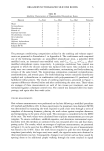
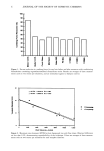
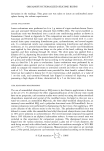
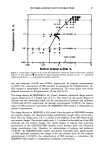
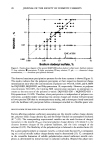
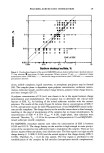
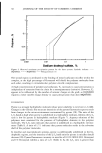
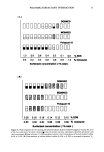
24 JOURNAL OF THE SOCIETY OF COSMETIC CHEMISTS tion for the complex occurs near a stoichiometric charge neutralization (8-10). Addition of excess amount of anionic surfactant results in the resolubilization of the precipitated complex (8-10). The interaction between cationic hydroxyethyl cellulose derivatives and oppositely charged surfactants has been studied extensively (1,5-10,14-19). However, in previous studies, the cationic moiety is attached to poly(oxyethylene) spacer groups that provide flexibility independent of the cellulose chain (20). We have prepared new mono- and diquaternary aminoalkylcarbamoyl cellulose derivatives as graft copolymers having a defined charge density where the quaternary nitrogen is located at the sites of carboxy- methylation of the starting polymer (21,22). The degree of substitution of the carboxy- methylcellulose was 0.70 and the degree of substitution of the aminoamide derivative was 0.56 (23,24). These model polymers have been used to determine the behavior of complexes formed between the charged polymer and oppositely charged mixed surfac- tant micelies of sodium dodecyl sulfate (SDS) and Octoxynol. The interaction of these novel polymers with mixed surfactant micelies has been compared with the behavior of Polyquaternium 10. The results of these studies reveal the role of polymer charge density and graft length on the behavior of the polymer-mixed surfactant micelie complexes. EXPERIMENTAL MATERIALS The surfactants, sodium dodecyl sulfate (99%) and reduced Octoxynol {c•[4-(1,1,3,3,- tetramethylbutyl)cyclohexyl]-co-hydroxypoly(oxy-1,2-ethanediyl)} (99%), were obtained from Sigma Chemical Company (St. Louis, MO) and Aldrich Chemicals (Milwaukee, WI), respectively. Polyquaternium 10, UCARE Polymer JR-400, was obtained from Amerchol Corporation (Edison, NJ). The aminoalkylcarbamoyl cellulosic derivatives (Figure 1), 2-trimethylammoniumethyl carbamoyl cellulose chloride (MQNNED) and 3-trimethylammonium-2-hydroxypropyl-N,N,-dimethylammoniumethyl carbamoyl- methyl cellulose chloride (DQNNED), were prepared in our laboratories (21-24). Water was purified by reverse osmosis, deionization, and filtration (Osmonics, Inc.). Ultrapure water used in light-scattering experiments was obtained using a NANOpure system from Barnstead. METHODS Precipitation studies. Pseudo-phase diagrams were prepared for the following system: SDS/ polymer/water. The solutions were prepared by addition of a concentrated polymer solution (3%) to a solution of SDS. The samples were shaken, placed in an oven at 60øC for eight hours, and allowed to cool slowly. The appearance of the liquid and precipitate was judged visually following the method of Goddard and Hannan (8,10). Phase diagrams were also prepared for systems of 1% polymer/SDS/Octoxynol, varying the ratio of surfactants (1% total). The solutions were prepared in the same manner as previously described, varying the percentage of SDS from 0-1% (w/v) and maintaining a constant polymer concentration of 1% (w/v).

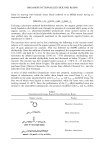
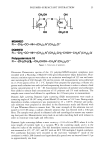
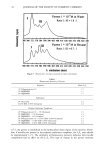
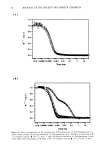
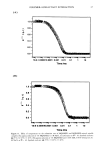
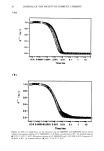
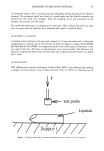
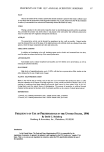
POLYMER-SURFACTANT INTERACTION 25 CH2OH OH o I I OH CH=O R MQNNED R = -CH2-CO-NH-(CH2) 2 N + (CH3) 3 CI- DQNNED R = -CH2-CO-NH-(CH2) 2 N + (OR3) 2 CH2-CHOH-CH2 N+ (CH 3)3 Cl' Polyquaternium 10 R = -(CH2CH2q•(-CH2CHOH-CH2 N+ (CH3) 3 CI- Figure 1. Structures of polymers. Fluorescence. Fluorescence spectra of the 1% polymer/SDS/Octoxynol complexes were recorded with a Fluorolog 2 Model F112X spectrofluorometer (Spex Industries). Fluo- rescence emission spectra were taken at an excitation wavelength of 335 nm and emis- sion wavelengths of 360 through 450 nm for pyrene. All measurements were performed in a 1.0-cm quartz cell at 25 + iøC. Samples were prepared by piperring a volume of a pyrene stock solution into each vial and evaporating the solvent in order to obtain a final pyrene concentration of 1 ß 10 7 M. Concentrated solutions of polymer and surfactants were added to obtain final concentrations of 1% polymer and 1% total surfactant. The samples were stirred and allowed to equilibrate for 24 hours prior to measurement. Dynamic light scattering. Dynamic light scattering (DLS) measurements were made at scattering angles of 30-90 ø using a Lexel Model 95 ion laser at 514.5 nm. During angle dependence studies, temperature was maintained at 25 + 0.05øC. Polymer and surfac- tant solutions were prepared as described in the fluorescence study and filtered with 0.2-pm Whatman filters to remove dust. The ionic strength of the solutions was ad- justed to 0.10 M using a sodium chloride solution that was filtered with a 0.02-pm filter. The samples were placed in silanated cells and centrifuged to remove any remain- ing dust particles. Measurements were made in an index matching bath with toluene in order to minimize stray light and reflections. Dynamic light scattering defines a wave vector q = (4 'r n/k) sin ((}/2) where X is the wave length of incident light in a vacuum, (} is the scattering angle, and n is the refractive index of the medium. The full homodyne intensity autocorrelation function was measured at 30 ø, 45 ø, 60 ø, and 90 ø with an ALV 500 multiple-'r digital correlator. The correlation functions were recorded in the real time "multiple-'r" mode of the correlator in which 288 channels are logarithmically spaced over an interval from 0.2 ps to approximately one hour.
Purchased for the exclusive use of nofirst nolast (unknown)
From: SCC Media Library & Resource Center (library.scconline.org)