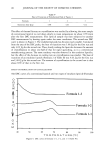
70 JOURNAL OF THE SOCIETY OF COSMETIC CHEMISTS Foaming cleansing products, e.g. shampoos or shower gels, success is dependent on the colloidal properties of the surfactants that affect detergency, foam stability, rheology, and mildness. Detergency requires the surface free energy, •G, to be __0 corresponding to minimum interfacial tensions, 7wo,+ 7sw, which occurs at surfactant concentrations 10 - 20X less than typically used. Foam stability is dependent on bubble film elasticity and resilience both requiring high surfactant concentration and viscosity within the film. Rheology or desired viscoelastic flow is the result of elongated, rod-like micelies of charge shielded ionic or amphoteric surfactant regular micelies. Soluble polymer - surfactant complexes can enhance foam stability and rheological properties while reducing concentrations of surfactants required also enhancing cleanser mildness. Skin irritating surfactants have been identified as those with compact ionic head groups that strongly bind stratum corneum proteins. Relative mildness is enhanced by surfactant or surfactant blends having bulky head groups, lower critical micelie concentrations (CMC), and formulated with solution polymers that complex with ionic surfactants. Emulsion products are macroscopic dispersions of two immiscible liquids into a physically stable suspension, to deliver functional attributes in a sensory attractive manner primarily to the surface of skin or hair. Their physical stability is dependant on forming small dispersed droplets maintained by 1) viscous closed lamella LC comprised of surfactants and polar lipids, 2) combination surfactant LC aggregates with branched or cross-linked soluble polymers in the continuous phase, or 3) amphipathic polymeric steric stabilizers. The functional attributes of an emulsion is centered around the manner it responds to the surface in which it is delivered. The rate the emulsion physically destabilizes and releases its phases via adsorption, evaporation, or dilution of the continuous phase, impacts sensory and performance qualities. GENERAL REFERENCES: Basic Principles of Colloid Science, D.H. Everett, ed., CRC Press, 1988. Colloid and Interface Chemistry, D. Void and M.J. Void, Addison-Wesley 1983. Foams: Encyclopedia of Chemical Technology, S. Ross, Vol.2, 3rd ed., Wiley, New York 1980 Structure and Flow in Surfactant Solutions, C. R. Herb and R. K. Prud'homme, ed., ACS Symposium Series 578 1994 Interactions of Surfactants and Polymers and Proteins, E.D. Goddard and K. P. Ananthapadmanabhan, ed. CRC Press, 1993 Interfacial Phenomena in Biological Systems, M. Bender, ed. Marcel Dekker, New York, 1991 Secondary Droplet Emulsion: Mechanism and Effects of Liquid Crystal Formation in O/W Emulsion, T. Suzuki, H. Tsutsumi, and A. Ishida J. Disp. Sci & Tech., vol 5(2) p.l19, 1984

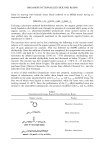
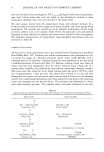
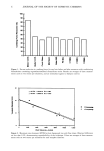
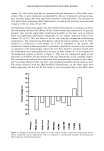
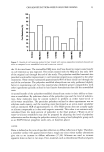
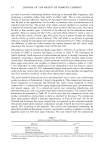
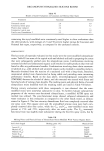
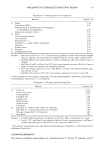
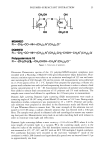
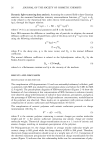
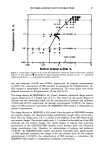
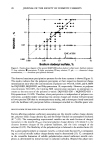
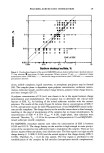
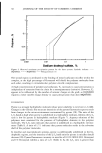
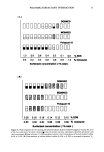
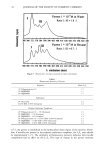
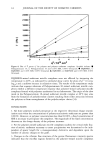
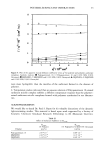
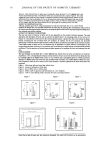
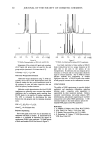
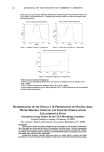
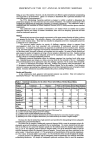
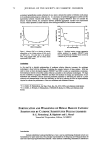
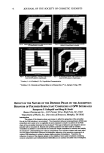
PREPRINTS OF THE 1997 ANNUAL SCIENTIFIC SEMINAR 71 USER-FRIENDLY COMPUTER PROGRAMS TO PREDICT SURFACTANT SOLUTION BEHAVIOR Daniel Blankschtein, Anat Shiloach, Nancy Zoeller Department of Chemical Engineering, Massachusetts Institute of Technology Cambridge, Massachusetts 02139 Introduction The rich and complex behavior of micelie-containing surfactant solutions is exploited in many practical applications. Fundamental miceliar solution characteristics such as the critical miceliar concentration (CMC) or miceliar shape and size can be correlated with practical and industrially important surfactant performance characteristics such as foam stability, detergency, emulsification, and dispersion ability. In many cases, miceliar shape and size are directly correlated to solution viscosity, which, in turn, can greatly affect processing of suffactant containing products. The CMC can also be correlated with skin irritation, a problem of great importance to the cosmetic industry. Micelie formation is also related to solubilizafion and emulsification, both of which affect the formulation of many cosmetic products in which polar and nonpolar materials are combined to create stable dispersions. In order to facilitate the design of new surfactant products while minimizing costs associated with trial-and-error research, it is desirable to develop a fundamental molecular-level understanding of the broad spectrum of solution properties exhibited by these complex fluids. With this goal in mind, we have recently developed •'2 two user-friendly computer programs, PREDICT and MIX, based on molecular- thermodynamic theories of surfactant solution behavior developed by our group. These programs are capable of quantitatively predicting many solution properties of single and mixed surfactant systems. The fundamental miceliar properties predicted by programs PREDICT and MIX can also be correlated with practical and industrially important surfactant performance characteristics such as viscosity, foam stability, detergency, emulsification, and dispersion ability. Here, we briefly describe programs PREDICT and MIX and present some illustrative examples of their predictive capabilities. Predictive Capabilities of Programs PREDICT and MIX Program PREDICT can be utilized to predict miceliar solution properties of nonionic, ionic, and zwitterionic hydrocarbon-based surfactants under a variety of solution conditions. Program MIX can be utilized to predict solution properties of binary mixtures of these surfactants. Given the surfactant molecular structure and solution conditions (temperature, total surfactant concentration, salt type and concentration, etc.), the following properties can be predicted using programs PREDICT and MIX: •'2 Program PREDICT CMC Optimal Miceliar Shape and Size Polydispersity of the Miceliar Size Distribution Average Aggregation Numbers Phase Behavior and Phase Separation Characteristics Surface Tension Program MIX Mixture CMC [!• Interaction Parameter Optimal Miceliar Shape and Size Optimal Miceliar Composition Miceliar Size and Composition Distribution Monomer Composition and Concentration Programs PREDICT and MIX are designed to be user-friendly both to those interested solely in predicting solution properties of surfactant types already incorporated into the programs, as well as to those interested in incorporating new suffactant structures which are relevant to their specific needs. For both types of users, minimal knowledge of the underlying theoretical details is required. Instead, only the suffactant molecular structure and the solution conditions serve as inputs to the programs. This greatly reduces the level of expertise and computational effort required to make predictions of suffactant solution properties. Due to space limitations, we are unable to present quantitative results for all the predictive capabilities of program PREDICT and MIX. Instead, we present two representative examples. Figure 1 below shows the predicted mixture CMC as a funaim of mixture composition for a mixture of sodium dodeeyl sulfate (SDS) and n-octyl dodeca(ethylene oxide) (C8E•2) at 25øC. The experimentally observed dramatic reduction in the CMC values, due to synergism between the anionie and nonionic surfaetants, is captured very well by program MIX. The fundamental miceliar solution properties predicted by programs PREDICT and MIX are closely related to the performance behavior of surfactant systems in many practical applications. For example, miceliar size is directly correlated to solution viscosity, which, in turn, can greatly affect processing of the miceliar solution in many cosmetic formulations. In Figure 2 below, the predicted number-average aggregation number is shown together with experimental viscosity values for a series of
Purchased for the exclusive use of nofirst nolast (unknown)
From: SCC Media Library & Resource Center (library.scconline.org)