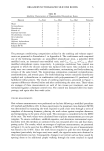
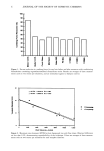
18 JOURNAL OF THE SOCIETY OF COSMETIC CHEMISTS eter was found to increase with increasing alkyl chain length of the substituent group attached to the siloxysilicate molecule. Further experimentation is planned to investigate the effect on volumizing performance of maintaining constant alkyl chain length while altering the degree of substitution. These materials were also evaluated in curl retention studies where they were found to offer no improvement in hold. The hair treated with the various alkyl-modified resins was characterized by lower curl retention values than the water-set control. Styryl modification of the silicone resins resulted in compounds having a high refractive index as compared to phenyl-functionalized silicone fluids, e.g., phenyltrimethicone. The resulting phenethyl siloxysilicates were found to dramatically increase apparent luster or shine of hair when applied from a cuticle coat formulation. The polyether- modified silicone resins were shown to improve curl retention when applied to hair from aqueous dilutions. Preliminary experiments suggest that by judicious choice ofpolyether type and level of substitution these molecules may be tailored to perform as either water-in-oil or oil-in-water emulsifiers. Further experiments are required to optimize these performance attributes. Organomodified siloxysilicate resins other than those re- ported herein have also been synthesized and are currently under evaluation in personal care applications. APPENDIX A: FORMULATIONS UTILIZED FOR EVALUATIONS OF ORGANOMODIFIED SILOXYSILICATE RESINS Formulation 1: Prototype Hair Conditioner Material Amount (%) Water 87.70 Organofunctional silicone resin 3.00 Behenyltrimonium methosulfate 2.70 Stearamidopropyl dimethylamine 2.50 Cetyl alcohol 2.30 Pentaerythrityl tetrastearate 1.50 Methylparaben 0.20 Propylparaben 0.10 Procedure: 1. Add parabens to water. With good stirring, bring temperature to 65-70øC. 2. Combine remaining ingredients and heat to -70øC. 3. Add wax phase to water phase with good stirring. Remove heat and continue stirring through COO1. Formulation 2: Cuticle Coat Conditioner Material Amount (%) Cyclomethicone (&) Dimethicone 60 Isohexadecane 10 Phenethyl siloxysilicate 30 Procedure: Combine all ingredients with moderate propellar agitation. Continue stirring until solution is homogeneous.

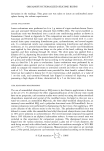
ORGANOFUNCTIONALIZED SILICONE RESINS 19 Formulation 3: Prototype Sunscreen Composition Material Amount (%) A. Water 77.58 Tetrasodium EDTA 0.05 Phenoxyethanol & methylparaben & butylparaben & ethylparaben & propylparaben 0.80 Magnesium aluminum silicate 0.25 Ester* 7.00 Octyl methoxycinnamate 7.00 Octyl salicylate 3.00 Benzophenone - 3 3.00 Acrylates/%o_3o alkyl acrylate crosspolymer 0.30 Carbomer 0.15 Sorbitan oleate 0.20 Fragrance 0.12 Triethanolamine 99% 0.55 n. C. Procedure: 1. Heat water of Phase A to 75øC. Add remaining ingredients in order with moderate propeller agitation, making sure all parabens have dissolved. Mix for 15 min, while cooling to 50øC. 2. Combine Phase B with sweep agitation at ambient temperature. Mix until smooth "paste" is obtained. 3. Add Phase B at RT to Phase A (at 50øC) with rapid propeller agitation. Mix for 30 min or longer to ensure that polymers are completely dispersed. 4. Cool with moderate agitation to 45øC. Add Phase C to batch with moderate propeller agita- tion. Mix for 10 min. 5. Add Phase D to batch at 40øC. Mix with moderate agitation for 20 min. Cool to RT. * Three formulations were prepared using either dilauryltrimethylolpropane siloxysilicate, diisostearyltri- methylolpropane siloxysilicate, or octyl palmitate. Formulation 4: Prototype Lipstick Composition Material Amount (%) A. Castor oil Silicone ester resin* Propypylparaben Candelilla wax Carnauba wax White beeswax Ozokerite wax Tocopherol B. D&C Red no. 6 Barium Lake (40% C.O. Colormix) D&C Red no. 7 Calcium Lake (40% C.O. Colormix) Titanium dioxide (60% C.O. Colormix) C. Berry flavor 41.85 20.00 0.10 6.OO 2.00 4.5O 2.50 0.05 7.00 7.00 9.OO 1.00 Procedure: 1. Combine Phase A and heat with agitation to 85-90øC. Mix at temperature for 15 min. 2. Cool to 75øC. Add Phase B with agitation. Mix for 30 min, avoiding aeration. Add Phase C to Phase AB with agitation and mix for 10 min pour into molds at 75øC. * Two products were prepared using eiher dilauryltrimethylolpropane siloxysilicate or dilisostearyltrimeth- ylolpropane siloxysilicate. ACKNOWLEDGMENTS The authors gratefully acknowledge the contributions of F. Traver, D. Johnson, and P.
Purchased for the exclusive use of nofirst nolast (unknown)
From: SCC Media Library & Resource Center (library.scconline.org)