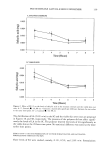
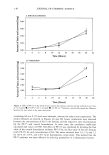
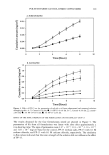
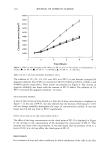
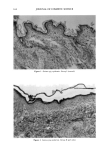
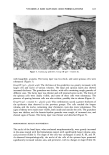
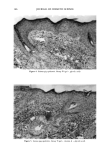
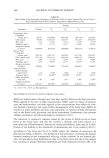
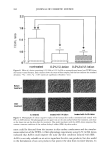
VITAMIN A AND GLYCOLIC ACID FORMULATIONS 169 reduction of electron-negative sulfate and phosphate groups of the outer wall of the corneocytes due to the enzymatic inhibition of transferases and kinases, a fact that would provoke the loss of cohesive strength. The hydration effect obtained in our experiments is very important when the cosmetic products containing glycolic acid are used, because there is a great interest in the research of the active substance with hydration properties. The moisturizing products are some of the most important types of cosmetics, because these act to prevent atopic xeroxis and cutaneous early aging and are used to support the treatment of several alterations. There are several moisturizing agents used in cosmetic products--for example, aminoacids, urea, latic acid, silicones, vegetable and mineral oils, liposomes, polymers, and ceramides, which act by different mechanisms, such as occlusive mechanism or carrying water into the skin surface (13,14). In our paper, the glycolic acid and vitamin A provoked the hydration effect by intra- and extracellular edema. This effect is very interesting and beneficial because it can improve cutaneous hydration, and it is not limited to the upper cells layers but is also present in the deeper ones. AHAs provoke a reduction in pH even in the deep layers of the horny layer (11), and the reduced pH contributes to desmosome dissolution. A reduced pH provokes maximum activity of certain enzymes, resulting in increased cell proliferation and differentiation. AHAs also stimulate epidermal proliferation by acting on keratinocytes. The changes observed in normal skin treated with AHAs (15) are similar to those observed in wound cicatrization (16) during the period of reaction after steroid-induced atrophy (17) and in treatment of the skin with retinoic acid (18). Increased total epidermal thickness, as well as increased numbers of granular layers, suggest that AHAs may stimulate changes in the epidermis. In the present study, glycolic acid stimulated an increase in the thickness of the granu- lose layer in the guinea pig skin, with cells filled with rough and fused keratin-hyalin granules. The epidermal thickening observed was due to the intra- and extracellular hydration (beneficial edema, in this case) and the nuclear volume increase. In the basal layer it may be suggested that the increase in nuclear activity occurred in the group treated with the formulation containing glycolic acid and vitamin A palmirate, due to alterations observed in the eccentricity, form coefficient e outline index (p 0.01), which indicates variations in the nuclear function. In this way, the effects observed (cell renewal and hydration) are very important in the products used to prevent and to improve cutaneous aging. In our studies, both the formulations containing vitamin A palmirate or glycolic acid caused increased epidermal thickness, but these alterations were even more evident with the use of the formulation containing a combination of vitamin A palmitate and glycolic acid. This is probably due to the presence of the glycolic acid in the gel formulation studied, increasing the behavior of skin penetration by vitamin A palmirate and poten- tiating its effects (20). Finally, we speculate that AHAs may promote collagen synthesis in human skin (18). It should be remembered that ascorbic acid (an AHA in the lactone form) stimulates procollagen synthesis in fibroblasts in culture (21).

170 JOURNAL OF COSMETIC SCIENCE CONCLUSIONS Under the present experimental conditions, we observed that glycolic acid, combined or not with vitamin A, acts on guinea pig skin by provoking thickening of the epithelium due to an increased cell volume caused by intra- and extracellular edema (hydration). This thickening is not limited to the upper cell layers but is also present in the basal and spinous layers. REFERENCES (1) R. Hermitre, Aging skin, retinoids and alpha hydroxy acids, Cosmet. Toilerr., 107, 63-67 (1992). (2) W. A. Metz, Die streckenmessung und gerichteten strukfuren im mikroskop und ihre anwendung zur bestimmung yon oberfl•chen--volumen relationen im knochengewebe, Mikroskopie, 22, 132-142 (1968). (3) M. Delesse, Proc•d• m&anique pour d&erminer la compasiton des rotes, Annales de Mines, 13, 379-388 (1847). (4) H. W. Chalkley, Method for the quantitative morphologic analysis of tissues, J. Nat. Cancer Inst., 4, 47-53 (1943). (5) E. R. Weibel, Principles and methods for the morphometric study of the lung and other organs, Lab. Invest., 12, 131-155 (1963). (6) A. Hennig, Feher der oberflachenbestimmung yon kerner bei endlicher schimittdicke, Mikroskopie, 12, 7-11 (1957). (7) M. Abercrombie, Stimulations of nuclear populations from microforme sections, Ant. Rec., 94, 239 (1946). (8) H. Elias, et al., Some methods for the study of kidneys structures, Z. Wiss. Mikrosk., 5, 70 (1961). (9) E. R. Weibel, Principles and methods for the morphometric study of the lung and other organs, Lab. Invest., 12, 131-155 (1963). (10) E. Van Scott and R. J. Yu, Hyperkeratinization, corneocyte cohesion and alpha hydroxy acids,J. Am. Acad. DermatoL, 11,867-879 (1984). (11) W. P. Smith, Hydroxy acids and skin aging, Cosmet. Toiletr., 109, 41-44 (1994). (12) E. Van Scott and R.J. Yu, "Substances That Modify the Stratum Corneum by Modulating Its Formation," in Principles of Cosmetics for the Dermatologist, P. Frost and S.N. Horwitz, Eds. (Mosby, St. Louis, 1982), pp. 70-74. (13) M. Rieger, Ceramides: Their promise in skin care, 111, 33-45 (1996). (14) B. Idson, Dry skin: Moisturizing and emolliency, Cosmet. Toilerr., 107, 69 (1992). (15) R. M. Lavker, et aL, Effects of topical ammonium lactate on cutaneous atrophy from a potent corti- costeroid, J. Am. Acad. DermatoL, 26, 535-544 (1992). H. Pinkus, Examination of the epidermis by strip method, J. Invest. DematoL, 19, 431-447 (1952). P. Zheng, et aL, Morphologic investigations on the rebound phenomenon after corticoid4nduced atrophy in human skin, J. Invest. Dermatol., 82, 345-352 (1984). P.M. Elias and M. L. Williams, Retinoids, cancer and the skin, Arch. DermatoL, 117, 160-180 (1981). E. Van Scott and R.J. Yu, Alpha hydroxy acids: Procedures for use in clinical practice, Cutis, 43, 222-228 (1989). G. R. Leonardi and P.M. B. G. Maia Campos, Influence of glycolic acid as a component of different formulations on skin penetration by vitamin A palmitate, J. Cosmet. Sci., 49, 23-32 (1998). S. R. Pinnell, et al. Induction of collagen synthesis by ascotbit acid: A possible mechanism, Arch. DermatoL, 123, 1684-1686 (1987). (16) (17) (18) (19) (20) (21)
Purchased for the exclusive use of nofirst nolast (unknown)
From: SCC Media Library & Resource Center (library.scconline.org)