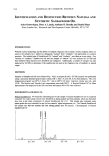
136 JOURNAL OF COSMETIC SCIENCE High-performance liquid chromatography (HPLC). The assay used in this study for the quantification of SA is a variation of the method recommended by the United States Pharmacopeia (USP) for the simultaneous analysis of benzoic acid and SA from oint- ments (US Pharmacopeia XXlII, 1995). A Waters © (Franklin, MA) HPLC equipped with an ultraviolet (UV) detector set at 280 nm was used. The mobile phase was composed of 150 ml of methanol, 150 ml of acetonitrile, and 700 ml of water that contained 225 mg of tetramethylammonium hydroxide pentahydrate, 6.8 gm of mono- basic potassium phosphate, and 0.224 gm of sodium hydroxide. The pH of the mobile phase was adjusted to range between 5 and 6 by the addition of glacial acetic acid. By means of a 4-mm x 15-cm C18 column and a flow rate of 0.7 ml/min, the SA eluted at 2.1 minutes. Under these conditions the coefficient of variation (CV) was under 3% for an injection volume of 20 lal. EFFECT OF PP-15 ON THE APPARENT SOLUBILITY OF SALICYLIC ACID The saturation solubilities of SA in aqueous solutions containing 1%, 2%, 3%, 6%, and 10% w/w PP-15 were measured and compared to a control (without polymer). Since SA can salt-out the polymer at room temperature, its solubility was measured at a low temperatures (4øC). To each system, excess solid SA was added. The suspensions were placed in individual flasks in a 4øC refrigerator and shaken manually for 15 minutes twice a day. The supernatant collected from each mixture was centrifuged, filtered, and assayed for SA content weekly by HPLC. Saturation solubilities were reached when no further increase in SA solubility was obtained. BINDING EXPERIMENTS Equilibrium dialysis was used to measure polymer/active binding at 32øC. In this experiment, side-by-side diffusion chambers were used. The donor compartment con- tained the polymer and the drug dissolved in a buffer (pH 2.4 for SA and 2.0 for LA). The receptor compartment contained the buffer alone. Four concentrations of drug (SA: 0.00375, 0.0025, 0.00075, and 0.0005 M LA: 0.05, 0.25, 0.5, and 1 M) and one polymer concentration (0.05 M) were studied. The two chambers were separated by a porous cellulose acetate membrane with a cutoff of 500 daltons. Equilibrium was reached after 72 hours. At the end of the experiment, both compartments were sampled and the amount of drug in each compartment was assayed. Two controls were studied. In the first, no polymer was added to the donor chamber, and the concentrations of the actives were 0.0005 1 M and 1 M for SA and LA, respectively. The receptor compart- ment was monitored for drug appearance over time until equilibrium was reached. In the second control, the same concentration of polymer (0.05 M) was added to the two chambers, and either 0.00375 M SA or 0.05 M LA was added to the donor compartment. The receptor compartment was monitored for drug concentration over time until equi- librium was reached. EFFECT OF THE IONIC STRENGTH OF THE FORMULATION ON THE EFFICACY OF PP-15 In this experiment, the ionic strength of a solution containing 0.1% w/w SA and 3% w/w PP-15 was changed by the addition of salts. The two salts studied were calcium

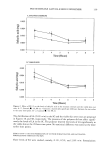
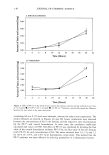
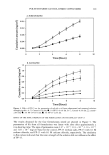
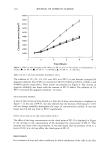
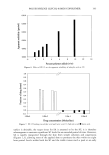
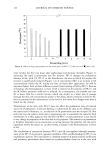
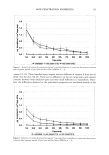
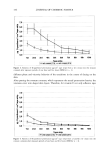
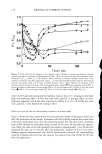
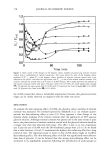
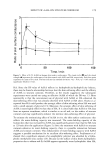
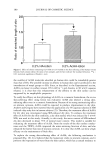
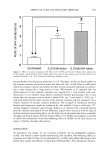
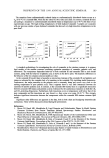
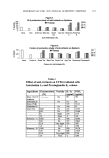
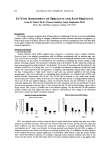
POLYETHYLENE GLYCOL-8/SMDI COPOLYMER 137 chloride and sodium chloride, each at a concentration of 0.1 M. Two formulations were prepared with the salts under study: 3% PP-15 with 0.1 M calcium chloride and 3% PP-15 with 0.1 M sodium chloride. The permeation of SA through pig skin from. two formulations was compared to a negative control (without PP-15) and a positive control (3% PP-15). Both controls did not contain calcium chloride or sodium. chloride. EFFECT OF SALICYLIC ACID AND LACTIC ACID ON THE CLOUD POINT OF PP-15 Solutions containing polymer/active combinations were placed in a water bath and visually monitored for cloudiness. The temperature at which the solution became turbid (cloud point) was recorded. Each solution was then placed in melting ice, and the temperature at which the cloudiness disappeared (cloud point) was recorded to confirm the results obtained by heating the solution. In this experiment, four SA concentrations (0.05%, 0.1%, 0.15%, and 0.2% w/w), four LA concentrations (2.5%, 5%, 7.5%, and 10% w/w), and a control (without active) were evaluated at one polymer concentration (3% w/w). DATA ANALYSIS The rates of permeation were calculated from the slopes of the linear regions of plots of the cumulative amount versus time. Typically in low-dose experiments, the linear region starts after the lag time and ends before any sign of depletion takes place. In most cases, the slopes were calculated from the one-hour time point to the four-hour time point. In infinite-dose experiments, a linear response is usually expected throughout the experi- ment after a certain lag time. In these cases the slopes were calculated from the last four points measured. (In all figures, the error bars represent the standard error of the mean.) Analysis of variance was performed on the permeation rates obtained. The flux values obtained over time were compared to a control for any significant differences using Dunnett's test (95% confidence level). When two groups or two points were compared to each other, a t-test was performed (95% confidence level). A statistical package (SigmaStat 2.0, Jandel Scientific, San Rafael, CA) was used to process the data. RESULTS EFFECT OF PP-15 ON THE PERMEATION OF SALICYLIC ACID AND LACTIC ACID THROUGH PIG SKIN The effect of PP-15 on the permeation of SA (0.5% w/w) and LA (5% w/w) is presented in Figures 1A and lB, respectively. All concentrations of PP-15 decreased the rates of permeation of SA. The flux values were 0.5514, 0.4314, 0.2885, 0.0170, and 0.0171 mg/cmi/hour for the control and formulations containing 0.3%, 1%, 3%, and 6% polymer, respectively. The effect of the polymer increased linearly (r -- 0.98) with concentration up to a level of 3% w/w. An increase greater than 3% w/w in the level of PP-15 did not have an additional effect on permeation. It was also found that the presence of 3% w/w PP-15 in the formulation did not decrease the flux of LA signifi- cantly when it was compared to the control (Figure lB).
Purchased for the exclusive use of nofirst nolast (unknown)
From: SCC Media Library & Resource Center (library.scconline.org)