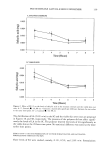
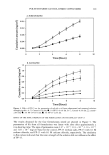
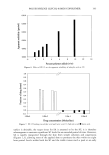
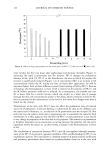
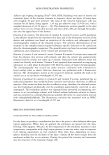
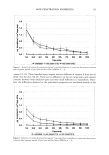
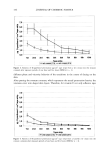
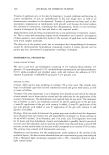
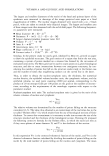
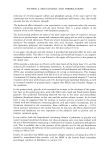
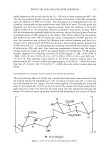
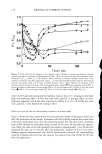
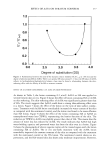
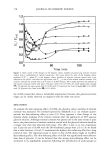
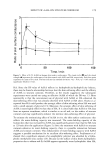
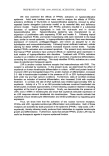
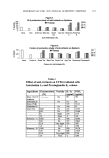
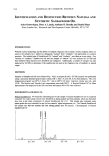
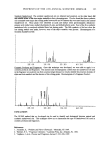
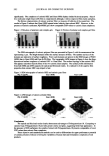
EFFECT OF AcHA ON STRATUM CORNEUM 179 o o o • ! ! ! I i i i I I I i i i 0 50 100 150 Time / min Figure 5. Effect of 0.2% AcHA on human skin surface conductance. The closed circle (0) and the closed triangle (&) represent the conductance of the skin treated with AcHA and HA, respectively. Each data point represents the mean of five trials. The bars indicate the standard deviation. **p 0.01 *p 0.05 statistical significance (Student t-test). HA. Since the DS value of AcHA reflects its hydrophobicity/hydrophilicity balance, there may be found a relationship between that the skin-softening effect and the affinity of AcHA to stratum corneum. Therefore, as the results suggested, the subsequent experiments were carried out using an effective AcHA of which the DS was 3.5. More noteworthy is that the concomitant use of glycerol with AcHA or HA enhanced the skin-softening effect that was already observed with AcHA or HA alone. Ozawa et al. reported that HA could produce the synergic effect of skin softening when HA was used with a small amount of glycerol (13). Moreover, the synergic effect of skin softening of AcHA is more highly effective than that of HA. It is conceivable that AcHA or HA may form an aqueous membrane, which is similar to an oil seal, on the surface of stratum corneum and may significantly enhance the intrinsic skin-softening effect of glycerol. To estimate the moisturizing effect of AcHA in vivo, the skin surface conductance that reflects the water-holding capacity was measured. The water-holding capacity of the human skin that was increased by AcHA was significantly greater than that by HA even at 120 min after the application (Figure 5). Since the treatment with AcHA on stratum corneum enhances its water-holding capacity, there is a possible interaction between AcHA and stratum corneum. This enhancement of water-holding capacity with AcHA suggests a possible mechanism for its excellent skin-softening effect. Freijlarsson et al. showed that a significant amount of an amphiphilic polymer was adsorbed by a hydro- phobic methylated silica surface (24). Because (a) the surface of skin shows hydrophobic properties due to sebum and (b) AcHA appears apparently more hydrophobic than HA,

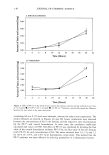
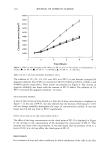
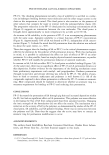
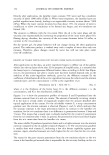
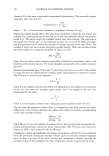
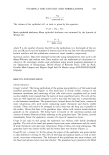
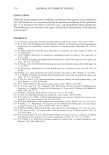
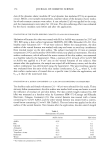
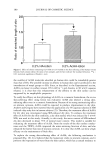
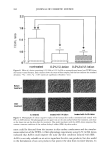
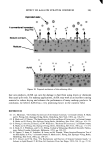
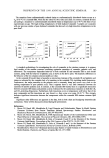
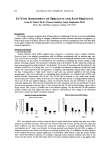
180 JOURNAL OF COSMETIC SCIENCE 2.0 0.2% HA-lotion 0.2% AcHA-Iotion Figure 6. Effect of a lotion containing 0.2% HA or 0.2% AcHA on the skin softening of the human ventral forearm. Each column shows the mean of ten samples, and the bars indicate the standard deviation. **p 0.01 statistical significance (Student t-test). the number of AcHA molecules adsorbed on human skin could be remarkably greater than that of HA. The possible increase in affinity to human skin can be attributed to the introduction of acetyl groups to HA. Since, as described in the Experimental section, AcHA can lower its surface tension (55.0 mN'm -•) and dissolve in 90 w/w% aqueous ethanol, it is clear that this enhancement of the affinity to the skin surface can be supported by its amphiphilic properties. To verify the efficacy on skin physiology of AcHA in a cosmetic formulation, the in vivo skin-softening effect using lotion was evaluated. AcHA also showed a strong skin- softening effect even in a cosmetic formulation. Because of its strong moisturizing effect on stratum corneum, AcHA could be expected to produce improvement in dry skin. Andrew and Gregory have reported that the application of a 4% aqueous solution of SDS induced a dry scaly skin in human subjects (25). Therefore, the treatment effect of AcHA for dry skin was investigated using SDS-induced dry skin. To evaluate the treatment effect of AcHA for dry skin condition, a dry skin model, which was induced by 5 w/w% SDS, was used in this study. Actually, in this study, the water content of SDS-induced dry skin decreased to about 75% of normal water content. This model is suitable for evaluating the treatment effect of AcHA. From the results of the skin surface conduc- tance and the TEWL, AcHA improved the water-retaining function of skin, and also enhanced the barrier function of stratum corneum. It is clear that AcHA can show a high efficacy on the maintenance of fresh skin. To explain the strong skin-softening effect of AcHA, the following mechanism is proposed (Fig. 10). It is believed that the humectant sticks to stratum corneum, and it prevents the evaporation of water from the skin surface, which has a natural tendency to
Purchased for the exclusive use of nofirst nolast (unknown)
From: SCC Media Library & Resource Center (library.scconline.org)